

 I Speak for the Fish is a monthly column written by Great Lakes Now Contributor Kathy Johnson, coming out the third Monday of each month. Publishing the author’s views and assertions does not represent endorsement by Great Lakes Now or Detroit Public Television. Check out her previous columns.
I stood at the sink for hours. Sandwiched between my older brother on my left and our dad on my right. Working in silence, our assembly line cranked out the filets faster than a McDonald’s line at dinnertime.
My brother cut off the heads and slit the bellies open. My job was to rinse the innards down the drain before passing them to my dad for frying. Most of the bellies were filled with a bright orange, lumpy goo.
As a clueless ten-year-old, I had no idea the orange gunk was actually ripe eggs and I was literally flushing hundreds of thousands of smelt down the drain.
Each evening, my siblings and I would take turns dipping the smelt net into the river from our dock. We only needed to hold the net in the water for a few moments before pulling it out full. No skills required.
It was so easy that we caught far more than we were willing to clean or eat. Which is why it was not uncommon for my father to dump several five-gallon buckets of dead smelt back into the river. Thinking back on the wastefulness makes me feel a little sick.
My family was not alone in taking more than we should have. Stories abound of people lining their pickup trucks with plastic and then completely filling the beds with smelt within a few hours.
We no longer see massive smelt runs in the Great Lakes. I occasionally hear people waxing nostalgic about how “you used to be able to just dip a net in the water and pull it out full of smelt.”
When I hear someone talking about the good old days of smelt dipping, I often ask if they think all of us taking a ridiculous amount of smelt has anything to do with the lack of smelt in the Great Lakes today. Almost all say “nope.”
Many have been openly offended by my suggestion that their actions have directly contributed to the decline of another species. It’s as if their choices and actions have no effect at all on nature. The general consensus is that overfishing is done by bad characters in other parts of the world. Not by “me.” Not by us.
So, in the fairytale, it’s ok to boast about taking far more than is seemly because overharvesting has no negative impacts on fish populations as long as everyone is having fun. And the emperor’s new clothes are lovely.
Targeting parents

The smelt were easy to net because they were running upstream to spawn. I can not get over how short-sighted it is to target any species right before they reproduce, unless you are trying to eradicate them, because it’s a very effective way to negatively impact a species.
It’s painfully ironic that my dad was an OBGYN, yet killing hundreds of pregnant fish gave him no pause.
My family was not alone in targeting the smelt while they were running. Lots of people did, simply because it was so easy. The Minnesota Department of Natural Resources notes that back in its heyday, spring smelt dipping was a “carnival-like” event.
It wasn’t always that way.
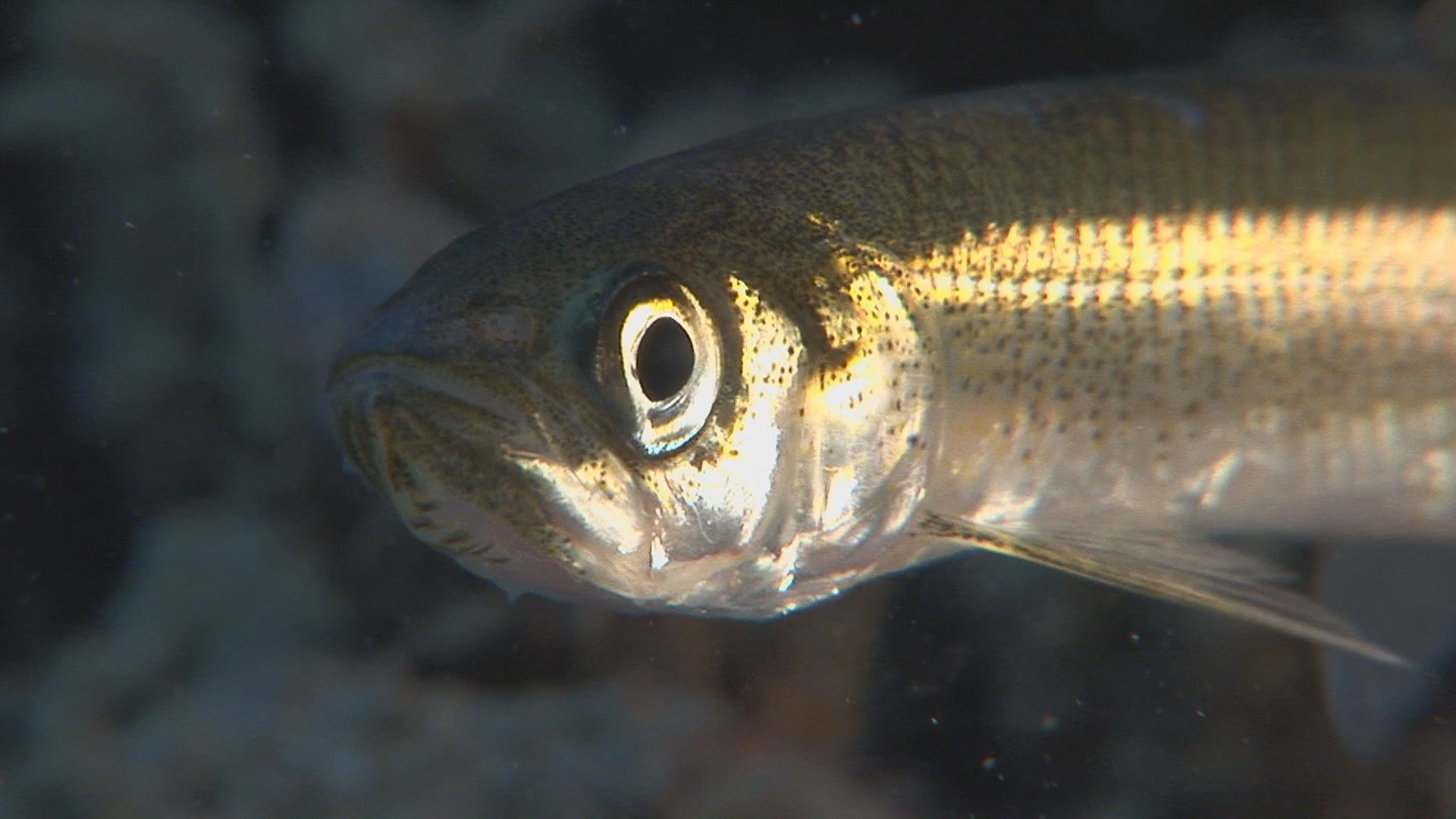
Rainbow smelt were one of the earlier non-native species to enter the Great Lakes. In the early 1900s, they were brought to the region as a food source for the first attempt at an artificial salmon fishery.
That initial salmon introduction project was unsuccessful, but the smelt survived and thrived. Their numbers steadily increased through the 1900s until their spring spawning runs were so large the abundance seemed eternal.
Today? There are small populations scattered throughout the Great Lakes, but the large runs are gone and not likely to return.
Even though many of us grew up with them being abundant here, rainbow smelt were never native, so their declining numbers should not be a cause for concern. Some might argue that it is even a good thing for the native Great Lakes fishery.
Yet, all the articles that I read while researching this column suggested the loss of smelt was very much a cause for concern in the Great Lakes.
The articles agreed it is a multifaceted issue with contributing factors such as increased predation from larger species, impacts from zebra and quagga mussels and increasing water temperatures and water clarity.
While there are a wide range of possibilities offered, and no doubt many factors play a role, not once did I read that maybe, just maybe, we all washed too damn many eggs down the drain.
Killing one pregnant female kills hundreds, perhaps even thousands, of future fish. It seems so unbelievably short-sighted to me, unless the goal is to make them go away.
Yet, there is currently no season or limit for taking smelt in Minnesota, and Michigan still allows two gallons a day per fishing license.
Culture shift

This squander of life is not limited to smelt. Walk along any popular fishing pier in the Great Lakes, and you are likely to see bucket after bucket swirling with minnows hoping to avoid the hook.
A significant percentage of those fish, some of which are raised for the bait trade while others are taken from the wild, will be wasted and unceremoniously discarded.
Wasting life, even if it’s just a silly little bait fish, shouldn’t be so readily acceptable.
Changing how fish are treated starts from the frontline with anglers. While change can be difficult and takes time, it can be done.
In the early days of sport diving, the general rule was that it was ok to take whatever you wanted. It was a finders-keepers culture.
In the Great Lakes, dozens of shipwrecks were stripped of their anchors and rigging before the diving industry changed the culture. Divers weren’t forced to do it. We chose to change.
Lessons were added to basic certification courses, discouraging taking anything but pictures. Charter captains and crews provided pre-dive instructions about not removing or touching anything.
There was admittedly a difficult stretch for the old-school divers when it stopped being cool to have a giant anchor in your front yard. In the end, most ended up donating their anchors to local museums and were happy with the decision.
Eventually, underwater preserves were established, and a few regulations were put in place with enforceable consequences to deter the remaining looters. It took several decades to go from taking whatever you wanted to taking nothing, but the shipwrecks are better off for the effort.
Surely, fish are worth the same regard as sunken ships. So, here’s the good news. We can all do our part to help Great Lakes fish by making one simple change: stop rinsing fish eggs down the drain.
Catch more news at Great Lakes Now:
I Speak for the Fish: The hardest lake sturgeon dive in the Great Lakes
I Speak for the Fish: How to photograph mysterious freshwater fish
Featured image: Rainbow smelt are not native to the Great Lakes having been introduced to the region in the early 1900s. (Photo courtesy of Kathy Johnson)