
Here’s what officials – and Michigan’s new Governor-elect – are saying about the pipeline’s future
Since last month’s announcement that Gov. Rick Snyder’s administration and Enbridge plan to build a tunnel to encase a replacement pipeline for the existing, aging Line 5, more information about the agreement has become available about terms and implications of the proposed project.
Through a series of interviews with Gov.-elect Gretchen Whitmer and state officials, Great Lakes Now collected some answers we hope will clear up some issues surrounding the agreement involving construction of the tunnel.
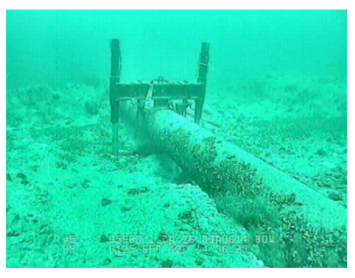
The proposed tunnel, 100 feet under the lake bottom, would house a replacement pipeline for the 4.5-mile section of the Line 5 pipeline, which carries 23 million gallons of oil and natural gas liquids each day across the Straits of Mackinac. Construction is estimated at $350-$500 million and is expected to take up to 10 years. “The historic agreement will result in eliminating nearly every risk of an oil leak in the Straits and provide added protections to the Great Lakes,” says Snyder.
But critics say tunnel construction near the existing pipeline, which was built in 1953, will be dangerous. And, they say, even if the tunnel is built, the Line 5 pipeline still poses a risk because the rest of the 640-mile pipeline, which will not be encased in the tunnel will still have more than 400 crossings over lakes, rivers and streams.
Here are six questions – and some answers – about the Enbridge tunnel plan from Great Lakes Now’s recent reporting:
QUESTION: What will the Whitmer Administration, which takes office in January, do regarding the existing pipeline and the proposed tunnel?
ANSWER: In a pre-election interview with and the Detroit Journalism Cooperative, Whitmer said she “wants the oil out of the water” and that she won’t support the construction of the proposed tunnel. She also said she wants to shut down Line 5. Watch her answer here:
QUESTION: The current plan calls for the Mackinac Bridge Authority (MBA) to own and operate the tunnel. But the current law, MCLA 254.311 limits the authority’s jurisdiction to what is “useful” in the operation of the Bridge. How is the proposed tunnel “useful” to the bridge?
ANSWER: The agreement has the MBA “being asked to approve being the oversight agency for the construction and long-term maintenance of a tunnel,” says Jeff Cranson, spokesperson for the Michigan Department of Transportation, which does media relations for the MBA. “The agreement between the state and Enbridge has laid the path for the construction of a utility corridor. The Bridge authority is not being asked whether to build a tunnel.”
QUESTION: What are the financial guarantees and liabilities in this plan?
ANSWER: “Under any agreement, the Mackinac Bridge Authority would not have liability for damage caused by the Enbridge pipeline,” says Ed Golder, public information officer with the Michigan Department of Natural Resources. “The state is both held harmless and indemnified by the easement. In addition, as the easement requires, the agreement is requiring Enbridge to show they have money immediately available to address the cost of a worst-case scenario,” he said.
Since the most recent risk analysis report indicates an estimated $1.9 billion in potential liability, the agreement requires Enbridge’s financial assurance to “meet or exceed,” Goldner says. “As you know, this worst-case scenario anticipated a two-hour release of oil, a low probability event with high consequence,” he said.
The agreement also requires Enbridge to have personnel available 24/7 who could shut down the line within 15 minutes of an incident.
QUESTION: If there was a major spill or other disaster involving the proposed tunnel, could the Mackinac Bridge or the $23 million in annual revenue it generates from tolls, the $34, 000 it makes each year from leasing buildings, and the $375,000 It brings in from leasing fiberoptic cables be used to pay for clean up?
ANSWER: According to the DNR’s Ed Golder any agreement with the MBA will fully protect bridge revenues from being used for any expense associated with the utility tunnel.
QUESTION: Worker safety is an issue, both in the construction of the tunnel and its maintenance for at least the 99-year duration of the deal. Who is responsible for maintenance of the tunnel if it is built, and, as proposed in the Snyder-Enbridge deal, if the tunnel is given to the Mackinac Bridge Authority?
ANSWER: Under the proposal, Enbridge would be required to perform maintenance as a condition of its lease, according to the DNR’s Golder.
QUESTION: Were members of the Mackinac Bridge Authority informed about the idea of overseeing the Line 5 Tunnel before the agreement was announced?
ANSWER: State officials say representatives from the governor’s office contacted all seven of the MBA board members prior to the Oct. 3 announcement.
This report was compiled from Great Lakes Now Bureau Chief Mary Ellen Geist’s interviews with Michigan Department of Natural Resources Public Information Officer Ed Golder and Communications Director for the Michigan Department of Transportation’s Jeff Cranson, as well as from Detroit Public Television/Detroit Journalism Cooperative interviews with Gov.-elect Gretchen Whitmer.
For more about Line 5, watch Great Lakes Now’s documentary “Beneath the Surface: The Line 5 Pipeline in the Great Lakes.”