
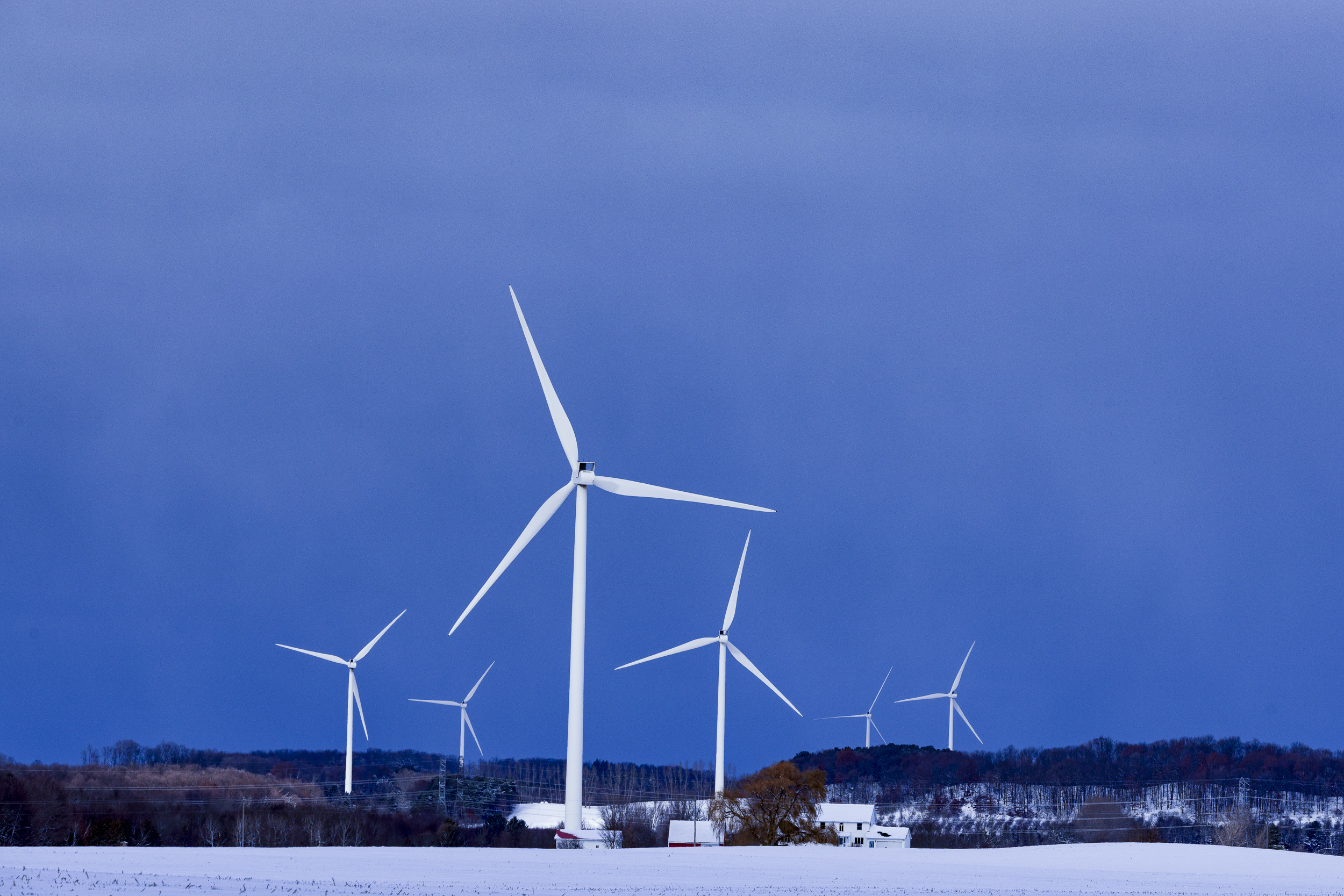

Covering an area the size of the United Kingdom and surrounded by half a dozen large, energy-hungry metropolitan regions, the Great Lakes, surprisingly, boasts not a single offshore wind energy project.
We know that the resource and the demand are there. But no offshore wind effort has ever taken off.
Past efforts at a demonstration project called Icebreaker, slated for Lake Erie off the coast of Cleveland, fizzled out in 2023. In Ontario, which boasts 5,200 miles of Great Lakes coastline, a moratorium on offshore wind has been in place since 2011, with the provincial government having to fork out millions of dollars in damages to one wind energy company for doing so.
But today, with electricity prices surging around the region, is it finally time for offshore wind to take its place? Do communities even want them?
Here, we speak to advocates for and opponents to offshore wind and investigate the myriad challenges such projects in the Great Lakes face.
What’s changing now?
A perfect storm of events has combined to push electricity prices to record levels for thousands of communities around the region.
Utility companies such as Consumers Energy in Michigan, We Energies, which operates in Wisconsin and Michigan’s Upper Peninsula, and a host of others have embarked on system upgrades that are set to add up to 14% to the cost of monthly electricity bills for consumers, with further rate hikes likely in the years ahead.
On top of that, the federal government has mandated that coal-fired electricity plants in Michigan, Indiana, Pennsylvania and elsewhere that were scheduled to be retired now remain open. That means that federal subsidies that are essential for keeping these loss-making plants running are likely to cost ratepayers billions more dollars.
Then there’s the contentious wave of data centers opening across the region, creating a huge new demand for utility-scale electricity.
All the while, recent years have seen a drive in Great Lakes states and provinces to reach net zero carbon emissions. Michigan, Wisconsin and Minnesota plan to reach that goal by 2050.
Ontario aims to get to 80% below its 1990 level of carbon emissions in the same time. New York state has declared an even more ambitious plan, to reach net zero by 2040.
On top of that, with the federal government banning offshore wind projects in oceans surrounding the U.S., there’s been a renewed push to see the Great Lakes — controlled by eight U.S. states and the Canadian province of Ontario, rather than authorities in Washington D.C. and Ottawa — become a new front in the development of the technology.
What is the energy potential for offshore wind on the Great Lakes?
Experts say offshore wind generated from the lakes could provide three times the amount of the electricity used by the eight U.S. Great Lakes states in 2023. National Oceanic and Atmospheric Administration (NOAA) data from 2021 crunched by the Woodwell Climate Research Center found that Great Lakes water generates more wind than anywhere else east of the Mississippi River.
“According to reports done for Ontario’s Ministry of Natural Resources, Great Lakes offshore wind can be implemented with minimal aquatic impacts. If the turbines are 10 to 15 km offshore, they will be almost invisible,” said Jack Gibbons of the Ontario Clean Air Alliance.
“Offshore wind in the Canadian section of the Great Lakes has the potential to supply more than 100% of Ontario’s electricity needs.”
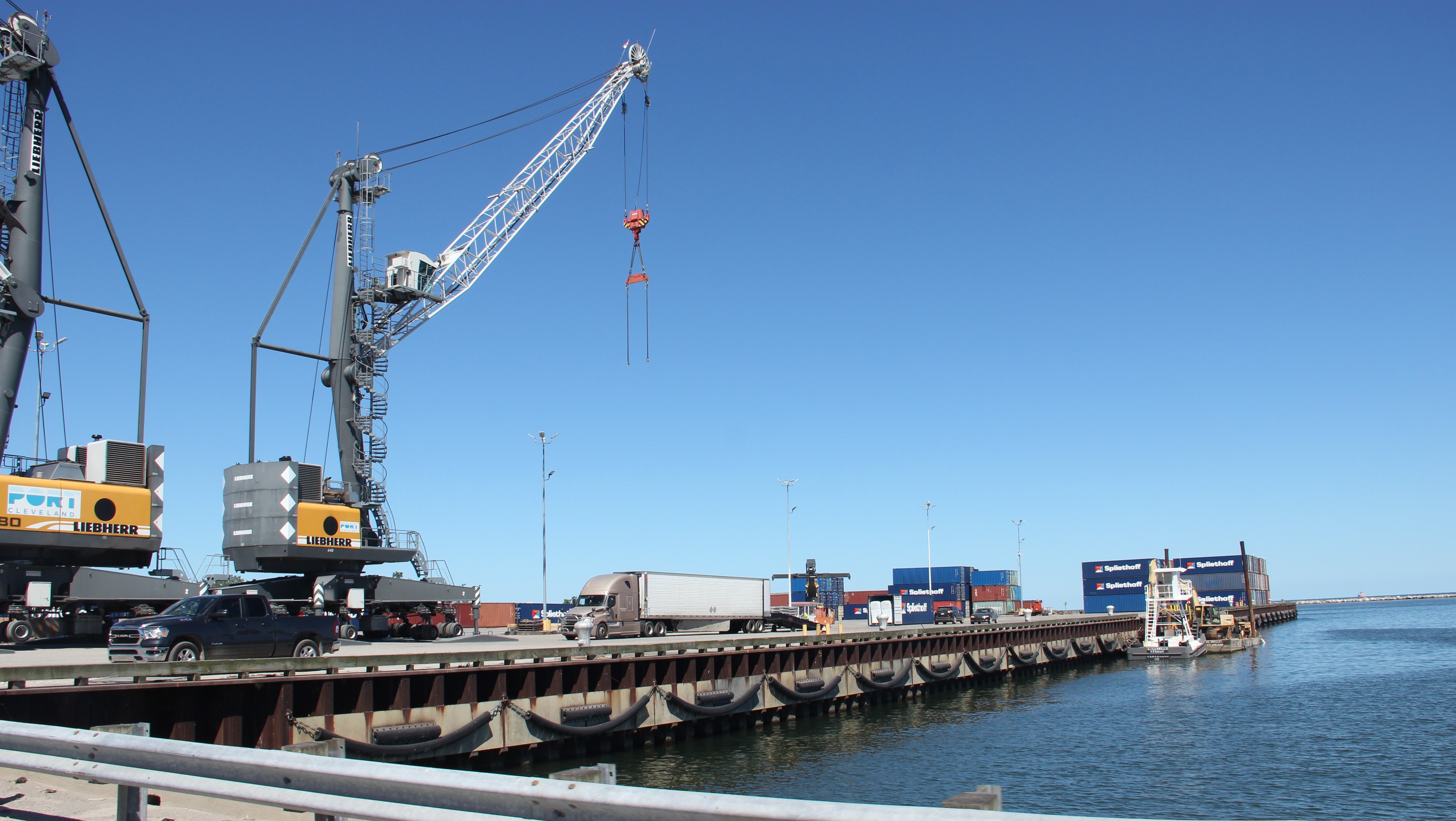
Icebreaker, the Cleveland project, got as far as securing a 50-year lakebed lease from the state of Ohio in 2014. Predicted to provide 20 megawatts of electricity, enough to power more than 7,000 homes, its main goal was to function as a trial project.
But Icebreaker is not completely dead, yet. Last year, a Maryland-based company called Mighty Waves Energy acquired the project, raising hopes among Cleveland leaders and many residents around the region that the first steps towards a lake-based wind energy future remain in place.
Mark Hessels, CEO of Mighty Waves Energy, spoke with Great Lakes Now over the phone, but declined to go on the record to discuss the company’s proposed new offshore wind project, and failed to provide a statement when asked.
What are the big challenges?
And yet, the barriers appear immense.
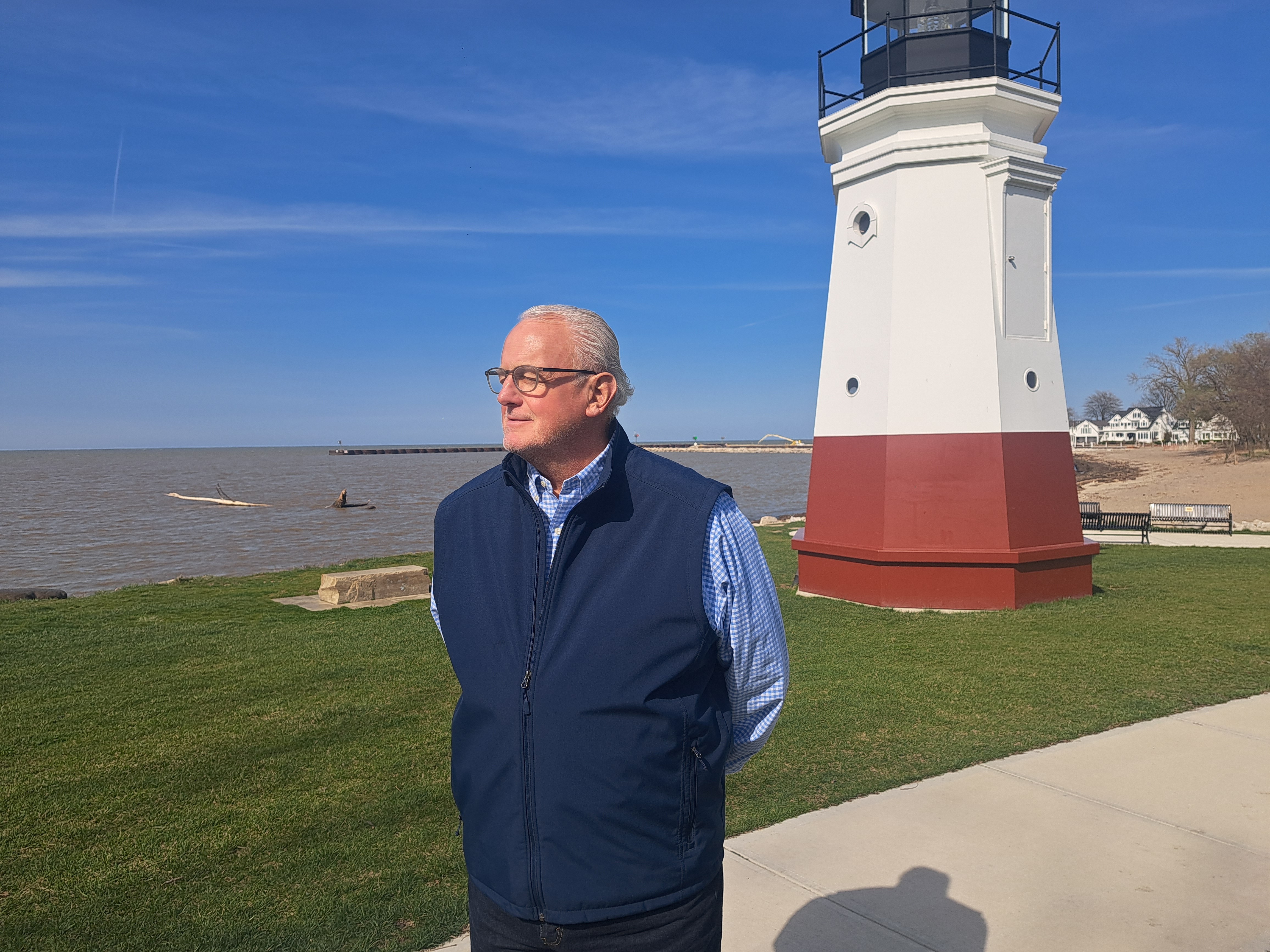
John Lipaj has been sailing and boating on Lake Erie ever since he was a child.
“I spent every summer out there on a boat. In July and August, when the temperatures rise, the wind would die,” he said, illustrating one of several reasons he and others think offshore wind isn’t suitable for Lake Erie.
“If there’s no wind at exactly the time of year when electricity is needed most, for air conditioning, then what’s the point of building offshore wind?”
As a board member of the Lake Erie Foundation, a nonprofit, that’s not the main reason he and the organization he represents opposes offshore wind on Lake Erie.
“One of the things we were most concerned about is that bald eagles were almost extinct, and they’ve really come back along the Lake Erie shore. Now, they’re thriving,” he said.
“In the winter, they’ll fly out a couple of miles [offshore] looking for fish, especially if there’s ice [on the shoreline]. We’ve got real concerns about the bald eagle population being hurt by the wind turbine out on the lake, because that’s their feeding ground.”
In 2022, a wind energy company was fined $8 million and sentenced to probation after its wind turbines were found to have killed more than 150 eagles over the course of a decade across ten U.S. states, including Michigan and Illinois.
Some conservation organizations opposing offshore wind have even come under fire. A report by Grist in 2021 alleged that the American Bird Conservancy, a $30-million non-profit, has been one of the most powerful environment-focused opponents to wind turbine projects across the country, having received around $1 million from fossil fuel interests.
A request by Great Lakes Now for comment from the American Bird Conservancy was not received by the time of publication.
All the while, others believe the potential threat to wildlife can be mitigated.
“Some people are unaware that the National Audubon Society supports Great Lakes offshore wind power. The good news is that offshore wind can be done in a bird-friendly way,” said Gibbons of the Ontario Clean Air Alliance.
“We are recommending that the turbines should be turned off from dusk to dawn during the migratory bat seasons (late April and May and mid-July to the end of September) when wind speeds are less than seven meters per second, since bats fly more when wind speeds are low.”
Threats to wildlife aside, for Professor Melissa Scanlan, director of the University of Wisconsin-Milwaukee’s Center for Water Policy, five leading factors have combined to stall progress in offshore wind:
- Jurisdictional fragmentation that prevents states and provinces from combining their efforts;
- Inadequate planning;
- Policy instability at the federal government level;
- Protracted litigation in the case of Ohio;
- And a lack of sustained political will.
And there are other challenges.
“There’s definitely misinformation that circulates about offshore wind,” she said.
“From the research we’ve done, we think you can address that through transparent, science-based planning processes,” said Scanlan. “Without doing a more rigorous science-based planning process, if there’s a vacuum of reliable information, that can allow misinformation to be circulated more freely.”
On top of that, there are reservations around the economic return of such projects. Estimates suggest the cost of offshore wind on the Great Lakes could range from 7.5 to 12.9 cents per kilowatt hour. That’s more than double the cost of onshore wind or utility-scale solar.
But while the costs of delivering offshore wind are not inconsiderable, experts such as Scanlan say there’s also both a dollar and environmental cost of continuing to deploy fossil fuels for electricity generation.
Moreover, interest groups have allegedly been at work to make such efforts difficult to bring to fruition.
The former proprietor of the Icebreaker project, the Lake Erie Energy Development Corp., has claimed that corruption within Ohio’s energy regulatory body and state leaders’ close ties to energy giant FirstEnergy made the project unworkable, and has sued FirstEnergy for up to $10 million. Restrictions that the project faced, including calling for turbines to be shut down at night for eight months of the year, essentially torpedoed the project.
What would facilitate off-shore wind?
Industry innovators say that an easing of regulations at the state level would make a huge difference to the emergence of offshore wind in the Great Lakes. Investment in the form of tax breaks from state governments, which handle the leases and permits for any offshore wind projects in the Great Lakes, are another way.
And while the cost of producing offshore wind is higher than its onshore equivalent, higher winds offshore combined with technological advances mean that energy production capacity from offshore could be up to 60% more than onshore.
Scanlan of the University of Wisconsin-Milwaukee’s Center for Water Policy is among the researchers who say offshore wind projects could play a significant role in meeting our rapidly growing energy needs.
“As a society, we need to develop energy resources that are not in conflict with protecting the environment,” she said.
“Offshore wind is no different from that.”
Editors note: This article was updated on May 4 to correct the spelling of a name.