

By Kelly House, Bridge Michigan
The Great Lakes News Collaborative includes Bridge Michigan; Circle of Blue; Great Lakes Now at Detroit PBS; Michigan Public, Michigan’s NPR News Leader; and The Narwhal who work together to bring audiences news and information about the impact of climate change, pollution, and aging infrastructure on the Great Lakes and drinking water. This independent journalism is supported by the Charles Stewart Mott Foundation. Find all the work HERE.
As targeted online misinformation and AI hallucinations corrode society’s shared sense of reality, one of Michigan’s oldest public institutions is still betting its future on good, old-fashioned human expertise.
For 118 years, Michigan State University Extension and its predecessor agencies have existed to serve the public with programs ranging from canning classes to soil testing and financial literacy workshops.
But Director Quentin Tyler admits many Michiganders still don’t know how far the agency has evolved from its roots helping farmers get better crop yields.
This fall, Tyler became the face of a campaign to position MSU Extension as the antidote to AI slop.
“Artificial Intelligence may be able to write you a song, develop a presentation or help you write a script,” he says in a video released this fall. “But Ask Extension is real experts with real answers. No AI needed.”
Want a master gardener’s advice about how to keep potted garden plants alive through the winter? A food safety expert to explain how long a freezer full of meat will keep in a power outage? A certified planner to help you navigate a property boundary issue? Plug in a question and it will be directed to one of thousands of Extension educatorswho have expertise in a range of topics. It could even go to an MSU professor.
Amid growing concern about AI’s potential to erode critical thinking, Tyler said, “we heard a rallying cry for people wanting accurate, true, valid information.”
While artificial intelligence can be an appealing source of instantaneous information, the results are frequently inaccurate. AI has helped produce reading lists rife with nonexistent books and McDonald’s orders that mistakenly include hundreds of dollars-worth of chicken nuggets. There have also been infamous examples of bias, such as the time the Grok chatbot operated by Elon Musk’s xAI company published antisemitic falsehoods and instructions for assaulting a public figure.
For MSU, answering questions is nothing new — the online Ask Extension service has been around since 2006, part of a nationwide effort to bring the organization’s expertise to people who may not live near a county Extension office.
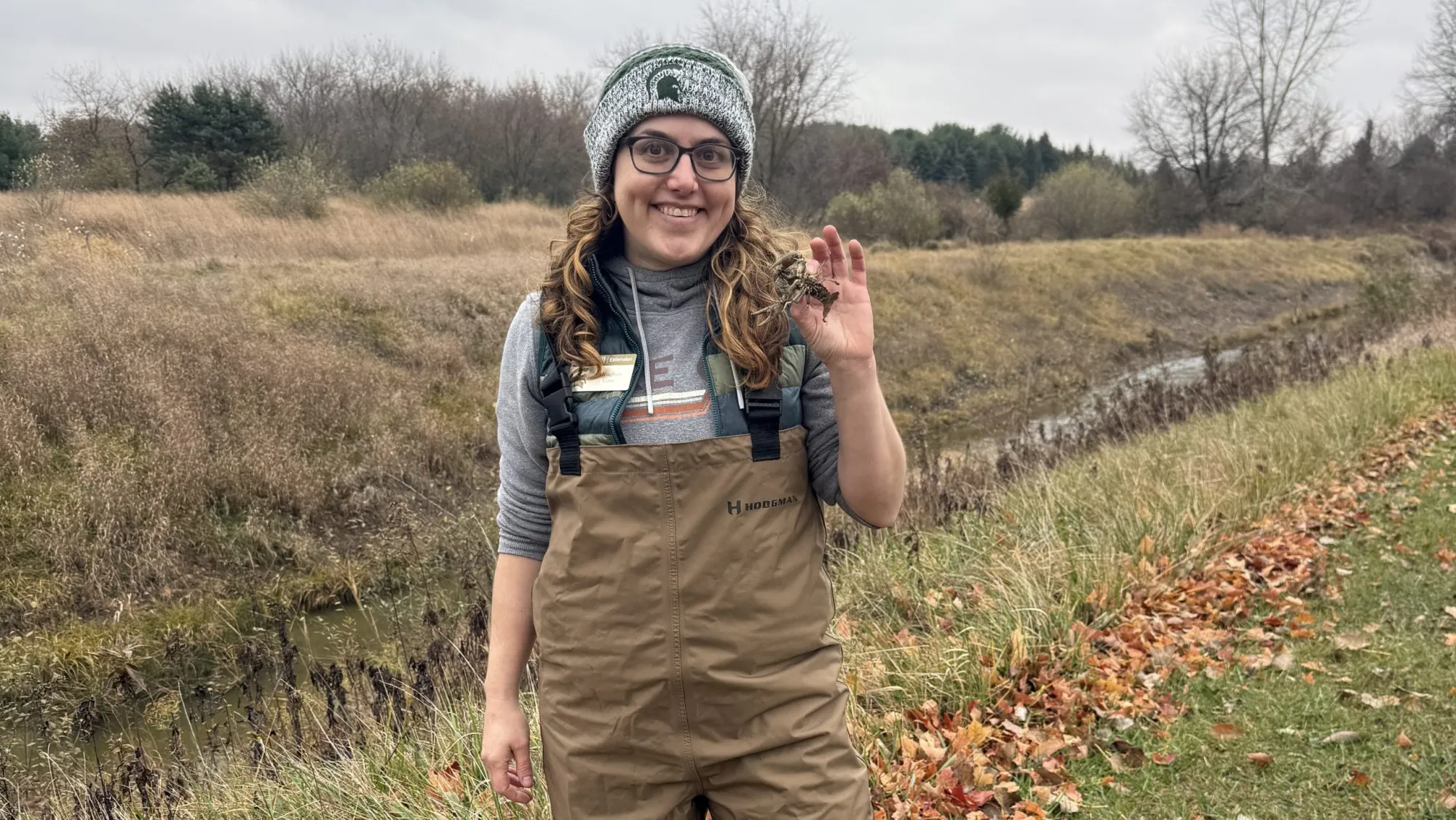
Meaghan Gass, an Extension educator based in Bay City, knows firsthand the value of that human connection. She’s answered plenty of Ask Extension questions over the years, but a recent one stands out.
Someone had snapped a photo of a crayfish and needed help identifying it.
Google’s AI search engine would have responded unequivocally (but potentially incorrectly) that the animal is a rusty crayfish. Gass knows because she checked.
But, because Gass also knows Michigan’s crayfish well, she noticed a detail AI had missed: The photo didn’t show the crayfish’s claw, a visual cue needed to make a positive species identification.
So she gave the inquirer a list of possible species, along with pointers about how to tell the difference and a field guide to help them ID the next crayfish they come across.
“You don’t get that deep-dive from a review in AI,” Gass said. “Anything can get pulled up and used to answer the question, and not every resource online is a good resource.”
The service has answered more than 500,000 questions to date. All are publicly available in an online archive.
Gass admits it might be faster and more convenient to simply plug questions into a search engine that spits out near-instantaneous results. But, so long as people see value in human expertise, she’s confident there’ll be a place for her work.
“That connector role is just so important,” she said. “I think it’s more important than ever.”
Catch more news at Great Lakes Now:
A Michigan town hopes to stop a data center with a 2026 ballot initiative
Featured image: MSU Extension educator Meaghan Gass poses with a rusty crayfish. In the era of AI and online influencers, the extension is seeking to distinguish itself with a human touch. (Courtesy of Meaghan Gass)