


By Richelle Wilson, Wisconsin Public Radio
This article was republished here with permission from Wisconsin Public Radio.
Paul Ehorn started scuba diving as a teenager in the early 1960s. On his first dive, he was wearing a self-assembly wetsuit he purchased from a Montgomery Ward catalog for $28.
“The water’s cold, probably the low 40s, and I came up just shivering uncontrollably,” Ehorn told WPR’s “Wisconsin Today.” “All I could say was, ‘How long before we can go back in?’”
“I was hooked. That was it,” he added. “It just became a passion and obsession.”
After that, it wasn’t long before Ehorn picked up some sonar gear and started what would become a lifelong career as a shipwreck hunter. Now 80 years old, he has discovered 15 shipwrecks in the Great Lakes.
His latest find, which he announced to the public in February, is Lac La Belle, a luxury steamer that sank in Lake Michigan more than 150 years ago. The ship has been on Ehorn’s radar from the beginning due to his interest in wooden steamers and because it’s “close to home,” he said in the press release.
After nearly 60 years of searching, Ehorn got the clue he needed and finally located the sunken wreckage about 20 miles offshore between Racine and Kenosha.
“It was just a wonderful day,” Ehorn said. “Beautiful wreck, it turned out.”
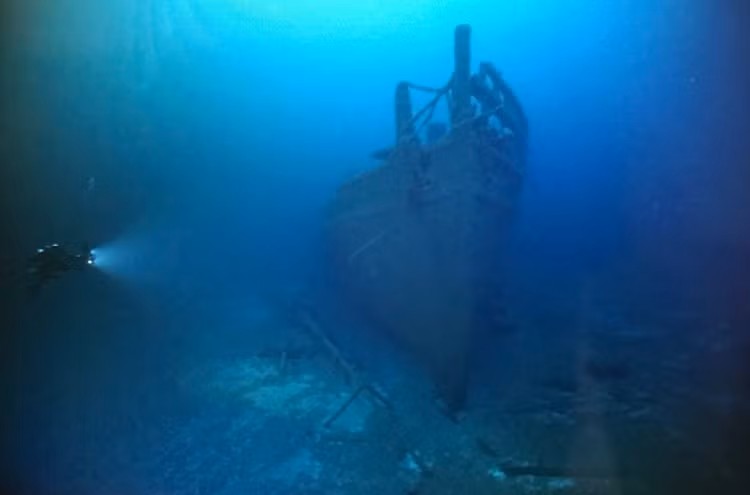
Ehorn and his crew first found the wreckage of Lac La Belle in 2022, but he waited to publicly share his discovery until conditions were right to go down for a dive to film the ship and create a 3D model. Documenting the shipwreck is an important part of the process to educate the public and give historians a unique view into the past.
“All of our wrecks on the Great Lakes have a shelf life — they’re not going to look like this in 100 years,” said Brendon Baillod, president of the Wisconsin Underwater Archaeology Association. “I have to commend Paul for really wanting to do that photogrammetry model, because that’s a good standard for recording exactly how that wreck was at the time he found it.”
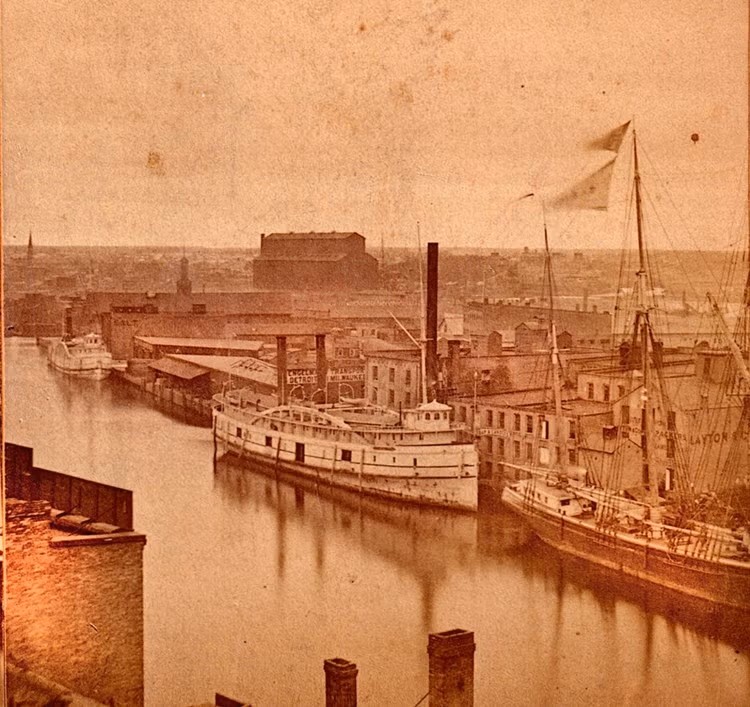
As a maritime historian, Baillod has researched a number of Great Lakes shipwrecks. His book “Fathoms Deep But Not Forgotten: Wisconsin’s Lost Ships” includes an entry for Lac La Belle that details its history carrying passengers and cargo — first between Cleveland and Lake Superior starting in 1864, and later on a trade route between Milwaukee and Grand Haven, Michigan.
On Oct. 13, 1872, the ship sank a couple hours after departing Milwaukee due to a leak that sprung during a storm. The ship was carrying cargo and 53 passengers. Eight people died after one of the lifeboats capsized.
“The Lac La Belle is a time capsule. It’s an underwater museum from 1872,” Baillod told “Wisconsin Today.” “It played such a pivotal role not just in the industrialization of America, but in Milwaukee’s history.”
A ‘golden age’ of shipwreck discovery
The Great Lakes are home to an estimated 6,000 to 10,000 shipwrecks, most of which remain undiscovered, according to the Wisconsin Water Library.
But more of these sunken ships are being found, Baillod said, due to advancements in affordable technology and with the help of citizen scientists who are becoming more aware of shipwreck history.
“It’s kind of the golden age, I guess you might say, of shipwreck discovery on the Great Lakes,” he said, “and a tremendous opportunity for us to tell the stories of these ships that played such a huge role in the cultural history of the Midwest, and Wisconsin in particular.”
And the race is on to find more of these wrecks, as invasive quagga mussels congregate around shipwrecks and damage what remains.
For shipwreck hunters, the mussels are a double-edged sword: Despite the damage they cause, the mussels also are clarifying the water, making shipwrecks easier to spot. Whereas Lake Michigan used to have only about 5 or 10 feet of visibility underwater, now divers have a much clearer view.
“We called it ‘Braille diving.’ You’d go down and you’d have to get within a couple of feet of the shipwreck,” Baillod said. “Now, you go down there and you can see sometimes 50, 80, 100 feet — you can see the whole ship.”
While that has created opportunities for “beautiful underwater photos of these shipwrecks” and raised public awareness, Baillod said, the quagga mussels are ultimately decimating the food web and changing Lake Michigan’s biome, leading to the collapse of native species like whitefish.
Baillod is one of the founders of the Ghost Ships Festival, an annual community event to promote research, education and public awareness of Wisconsin’s shipwreck history. This year, the event is being held in Manitowoc on Friday, March 6 and Saturday, March 7 and includes a presentation from Ehorn about his discovery of the Lac La Belle.
“We’re trying to educate the public about the Great Lakes maritime history and about the role these ships played in building America back in the 1800s,” Baillod said. “And we’re having a lot of success — people are learning about it.”