
By Christian Thorsberg, Circle of Blue
The Great Lakes News Collaborative includes Bridge Michigan, Circle of Blue, Great Lakes Now at Detroit PBS, Michigan Public and The Narwhal who work together to bring audiences news and information about the impact of climate change, pollution, and aging infrastructure on the Great Lakes and drinking water. This independent journalism is supported by the Charles Stewart Mott Foundation. Find all the work HERE.
In early August, days after thousand-year rain fell on southeastern Wisconsin, officials waded through the devastation’s wake — and liked what they saw.
Beyond the overflowing banks of the Little Menomonee River, which surged six feet in less than 10 hours, floodwaters were deep enough to support swimming beavers and waterfowl. On farmland near the northern border of Milwaukee, 70 acres of standing rainwater overtopped boots. Further south, in the town of Oak Creek, another 114 acres of public grassland resembled an aboveground pool.
These inundated sites worked exactly as intended. All were purposefully restored wetlands, which are often called “nature’s kidneys” for their ability to absorb excess water that would otherwise cause harm to infrastructure, homes, and sewage systems during storms.
“Water needs space to expand, to flow,” said Kristin Schultheis, a senior project planner with the Milwaukee Metropolitan Sewerage District (MMSD). “It’s not destructive when it has its room.”
The three locations were recently completed Greenseams projects, a flood mitigation program that acquires and protects undeveloped wetlands. The effort is a testament to a long-standing cohesion of environmental policy, dedicated funding, and sound climate science in Wisconsin.
Over 25 years, Greenseams has applied $30 million in state and federal grants to conserve 5,825 acres of wetlands in the Milwaukee area. Their collective storage capacity totals 3.2 billion gallons of water. Though neither MMSD nor the state Department of Natural Resources (DNR) quantified the role wetlands played in August’s storm, the Union of Concerned Scientists estimate these natural floodplains prevent $4.56 billion each year in flood-related damages in Wisconsin.
“As catastrophic as the flooding was, it would have been so much worse without the investments that MMSD and others have made,” Democratic state Rep. Deb Andraca told Circle of Blue.
Despite these benefits, Wisconsin’s wetland development program is in serious trouble, just as they are in other Great Lakes states. On both the state and federal levels, legislation that safeguards surface waters that produce wetlands is eroding. A lapse in federal disaster assistance means the importance of local, preventive action has never been greater.
This week, wetland protections took an additional, drastic hit on the federal level. The Trump Administration’s EPA and Army Corps of Engineers proposed new rules that would strip protections for up to 85 percent of the country’s wetlands, totaling 55 million acres.
“We’ve forgotten that we have clean water because of the Clean Water Act,” Jim Murphy, the National Wildlife Federation’s senior director of legal advocacy, said in a statement. “This rule would further strip protection from streams that flow into the rivers and lakes that supply our drinking water. The wetlands now at risk of being bulldozed filter our water supplies and protect us from floods.”
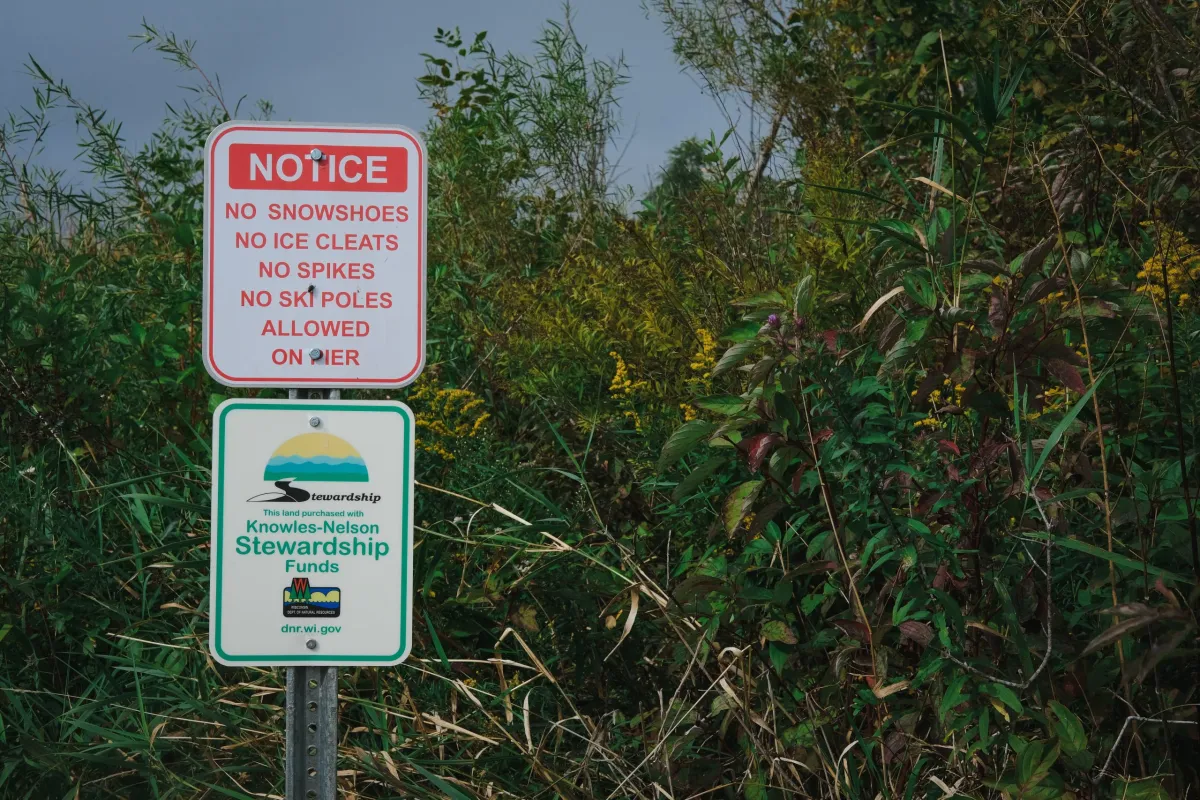
And a funding source in Wisconsin specifically intended to conserve land that can be used to produce new wetlands — called the Knowles-Nelson Stewardship Fund — faces an uncertain future in the state Legislature.
Created in 1989, the state has invested more than $1.3 billion into the stewardship fund. As of 2020, more than 90 percent of Wisconsin residents lived within a mile of property that received Knowles-Nelson investments. A significant portion of these projects have gone to wetland restoration. Of the $30 million MMSD has spent on lands for Greenseams wetlands, $7 million has come from the Knowles-Nelson fund.
But amid ongoing tensions between Gov. Evers, a Democrat, and the Republican-led Wisconsin Senate, the new two-year state budget, signed in July, did not renew the Knowles-Nelson Stewardship Fund.
Both Republican and Democratic lawmakers have introduced dueling bills this legislative session to save the fund, which would otherwise expire in 2026 and leave a massive financial hole for environmental groups.
“It’s just another example of partisanship getting in the way of a project that we know so many Wisconsinites like,” Rep. Andraca said. “I get more mail on Knowles-Nelson than anything else, from people wanting to save it.”
A Wetter Climate Means Future Flooding
Added up, the flurry of changes amount to weakening government support for conserving existing wetlands and developing new ones. It couldn’t come at a worse time.
Fueled by warmer air lifting water into the atmosphere, climate change is projected by century’s end to dump 6 more inches of annual rainfall on Great Lakes states, according to NOAA data.
In Wisconsin, precipitation has already increased by 20 percent since 1950, and is expected to continue to rise. The likelihood of flooding remains high, with these deluges predicted to come in erratic, concentrated bursts.
But the landscape now is ill-suited to receive more moisture. Across the Great Lakes basin, floodplains have been overwhelmingly filled, to communities’ detriment. Recent damaging floods in Indiana, Ohio, and Illinois — which have each lost between 85 percent and 90 percent of their own historic wetlands — serve as a costly reminder of this change.
Wisconsin, which has retained roughly half of its wetland cover since pre-colonization, now finds itself at an uncertain tipping point. Decisions made today will affect lives during the next great deluge.
“I think everyone should have a new appreciation for wetlands. We need to recognize that making small investments helps all of us,” Rep. Andraca said. “If we’re cutting back on basic science, staff, and people who have expertise, we’re not going to make smart decisions, and that’s going to impact everyone down the road.”
Communities Left ‘On Their Own’ After Floods
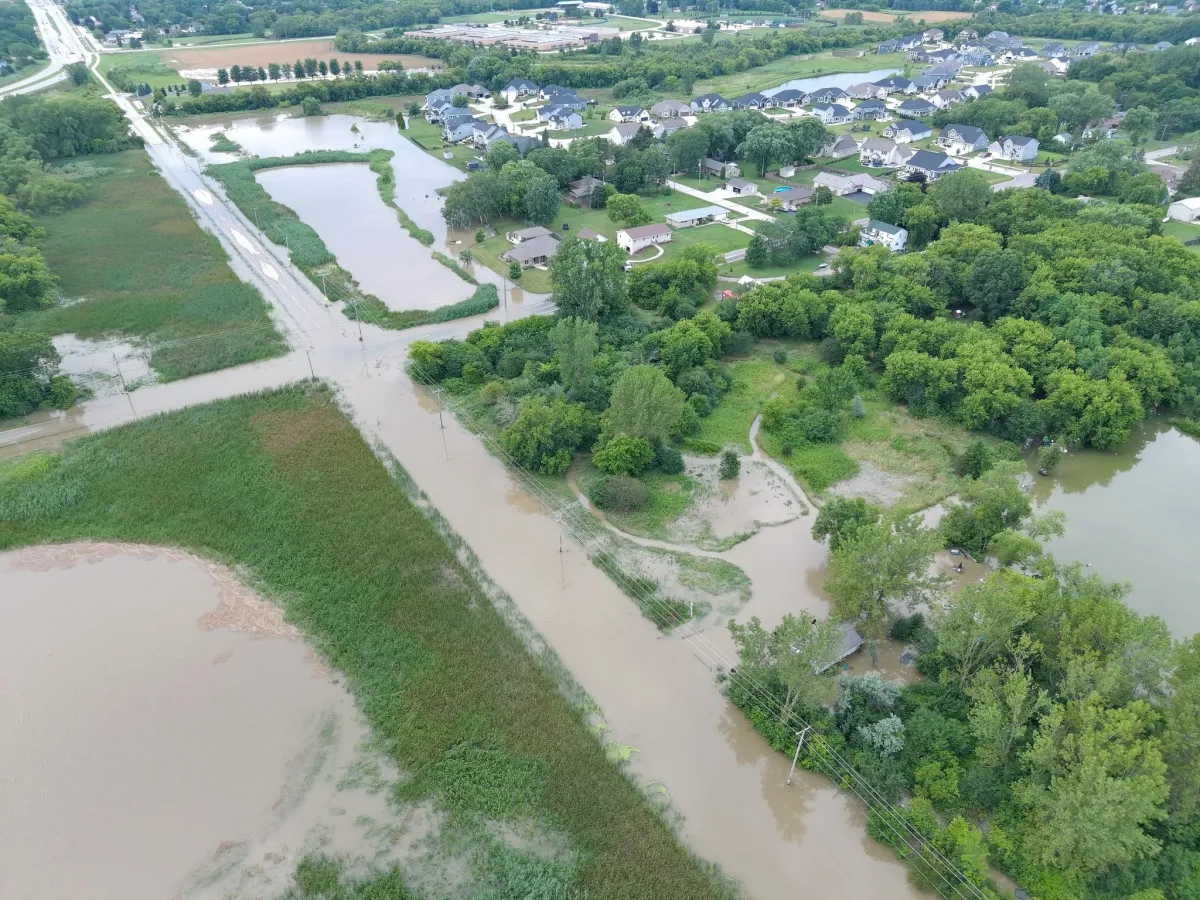
In Milwaukee-area neighborhoods without substantial floodplains, August’s storm and subsequent flash flooding prompted emergency evacuations and swift-water rescues. Crop fields submerged. Cars deteriorated in city lots. Suburban roads were made inaccessible. Nearly 50,000 residences and businesses across six counties lost power.
After the storm, Gov. Evers estimated the flooding had caused at least $33 million worth of home damages alone, with another $43 million accrued in public sector losses. Later that month, he requested $26.5 million in federal assistance.
The governor’s appeals for assistance were denied. The Trump administration has apparently politicized FEMA’s disaster aid programs. In a reversal from earlier commitments made by the Trump administration, FEMA announced in October it would halt all aid for the state the president flipped red in the 2024 election. Of the six counties in need of funds, two — Milwaukee and Door — voted Democrat that year.
“Denying federal assistance doesn’t just delay recovery, it sends a message to our communities that they are on their own,” Evers, who has recently feuded with Trump over immigration policy and other spending cuts, said in a statement.
The denial stands out amidst a backdrop of recently approved flood-assistance packages for Republican-led Missouri, Nebraska, North Dakota, and Alaska.
FEMA “categorically refutes” that their funding follows partisan lines. This month a coalition of 12 states — including Michigan and Wisconsin — filed suit against the agency and Department of Homeland Security for restricting grants, an act amounting to what they say is “an inconsistent patchwork of disaster response across the Nation.”
They also accused the agency of slowly unloading the responsibility of disaster financing solely onto states altogether, a move that magnifies the importance of local momentum for pre-emptive flood mitigation.
“In southeast Wisconsin in particular, this issue exemplifies how the protection or lack of protection in an area can impact such a wide swath of stakeholders,” said Tressie Kamp, assistant director of the Center for Water Policy at University of Wisconsin-Milwaukee.
State and Federal Protections Weaken
For the better part of the last 20 years, wetlands in Wisconsin were doubly protected by both state and federal environmental legislation. But key changes on both levels, in quick succession, have left thousands of acres of floodplains vulnerable to filling.
The first action came in 2018, when the Wisconsin Legislature introduced an exemption in state law allowing for the filling of wetlands that were not protected by the federal government. At the time, this constituted a relatively small amount of habitat in Wisconsin.
But this change had massive consequences just a few years later, when, in 2023, the U.S. Supreme Court significantly rolled-back its definition of federally protected waters. Suddenly, wetlands in Wisconsin and across the country that were not permanently connected to a navigable stream, river, or lake were legally eligible to be filled.
In the two years since this decision, officials in Wisconsin have noted developers taking advantage of its large swath of unprotected areas. “It makes it easier [to fill wetlands] when there’s only one entity regulating it,” said Chelsey Lundeen, the wetlands mitigation coordinator for the Wisconsin DNR.
The U.S. Army Corps of Engineers determines if a wetland is eligible to be filled. According to Joseph Shoemaker, the Corp’s Wisconsin East Branch Chief, Section 404 of the Clean Water Act — which pertains to wetland filling or dredging — is now “the most common reason people request that we review federal jurisdiction over aquatic resources,” he said.
Between 2018 and 2022, the number of acres of wetlands filled steadily rose each year, from 2.5 acres to 40 acres, according to Kamp. This rise is likely to continue, she said, as the Army Corps streamlines their permitting processes.
In January, the matter was addressed with even greater haste when President Trump issued an executive order directing the Corps to speed up its review for filling wetlands, encouraging more development projects.
The southeast region of Wisconsin, which receives the highest number of requests, is particularly vulnerable to these fillings, said Tom Nedland, a wetland identification coordinator with the Wisconsin DNR. “As the state’s largest population center,” he said, “development pressure is high.”
Reliable Funding Sources Disappear
The state’s looming loss of the Knowles-Nelson Stewardship Fund is magnified by the Trump Administration’s freezing and outright cancellation of hundreds of millions of dollars of federal grants for conservation initiatives.
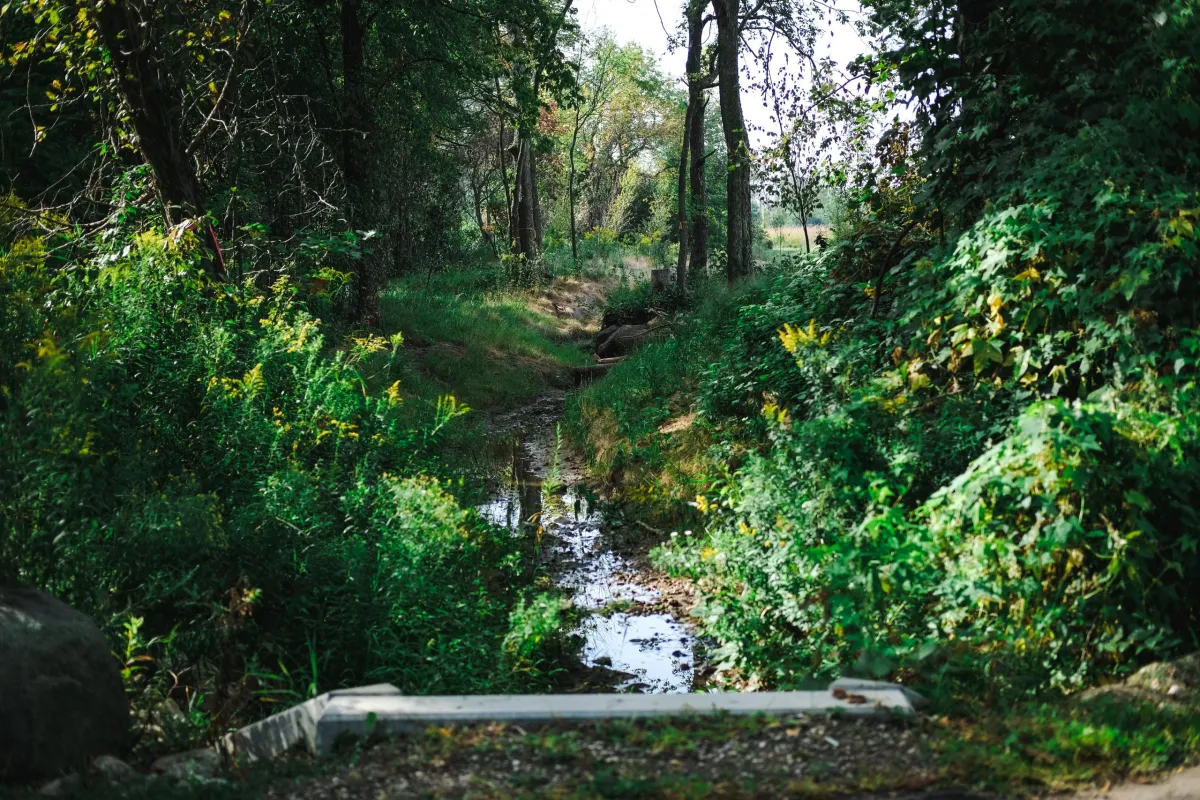
In Ozaukee County, several wetland restoration projects — completed just before August’s historic flooding, supported by the federal Great Lakes Restoration Initiative — are telling examples of what might be missed during the next great deluge.
Wetlands at Mineral Springs Creek, Mequon County Park and Golf Course, and the Little Menomonee Fish and Wildlife Preserve all showed “proof of concept” this summer, said Andrew Struck, the county’s director of planning and parks.
“We didn’t get any complaints about flooding that we were constantly hearing about,” Struck said. “We retained a good amount of water during that event…so I think we’ve seen that as being very successful.”
But big challenges lay ahead, with potentially devastating consequences. For county neighbors living along Lake Michigan’s shoreline — where unchecked drainage and stormwater runoff are causing erosion and slumping — the future of wetland restoration could very well determine the fate of their properties.
“We’re also trying to do some of this work on private lands,” Struck said. “We have a comprehensive goal of managing the water, and also managing infrastructure. But we face a lot of challenges. Funding is disappearing from the landscape.”
Catch more news at Great Lakes Now:
Intense rainfall means more floods. What can we do?
This wetland fight could go to the Supreme Court
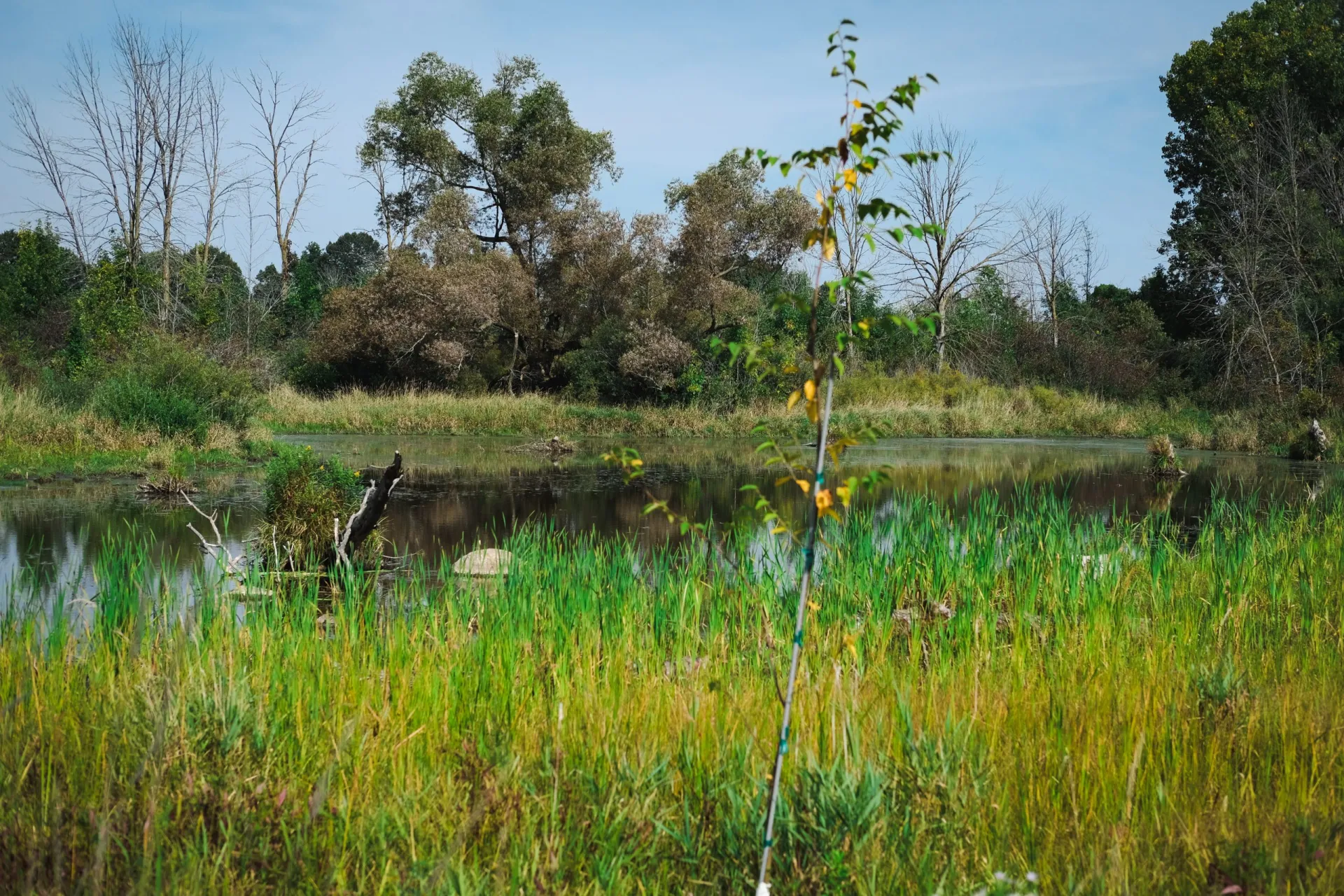
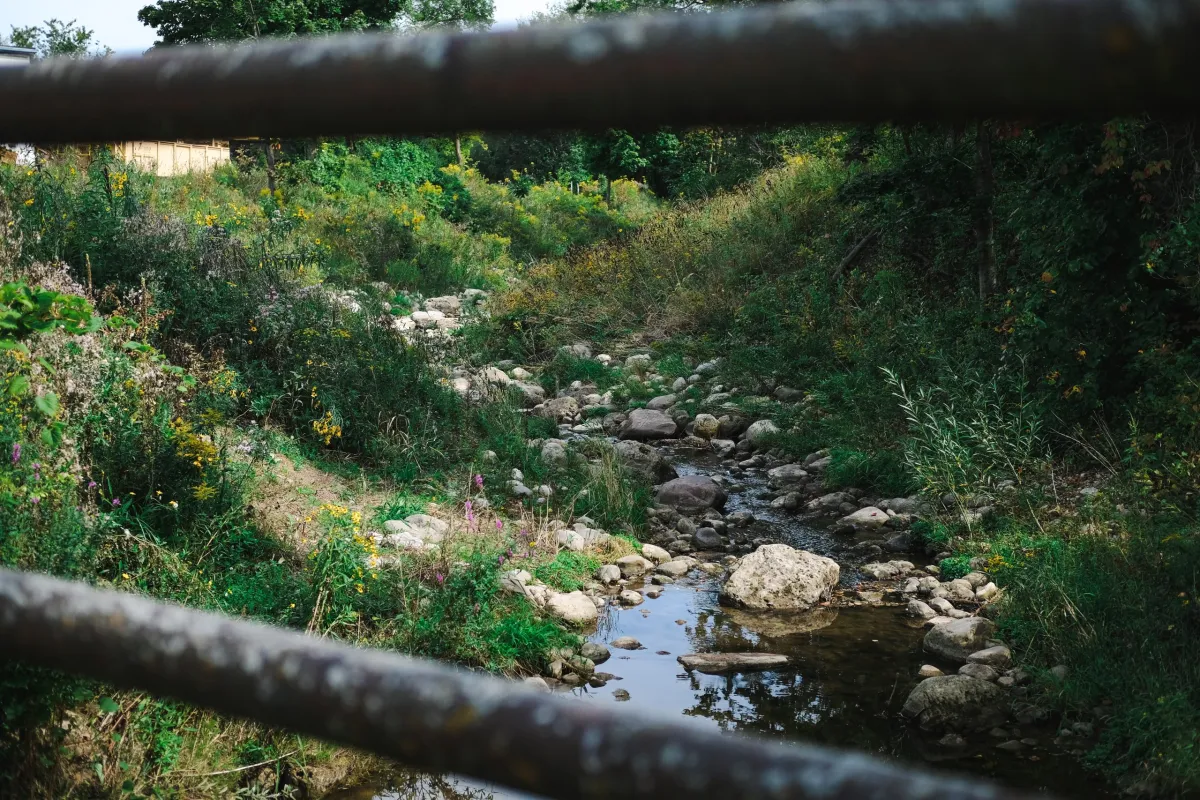
Featured image: Wetlands at Tendick Nature Park in Saukville, Wisconsin. Photo by Christian Thorsberg/Circle of Blue.