
By Nina Misuraca Ignaczak, Planet Detroit
This article was republished with permission from Planet Detroit. Sign up for Planet Detroit’s weekly newsletter here.
Lead exposure remains a serious health risk in Michigan, but many residents don’t know whether their water system complies with state rules or whether their service line contains lead.
Utilities must notify customers of sampling results and the presence of lead or galvanized lines. Yet, these notices don’t always reach people — leaving families unsure about their potential exposure and what steps to take.
Depending on where you live in Michigan, you may have recently received updates from your water utility about compliance with state and federal Lead and Copper Rule requirements.
Most utilities completed their annual lead and copper sampling by Sept. 30, and Michigan regulators have since notified communities that exceeded the lead action level. If you live in one of those areas, you should have been told.
Utilities must also notify all residents served by lead, unknown, or galvanized-previously-connected service lines. You should have received this notice last November, and the next round is due by Dec. 31.
Michigan is simultaneously working to remove an estimated 580,030 lead and galvanized service lines statewide. About 11% — roughly 69,891 lines — were replaced from 2021 to 2024. Progress varies by water system, and many still lack complete inventories or are behind on required reporting.
To help residents see the whole picture, Planet Detroit and Safe Water Engineering created the Michigan Lead Service Line Tracker. This statewide dashboard shows how much progress each water system is making in identifying and replacing lead service lines. This guide explains what the dashboard includes, how to use it, how to protect yourself from drinking water risks, and what to do if your community is not keeping pace with Michigan’s Lead and Copper Rule.
The Michigan Department of Environment, Great Lakes, and Energy (EGLE) releases lead sampling data on a separate timeline, so limited information is available: the full set of 2024 compliance results and the 2025 action-level exceedances.
Without a complete 2025 dataset, we chose not to include 2025 sampling results in the dashboard at this time. Stay tuned for future updates as more data becomes publicly available.
Why this matters
Lead exposure remains a major environmental health threat across Michigan. Lead is a well-documented neurotoxin with no safe level of exposure. Even small amounts can affect learning, behavior, and long-term health. Planet Detroit’s reporting has highlighted several statewide concerns:
- Children face the greatest risk. Lead can harm brain development, lower IQ, and affect attention and learning. Infants who consume formula mixed with contaminated water are particularly vulnerable.
- Pregnant people are also at higher risk. Lead exposure is linked to high blood pressure, premature birth, miscarriage, and reduced fetal growth.
- Adults can experience cardiovascular and kidney impacts. Long-term exposure is associated with hypertension, decreased kidney function, and increased risk of heart disease.
- Exposure often tracks with inequity. Many of the state’s highest concentrations of lead service lines — and some of the slowest replacement rates — are in communities that have faced historic underinvestment.
- Installation work can temporarily increase lead levels. Disturbing old pipes during replacement can cause short-term spikes, underscoring the need for filters and clear public communication.
Michigan’s 20-year replacement mandate is designed to reduce these risks, but the pace of removal varies, and residents often struggle to get clear information about what’s happening in their communities.
Many drinking water systems still have thousands of known or suspected lead lines, and some continue to exceed state or federal lead limits. Planet Detroit’s reporting has shown:
- Significant regional differences in replacement speed, with some systems moving quickly and others reporting little to no progress.
- Inconsistent public notification, including instances where residents weren’t told about lead exceedances, construction schedules, or mandatory notification that a lead or unknown service line serves a home.
- Higher risks in historically under-resourced communities, where lead lines and aging infrastructure tend to be concentrated.
Checking the dashboard is one of the simplest ways for residents to understand how their water system is performing under Michigan’s 20-year replacement mandate.
How to use the lead service line dashboard
Follow these steps to look up your water system and interpret what you’re seeing.
1. Start at the search bar
In the middle, click Search Systems and type the name of your water system — usually a city, township, or regional authority. Select it from the dropdown to open its profile.
2. Review your system’s profile card
Each water system has a standardized card with key information required under Michigan’s Lead and Copper Rule. The card shows:
- Population Served: The estimated number of people receiving water from the system.
- Known Lead Lines: Service lines confirmed to be made of lead. These are the highest-priority lines for replacement. Example: 1,999 lead lines.
- Lines Replaced: The number of lead or galvanized lines that have been removed and replaced with safer materials between 2021 and 2024.
Example: 96 lines replaced.
- Galvanized (GPCL) Lines that are galvanized steel but were previously connected to lead pipe. These are considered “galvanized requiring replacement” under federal rules.
- Unknown Material Service lines where the material is not yet confirmed. To protect your health, these should be treated as though they are lead until they are confirmed to be a non-lead material.
- Total to Be Identified and/or Replaced: The combined number of known lead lines, GPCL lines, plus all unknowns that must be resolved through inspection or replacement.
- Replacement Progress: The percentage of replacements completed between 2021 and 2024. During this four-year period, water systems were required by the Michigan Lead and Copper Rule, as enforced by EGLE, to complete an average of 20% of their total lead service line replacements.
- Compliance Status: Indicates whether the utility has met state inventory and reporting requirements. Systems that have replaced at least 20% of the required lines between 2021 and 2024 are compliant.
This card is your quick snapshot of how well your water system is doing compared with state requirements and nearby communities.
3. Check the statewide map for context
The map shows systems by color:
- Green: Compliant
- Red: Not compliant
If your system appears in red while neighboring systems are green, that may signal slow progress or reporting problems.
4. Look for missing or incomplete data
If the card shows large numbers of unknown materials, low replacement counts, or a noncompliance flag, the system may be struggling to meet Michigan’s 20-year replacement mandate. A large, future project can bring a water utility into compliance.
The sooner the lead pipes are removed, the sooner the residents experience the public health benefits.
What the numbers mean for your household
- Lead or galvanized lines: These carry the highest risk of lead release, especially during construction or partial replacements.
- Unknown lines: To protect your health, treat these as lead until they are confirmed to be non-lead materials. Many Michigan systems still have thousands of unknown materials.
- Low replacement progress: Systems with single-digit progress may struggle to meet Michigan’s 20-year requirement, leaving residents with long wait times and extended exposure to lead in drinking water.
- Exceedances: If your system exceeds the lead action level, it must accelerate replacement and notify residents.
If your water system has a high proportion of lead or unknown lines, or if you know or think you have a lead service line, request or purchase a certified lead-reducing filter. The Michigan Department of Health and Human Services has some filter distribution programs targeted to specific communities in Michigan. You can also check whether your service line is lead using your utility’s inspection program.
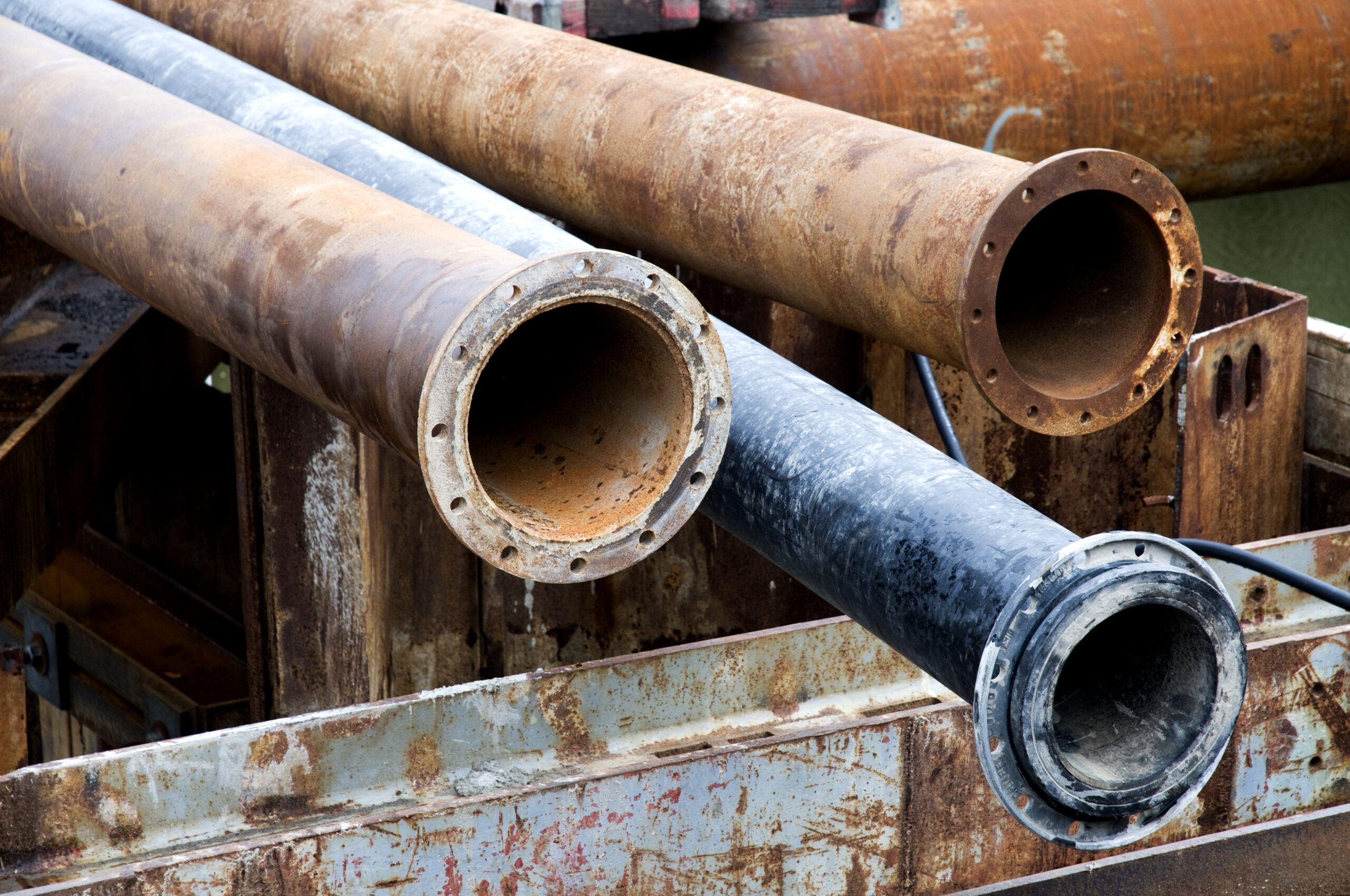
Featured image: Close up shot of some metal pipes. (Photo Credit: iStock)