
A new study between researchers at the University of Michigan and Wayne State University, looked at suicide rates in metropolitan areas around the United States. When looking at data from 2000 to 2018, they found a direct correlation to rises in seasonal pollen. While it is still unknown how exactly allergies work as a tipping point for some people, the research adds to a burgeoning body of work that shows this parallel exists.
With suicide rates in the U.S. increasing by 37% the last two decades, researchers said this information could help give mental health providers a more holistic view on how to support their patients. Structural factors in suicide have been extensively studied, according to Joelle Abramowitz, an associate research scientist at University of Michigan’s Institute for Social Research. However, small “exogenous shocks” like allergies that can act as a tipping point, have not been studied as extensively.
To learn more about this study and what inspired the research, Great Lakes Now recently sat down with Abramowitz, one of the researchers from this study. This interview has been edited for clarity.
GLN: I’m curious what brought you to this study? How did you get involved?
JA: Some of my prior work had been looking at mortality rates, specifically at maternal mortality and also looking at suicide. And my colleague, Shooshan Danagoulian, who’s at Wayne State, had been looking at pollen. She had some prior work that was looking at the effect of pollen on crime rates, and they found some effects there, that people seem to be less likely to commit crimes on high pollen days, with the thinking that when people don’t feel well, they don’t go out and commit crimes.
We had seen some other literature that looks at the effects of pollution and also at wildfire smoke on suicides, and then also at [extreme] heat on suicide rates. And so we thought we should explore the effect of pollen as well, given that it also could have cognitive effects in the same way that other sorts of pollutants do.
GLN: Really quickly, the other studies that correlate wildfire smoke, pollution or heat, was there a sort of correlation with those things and suicide rates?
JA: There was, so across all of these, we’ve seen significant effects of these different environmental factors on suicide rates. That all of those lead to increased suicide rates.
GLN: What did you discover in this study?
JA: So we were trying to examine this relationship between high pollen days and effects on deaths by suicide. There are some other studies that have looked at relationships between pollen and suicide, but we are the first study to be able to look at that across 34 localities around the U.S., and using the daily data.
GLN: I know in the study, it suggests that the physical discomfort of allergies may trigger this. Do we know, is it the discomfort? Or, is it something else that you’re going to investigate in another study?
JA: Certainly in future work we want to be able to isolate some of these mechanisms more. So we know that as a result of allergic reactions to pollen, that people can have physical symptoms like sneezing, itchy eyes, runny nose, not being able to sleep well. And all of these physical effects can also affect mental health, and we’ve seen effects on cognitive function as a result of pollen.
There could be other biological pathways related to the inflammation, broadly speaking, and the effects that, that can have. Another piece that we’d love to look at that we weren’t able to look at in this paper is how the use of antihistamines plays into this relationship.
We set up this model in the paper where we talk about a framework where people have a certain…we’ll call it a “mental health shock.” And you know, if someone is close to their mental health capacity, and then there’s even a small shock, then that could push them into a realm where they’d be considering suicide.
We think about this as small triggers that could have a big effect. In general, we might think that if you have a relationship breakup, or you lose your job, or something like this, that these are the kinds of things that we should worry about someone and their mental health. But I think a takeaway of this paper is that it’s not just the big things, like a small shock could have a big effect, especially for someone that might already be on the margin with their mental health.
GLN: Could you explain a little bit more about what an exogenous shock is?
JA: So when we think of an exogenous shock, what we’re thinking of is something that’s coming from outside. We’re aiming to get at this question of causality, right?
For example, if we were looking at pollution, we would worry that areas with high pollution, or if there’s more economic activity, then there’s more pollution. And so we can’t really see the effect of the pollution itself, because there are all these other factors that are tangled up with the pollution.
With the question of pollen, it’s a little bit of a different question, because it’s not man-made; it’s naturally occurring. And so we can think of the daily variation in pollen as reflecting what we would call an exogenous shock. It’s not tied up in these other factors that might be driving someone’s mental health.
GLN: How could this inform public health or city planning going forward, knowing information like this?
JA: So, thinking about communicating more to people, first that there is this relationship. Because if you don’t know about it, you can’t even think to do anything about it, or that it should be on your radar to worry about.
Something that we learned in the course of this, talking with other researchers at U-of-M who study pollen, is that when you open your weather app and it says today’s pollen is higher than yesterday, that those estimates are proprietary and they’re not necessarily very accurate.
There have definitely been days where people are around me having very severe reactions to pollen, but the app says there’s no pollen. I think one piece is, could we have better or more transparent measures of pollen? Or, think about how we could better measure that and better communicate that to people. In the same way that when it’s a really hot day and there’s a heat advisory it tells you that maybe you should make sure you have water and you’re in a cool environment, that you can have the same kind of notification about pollen. And then also make sure you think about your mental health as well, not just your sneezing and runny nose.
GLN: Is there any kind of connection between the role of histamine and the immune response that could potentially be a tipping point for people when they’re experiencing high pollen days?
JA: That is the biological mechanism, that you’re having this allergic reaction, so your body’s releasing the histamine that’s causing inflammation, and then that leads to all these other symptoms. So, that could be inflammation throughout your body, that could then cause these effects. So, I think that’s really the driving mechanism, is the histamine.
One of the studies that we reference in our paper shows that among people who have died by suicide, that there is an increased history of allergies among those people. And so, back to your question about histamine, it seems like there is some sort of biological pathway that’s putting people at a greater risk that are more sensitive in this way. So we haven’t explored that, but that’s something that’s been found in the literature.
Catch more news at Great Lakes Now:
Heat waves and cold snaps: Study finds the Great Lakes have entered an era of extremes
Toxic algae blooms are lasting longer in Lake Erie — why that’s a worry for people and pets
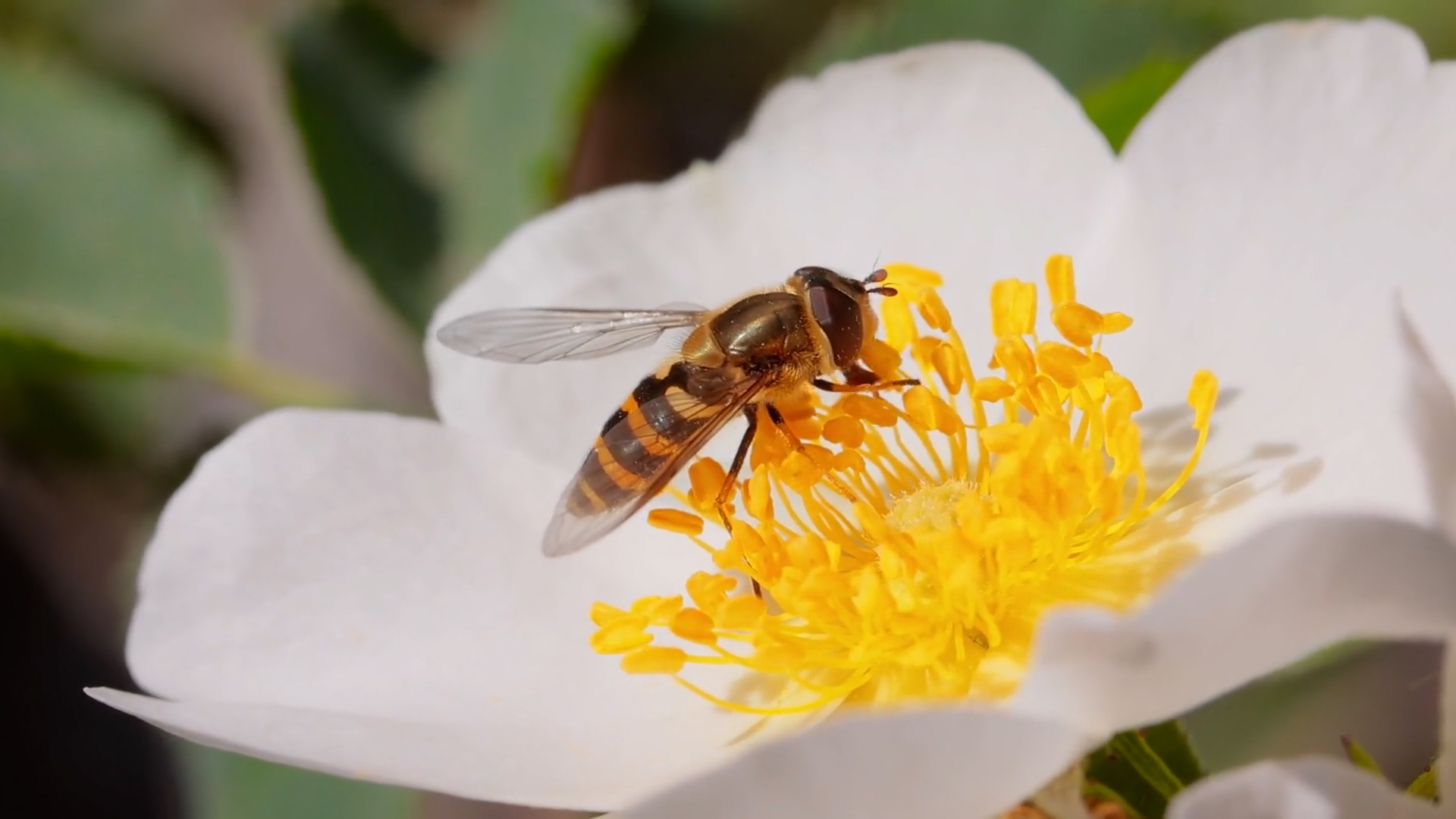
Featured image: Pollen season is getting worse as climate change intensifies. (Photo Credit: Storyblocks/GLN)