
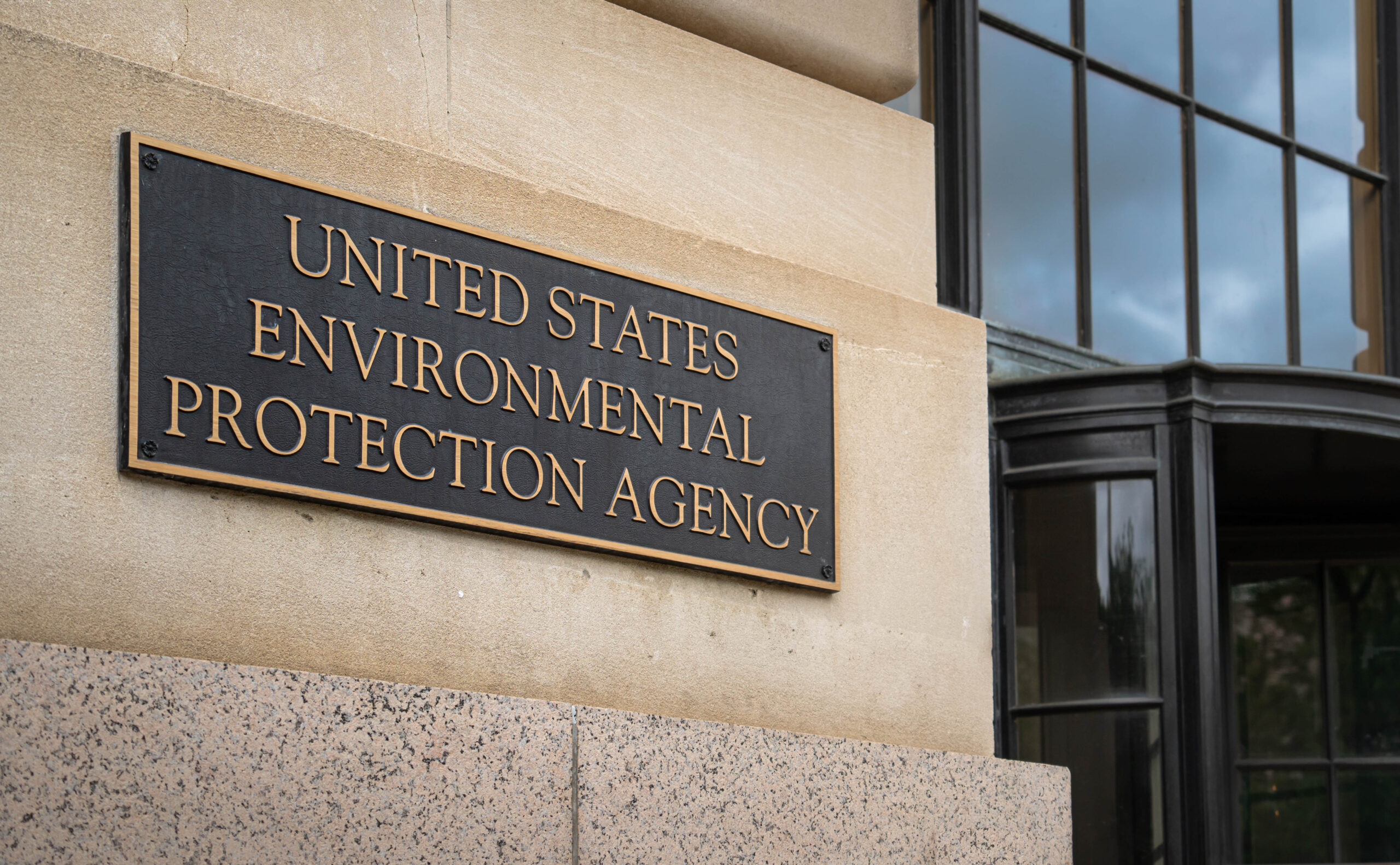
The administration of President Donald Trump acted quickly and unilaterally when it launched its blitzkrieg to dramatically downsize and alter the mission of the United States Environmental Protection Agency (EPA).
There were no bureaucratic task forces, collaborations or obligatory outreach sessions to the public for comment before taking action.
A chainsaw approach was taken to the agency, founded in 1970 under a Republican president, Richard Nixon. The result of this approach is a 54% budget cut for the EPA and the elimination of over 1,000 staff positions.
Among the changes, climate initiatives were rolled back, funding for clean water programs was slashed and environmental justice programs were rescinded.
Then, Trump’s pick to run the agency, Lee Zeldin, rolled out a new mission statement, “Powering the Great American Comeback.” The content prompted one Great Lakes advocate to say it is more about economic development than environmental protection.
To sort out how the Great Lakes region can best react to the Trump EPA’s shock treatment, Great Lakes Now reached out to Chicago’s Cameron Davis. He is currently an elected commissioner for greater Chicago’s Metropolitan Water Reclamation District that serves over 5 million people
Davis has long-been in leadership positions for non-profit groups that advocated for the Great Lakes. In 2009, he joined the EPA in the Obama administration, serving as a senior adviser to the administrator for Great Lakes issues.
The interview was conducted via email and was edited for length and clarity.
Great Lakes Now: The Trump EPA under Administrator Lee Zeldin has undergone change like it hasn’t seen in its 55-year history. It’s facing an unprecedented budget cut for the fiscal year 2026 and a staff reduction of over 1,000. Its mission has been rewritten to the point that one Great Lakes advocate said it reads like an economic development plan. How does that compare to the early days of 2017 in Trump’s first term?
Cameron Davis: The difference between now and then is that in Trump’s first term, we had a Congress that was more willing to resist proposed budget cuts. Now, we have an opossum Congress: it rolls over and plays dead instead of facing its aggressor. These budget cuts will have real-life consequences for our communities but we may not appreciate the impacts—their locations, scale and severity—until later, and until it’s too late.
GLN: There’s been no shortage of outrage from non-profit advocacy groups, some state agencies and others interested in protecting the environment in general and Great Lakes and clean water programs specifically. But Zeldin’s EPA wasn’t seeking input from the public. It acted with blitzkrieg speed. How best can NGOs and others mount a defense?
CD: First and most important, pressure needs to be applied where it belongs. Trump and Zeldin aren’t the most important pressure points right now.
Maximum pressure needs to be applied to individual members of Congress. They have the power to stop this, but won’t because right now they’re not feeling the heat from their own constituents. If there’s one thing we know, elected officials will prioritize their political futures over everything else. Constituent pressure needs to outweigh White House pressure.
GLN: You say apply pressure, what does that look like?
CD: Activities like public protests, phone calls and emails to members of Congress don’t hurt. But when elected officials aren’t doing their job to serve as checks and balances, we need to replace them. People can look to local organizations that they believe can organize to put pressure on members of Congress. A lot of time, NGOs and local political organizations are disconnected. The time is right for those collaborations.
GLN: Before joining the Obama EPA in 2009, you spent a quarter-century in non-profit advocacy leadership roles that helped advance large-scale federal programs like Great Lakes restoration. What’s your advice to these groups today?
CD: The non-profit advocacy community needs new tools and approaches to adapt to the current and likely future realities that environmental stewardship faces. But I’m not seeing that willingness to be flexible yet by many in the non-profit community.
GLN: Can you elaborate? Do you have specific recommendations?
CD: They should rethink whether it’s worth it to retain their 501(c)(3) tax-exempt status. It ties their hands and minimizes their effectiveness. And the Trump administration is doing everything it can to hurt non-profit organizations with tax-exempt status.
With changes in tax laws and standard deductions, I question whether people are donating because of the tax benefits anyway, thereby making tax-exempt status of limited use. These groups should at least create an arm of their organization that allows for political action so that education and outreach efforts can continue to receive tax-exempt benefits. If they don’t, they’re not fulfilling their mission to the best ability.
GLN: What about state governments? In the Great Lakes region, the governors — six Democrats and two Republicans — hold a lot of sway over the Great Lakes and clean water programs in general. How should they approach the dramatic remake of the EPA’s mission?
CD: First, let’s bend our mindset. Our region’s history has always been one where shifting power dynamics require us to adapt. During some years, we’ve seen Ottawa drag Washington, D.C., along for Great Lakes protection and vice versa. We’ve seen D.C. drag the states along and vice versa. This all comes back to which elected officials see their futures at risk if they don’t step up. Whether it’s governors, presidents, members of Congress and so on.
GLN: You currently serve as an elected commissioner for Greater Chicago’s sprawling Metropolitan Water Reclamation District (MWRD) that serves over 5 million people. What, if any role, can agencies like MWRD play to influence environmental decisions at the federal level?
CD: Not just MWRD, but municipal utilities like MWRD, states, tribes and others are going to have to play a bigger role in protecting public health than they’ve had to before. We won’t have the luxury of D.C. telling us what to do for us to fulfill our missions.
GLN: Lastly, what about concerned citizens who care about clean water and the environment but are engulfed with work obligations, paying the bills and raising a family? Should they be expected to weigh in on this sea change in environmental stewardship that’s coming from the White House?
CD: People are stretched too thin. So I understand that politics aren’t often at the top of personal priority lists. But as I teach my kids, civic engagement needs to be built into our personal job descriptions just like working, being a good family member and neighbor.
We all need to pick one or two things and engage. And it doesn’t have to be a chore. I love the energy and fun of meeting other people who share my sense of values. It’s a great antidote for battling the disconnection that is also a symptom of the times.
Catch more news at Great Lakes Now:
Advocacy group challenges “new normal” status of Lake Erie’s algal blooms
EPA 2026 budget cuts target clean water programs
Featured image: Plaque sign on the outside of the United State Department of Education in Washington D.C. (Photo Credit: iStock)