
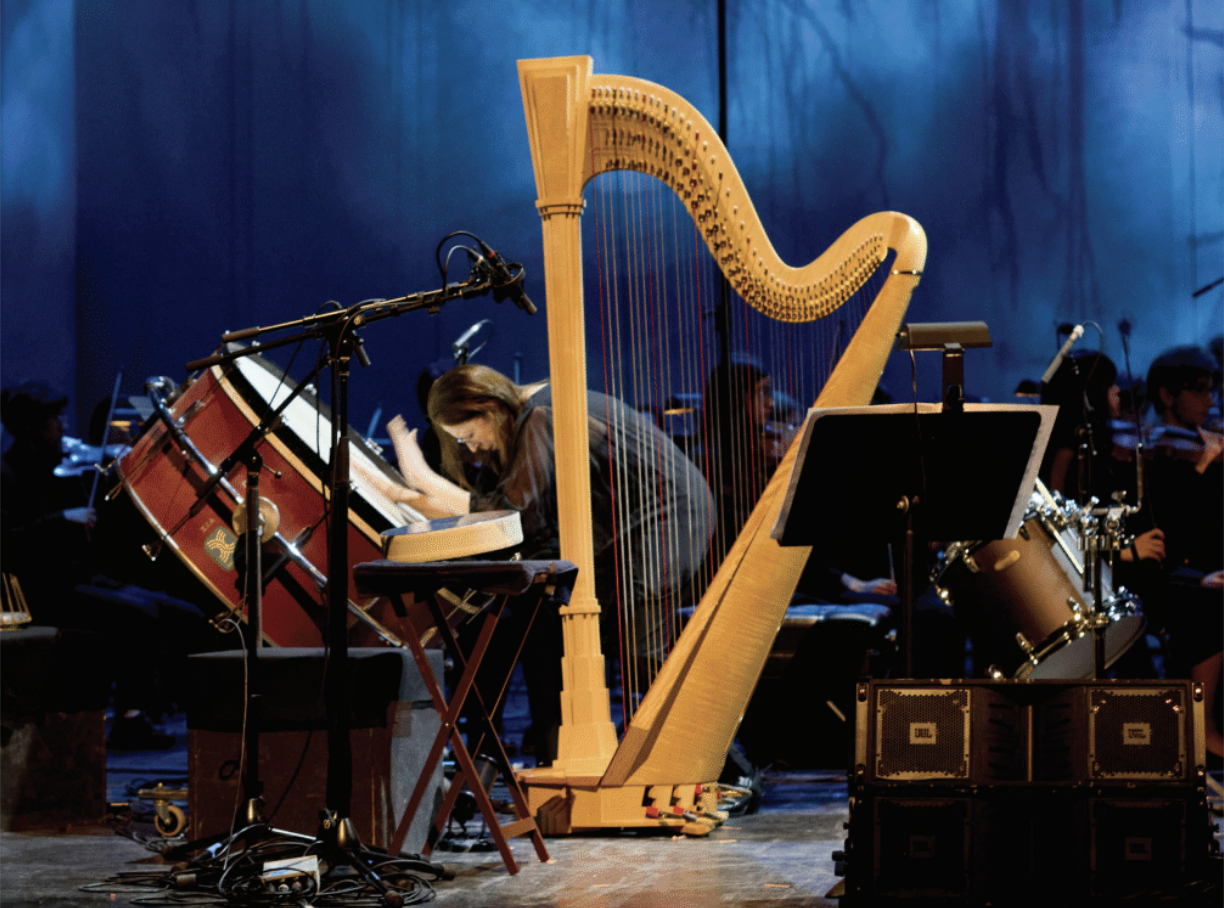
Yolanda Kondonassis is a musician working in the Great Lakes region, formerly at the Cleveland Institute of Music,she will begin teaching at the University of Michigan School of Music, Theatre and Dance in the fall. Now, the Grammy-nominated harp soloist performs on the harp and drums, on an album commissioned by the Interlochen Arts Academy, called “Terra Infirma.”
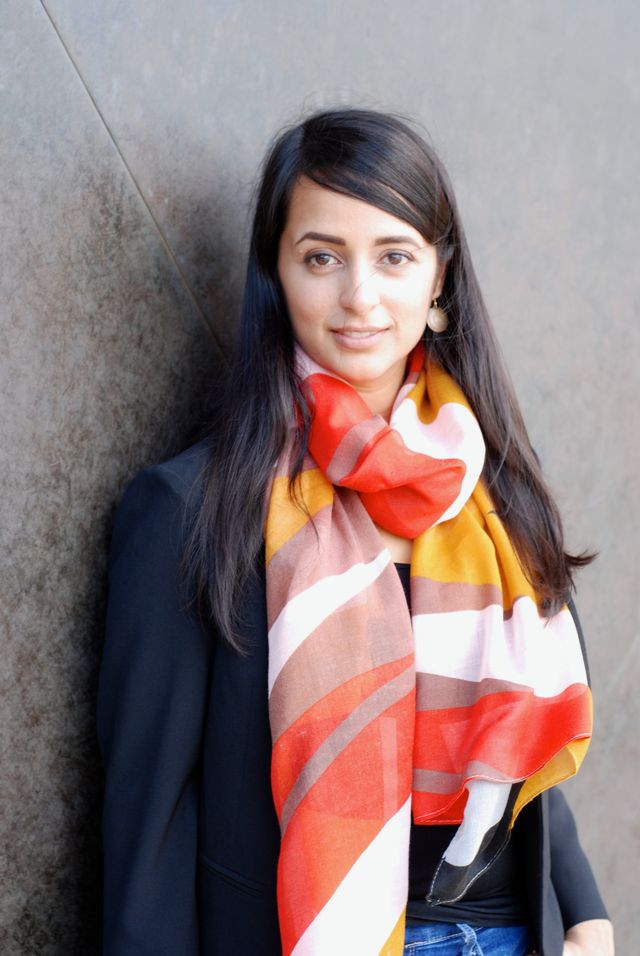
“Terra Infirma” had its digital premiere on April 17, ahead of Earth Day, and was composed by Reena Esmail for a collaboration with Kondonassis. Esmail started writing the concerto in January 2025, while living in Altadena, CA as the catastrophic wildfires began to enclose her neighborhood. The concerto also references Esmail’s extensive studies of Hindustani music — specifically the raags (or ragas) of Deepak, which are fabled to evoke uncontrollable fire. The piece also required another song or raag of Megh, which brings the rain as it is typically sung during monsoon seasons.
For Earth Day, Christa Grix from Detroit’s Jazz and Classical station WRCJ 90.9 FM (also owned and operated by Detroit PBS), discusses this groundbreaking new work in conversation with Kondonassis. They also touch on Kondonassis’s nonprofit, Earth at Heart, which encourages conservation awareness and action through music and the arts.
For the full interview, you can listen here:
The interview below was recorded, transcribed and edited for length and clarity.
Christa Grix: It gives me great pleasure to welcome my guest, Yolanda Kondonassis, a globally renowned harpist, composer, harp pedagogue, author, recording artist and environmental activist.
Yolanda Kondonassis: Thank you so much for having me.
CG: I have admired you for most of my professional career, and I’m also aware of Reena Esmail. I do the programming at WRCJ, and I heard her music about a year ago, and I said, that is a composer to pay attention to. So, I can’t imagine anything better than the two of you collaborating on this project, “Terra Infirma.” And I’d like you to tell us all about it.
YK: You know, the best things in life, I think, happen kind of organically, and because of that, they tend to evolve for all the right reasons. Reena and I probably first met virtually about five years ago. And we met through our husbands, who are both very active musicians.
My first experience with Reena was through my “Five Minutes for Earth” project, which was my most recent album, where I commissioned a whole bunch of folks to write a roughly five minute piece that was inspired by Earth.
She’s just such an intelligent, curious person, and we have very much the same sensibility when it comes to creating art. Our environmental concerns and everything we do to make sure the planet will be around for many, many years to come — art should be approached the same way, that term “sustainability” should apply to both.
And I think her music has sustainability. So much art right now is created extremely quickly; premiered, quickly; consumed, quickly and then almost discarded. We don’t really hear much about it again, and this is not musical fast food.
CG: No, it is absolutely not.
YK: It had about a four year gestation period. We talked about all sorts of different iterations this might take. And finally, we had one kind of seminal conversation where it was like, what sound, what sonic element would really bring the harp to life in a way it hadn’t been before?
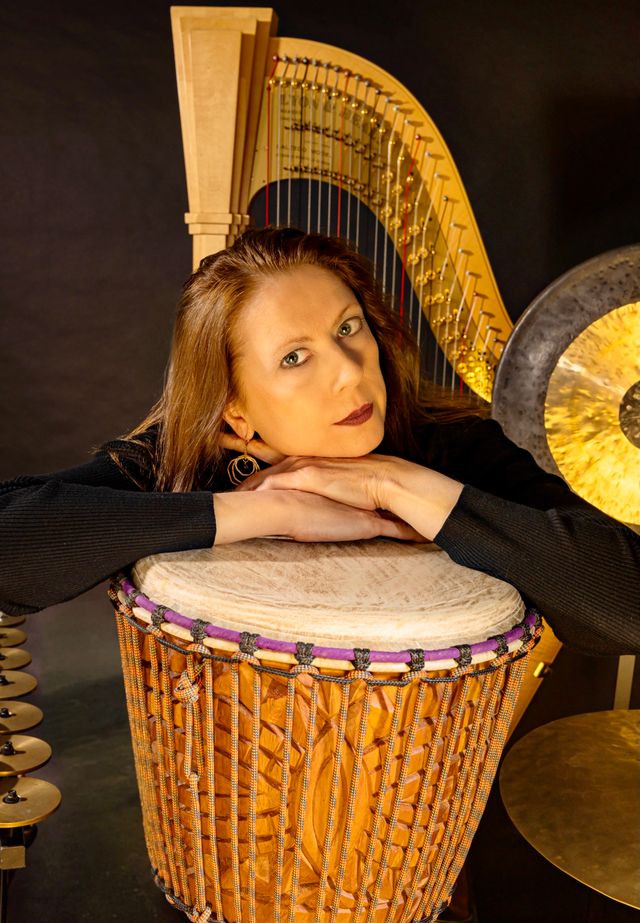
I’ve kind of always been sort of a closet percussionist. And I thought, well, you know, the harp is a percussion instrument. What if you actually wrote a concerto for harp and percussion, and I do both, and how would that look?
It just was such an amazing experience to learn about all these different percussion equipments. I play 18 different percussion pieces, and I’m shoving my harp across the stage, in a sort of a metaphorical journey.
CG: Could you tell me a little bit more about those logistical challenges? Principally, being a harpist, I know it’s no small feat to move a harp. And for our listeners, let me mention that the harp is about six feet tall and weighs about 80 pounds, so when you’re talking about moving — and as I understand— the harp is a main character in a musical drama. Is that correct?
YK: You said it. I just get excited every time I think about the genesis of this piece. Because initially we thought, okay, we’ll put you on stage. We’ll surround you with a ton of percussion, you may have to get up at some point. And then as we really started talking about the subject matter…
What if the harp actually, and to some degree, me as a performer were like a protagonist in this story of what we face environmentally? And what if the harp almost symbolized Earth as a “not” inanimate protagonist. And as anybody who plays the harp knows, that is not an inanimate object. You’ve got to be a harp whisperer, to play that thing.
It evolved from the idea of me sitting in one place on stage in my usual concerto position, surrounded by percussion to “what if you walked on stage just without a harp and started doing something percussive?” And from that, it evolved into this idea that my harp starts on one side of the stage. And throughout the journey of this piece, it is a journey, I literally shove it from one percussion battery to another.
CG: So, not on a dolly or anything like that. You shove it?
YK: Yes, and so that shoving was literally built into the choreography. Then, of course, we said, well, this is getting very theatrical. What if one of the movements was incorporated at a theatrical element where you’re literally walking around the stage? Maybe you’re rimming a singing bowl. Maybe you’re exploring while the orchestra does something else. So, it really kind of stretched me to my limit.
CG: We all know that you’re a passionate advocate for the environment. What inspired you to do so much for the environment and for Mother Earth?
TK: I think that when something evolves over time you begin to invest in it, emotionally and otherwise. And really, when I started truly thinking about the environment is when I had my daughter in 2002. As we know, when you have a child, you start thinking farther ahead than we do when we don’t.
I did an album called “Music of Hovhaness,” a piece on there was called, “Spirit Of Trees.” This was 20 years ago, and I thought, this music is so inspiring to me. This sounds like I’m walking through the woods and this is incredible, just being struck with the way music can conjure both a visual image and inspiration. I thought, wouldn’t it be great if we set it up so that my royalties from this album went to the Rainforest Alliance? And that was kind of the first little foray into all of this.
That eventually led to establishing my nonprofit called Earth at Heart, and writing a kids book called “My Earth, My Home.” You know, one thing kind of leads to another. I wanted to kind of wrap my artistic life around this unifying mission. At a certain point, I think during covid, is when I started thinking, okay, great, I’ve been doing this for decades. I played in every part of the world I could have ever dreamed of. I’ve played the traditional repertoire. I’ve commissioned some great pieces. What’s my mission, what’s my unifying idea.
And so it was a great kind of incubator during the pandemic to develop some ideas and to really have the time to follow through on them, because for busy musicians, that’s the tough part. It’s like we’re always full of ideas, but it’s the time to develop them and let them sit a minute and germinate and marinate before you take the next step.
It’s been a wonderful way to combine passions. I don’t pretend to be a climate scientist, but what I can do is work on inspiring action, inspiring awareness of things. And what better way to do that than music? I think if anybody hears this piece, “Terra infirma,” they might even be inspired to learn more about it, and in learning more about it, who knows, they might become really inspired to think about environmental concerns in a way they hadn’t before. When they’d been thrown stats and statistics and, quite honestly, very scary stuff. What a better way to reach people than through music?
Both Reena and I talked about how we didn’t want “Terra Infirma” to be some sort of musical Armageddon, even though the reality is very scary. But, I think the only way we address any problem is with hope, hope that we can do something, hope that our actions will have an effect.
“Terra Infirma” premiered live on October 30, 2025 at Interlochen Arts Academy. As of April 17, listeners will find the album digitally on all streaming platforms.