

By Fatima Syed, The Narwhal
The Great Lakes News Collaborative includes Bridge Michigan; Circle of Blue; Great Lakes Now at Detroit PBS; Michigan Public, Michigan’s NPR News Leader; and The Narwhal who work together to bring audiences news and information about the impact of climate change, pollution, and aging infrastructure on the Great Lakes and drinking water. This independent journalism is supported by the Charles Stewart Mott Foundation.
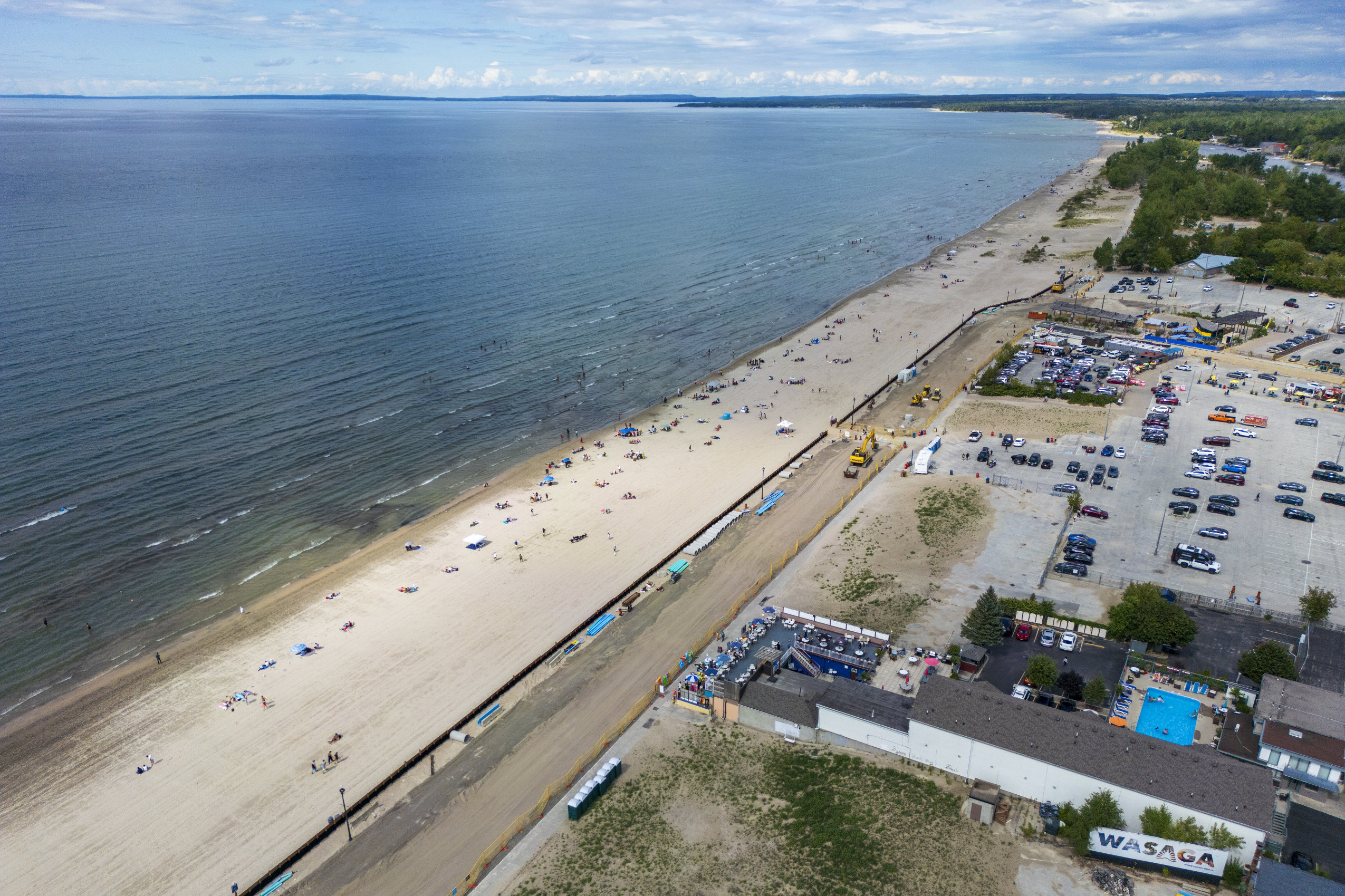
The Ontario government is moving ahead with plans to transfer management of 60 per cent of Wasaga Beach from the province to the town, despite receiving feedback from thousands of Ontarians decrying the proposal as potentially endangering sensitive piping plover habitat and affecting beach access.
The Doug Ford government received 14,233 comments over a 30-day period last summer, about 98 per cent of which were in opposition to the proposal. Many expressed concerns that erasing provincial protection could mean the loss of sand dunes in favour of hotels, condos and other beachfront development.
“We did not consider any changes to the proposal based on the feedback received, given the Town of Wasaga Beach’s commitments to keeping the beach public, not building on the beach and protecting environmentally sensitive dunes,” the government said in its decision.
Under Ontario’s Environmental Bill of Rights, the government is required to post moves with environmental or energy implications to the publicly accessible Environmental Registry of Ontario to allow for widespread feedback from industry, experts and residents. (The Ford government has, though, exempted several projects and types of notices from the registry, such as the Ontario Place redevelopment and permits to harm at-risk species, under Bill 5.)
Last June, the Ford government posted its decision to amend the Provincial Parks and Conservation Reserves Act, the legislation which created more than 340 parks across Ontario. The amendment would permit the transfer of 60 hectares, or three per cent, of Wasaga Beach Provincial Park, which protects the world’s longest freshwater beach and surrounding natural areas, to the town’s management to help boost tourism and the local economy.
The transfer includes more than half, or 60 per cent, of the beachfront, which contains all the sand dunes and vegetation that serve as nesting area for the piping plover.
Among the roughly two per cent of respondents that supported the move for the sake of economic development and revitalization, there was also a push for “continued environmental management and continued public access.”
Most of the comments on the registry posting highlighted the consequences of losing this beach environment, or even threatening it with increased development.
“Once this precedent is set, we risk irreversible environmental degradation, reduced public access and the commercialization of what should remain a protected, public space for generations to come,” one local resident wrote. “Tourism and environmental stewardship are not mutually exclusive, and development must not come at the cost of conservation.”
“Public land — especially waterfront property as ecologically and recreationally important as Wasaga Beach — should remain in public hands and under provincial protection,” another wrote.
None of this swayed the province. The amendments to enable the transfer were passed in Ontario’s 2025 budget, released last fall. With the recent decision, the government will now advance the transfer to the town.
This is not the first time the Ford government has disregarded feedback through the Environmental Registry of Ontario. The Auditor General of Ontario has repeatedly called out this government for failing to adhere to its own laws — at times “deliberately” — that require it to meaningfully consult the public through the registry.
In late 2022, for example, the government received more than 30,000 comments about its plans to remove 7,400 acres of land from the protected Greenbelt. In spite of this, “no changes were made to the proposal as a result of public consultation,” the government’s posting on the registry read.
In choosing not to consider any changes based on public feedback, the government’s decision said the lands removed from provincial protection in Wasaga Beach “will continue to be subject to Ontario’s species protection and environmental laws.”
However, shortly before announcing this transfer, the Ford government weakened species protections through its controversial Bill 5, as well as exempting certain postings from the environmental registry. The provincial parks legislation was the last law standing to protect plover habitat in Wasaga Beach.