


As anglers compete in the 2025 Yokohama Tire Bassmaster Elite competition on Lake St. Clair from Aug. 7-10, they’ll likely bring some pretty prize catches to weigh-ins. That’s because the catch-and-release method has allowed smallmouth bass on Lake St. Clair to grow to much greater sizes, according to new research from the Michigan Department of Natural Resources (DNR).
Combing through data spanning five decades on the smallmouth bass population in Lake St. Clair, researchers with the Michigan DNR discovered how the size of smallmouth bass has increased over time, transforming Lake St. Clair into a “worldclass” smallmouth bass fishery and increasing the lake’s reputation as a destination for anglers.
Smallmouth bass on Lake St. Clair now frequently reach “trophy lengths,” according to the research.
“Our office has been monitoring smallmouth bass for a long time,” said Jan-Michael Hessenauer, a fisheries research biologist at the DNR and the study’s lead researcher. “Smallmouth bass in Lake St. Clair have been getting bigger and bigger,”
The researchers attribute the increased popularity of catch-and-release as a likely cause for the bigger fish.
The angler’s angle
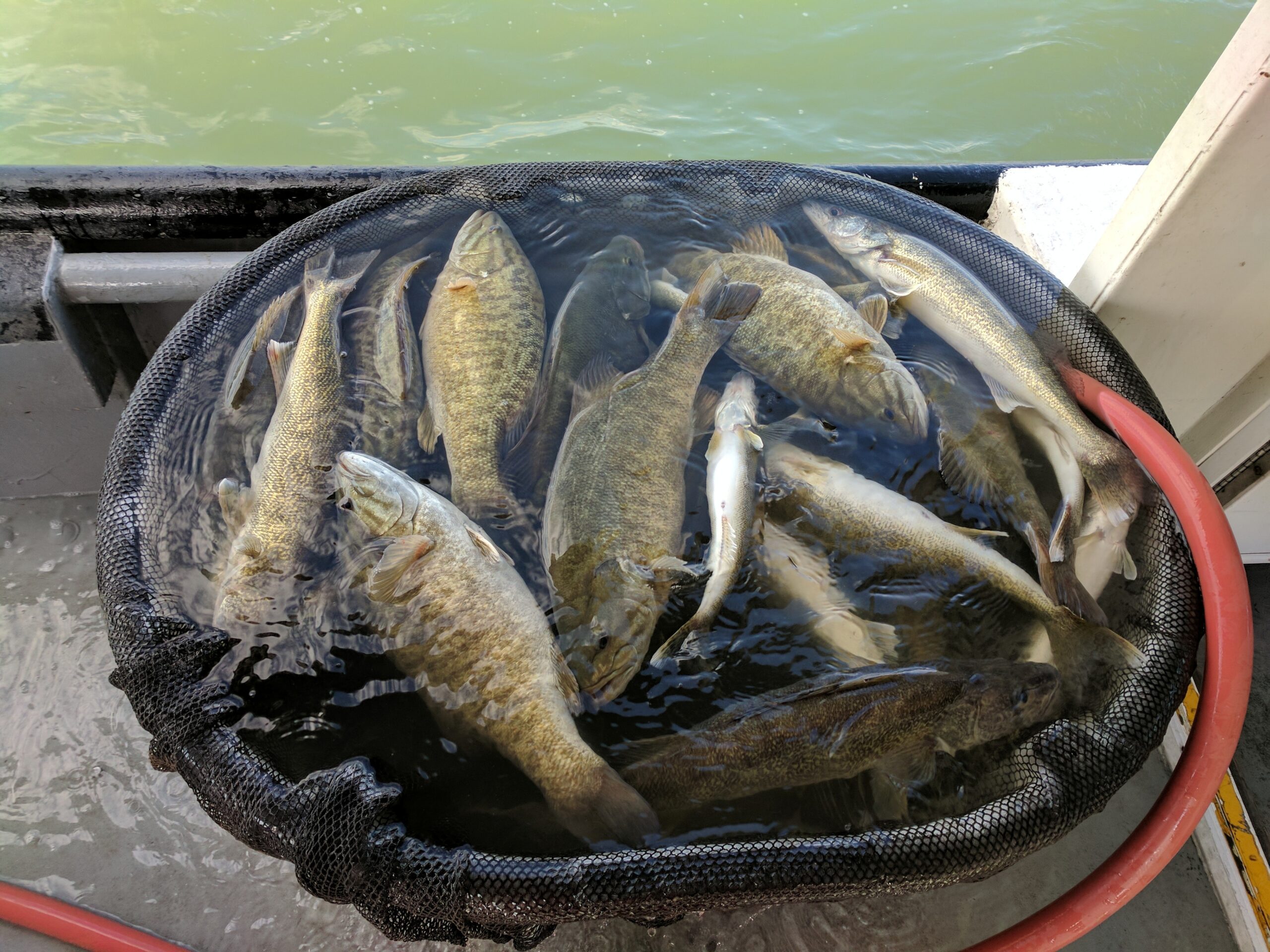
Smallmouth bass and a couple walleye float in a barrel on a DNR research vessel. DNR biologists deploy trap nets to capture smallmouth bass for research. (Photo Credit: Jack Armstrong)
The DNR’s research supports what anglers have experienced for several years.
When Dan Kimmel started fishing in Lake St. Clair in the 1980s, the lake was dominated by largemouth bass. But in the mid-to-late 1990s, things started changing.
“A five pound smallmouth used to be, if you caught one a year, you were a lucky angler,” said Kimmel, an angler and the conservation director for the Bass Federation of Michigan. “Now guys are catching five of them in one day.”
A 21-inch fish is typically considered trophy length and a fish that length usually weighs around six pounds.
Fishbrain, an application that allows anglers to log, photograph and post their catches, hosts angler-reported data on hundreds of species in the United States. Researchers have used the data the app produces to study fish populations in the Great Lakes region, and the platform previously teamed up with the U.S. Fish and Wildlife Service to help identify threatened, endangered and candidate species. According to the app, anglers have used Fishbrain to log over 900,000 smallmouth bass catches across the country.
On the Fishbrain app, the average size of smallmouth bass logged by anglers is 2.4 pounds and 14.6 inches. That data is based on catches inputted by anglers across the country.
Kimmel also runs the community and fishing resource website Great Lakes Bass. He said he gets contacted by people on every continent except Antarctica that want to know about smallmouth bass in Lake St. Clair.
Gene Gilliland, an angler and fish biologist, used to fish in Lake Erie with a group of friends every year until one of them recommended they visit Lake St. Clair.
Now, Gilliland drives 17 hours from Oklahoma every year to fish for smallmouth bass on the lake.
“Pardon the pun, we got hooked on it,” Gilliland said.
The increase in size has also affected professional tournaments on the lake.
One year, Kimmel led the state championship with just under 22 pounds divided across five fish, he said.
“Everybody wanted to be my new friend,” he said. “Now you catch 20, 21, 22 pounds, you’re not even in the money.”
About 10 years ago, anglers searching for a winning fish would make a 90-mile run into Lake Erie to find bigger bass, Gilliland said. But that’s no longer necessary — the bass in Lake St. Clair are plenty big enough for anglers to snag a winner there.
The lake was already renowned as a destination smallmouth bass fishery in the early 1990s, Hessenauer said. However, the reputation of the lake has only increased since then. Bassmaster Magazine ranked Lake St. Clair at number 10 in its 2025 list of best bass lakes in America, released July 8.
Mass of the Bass
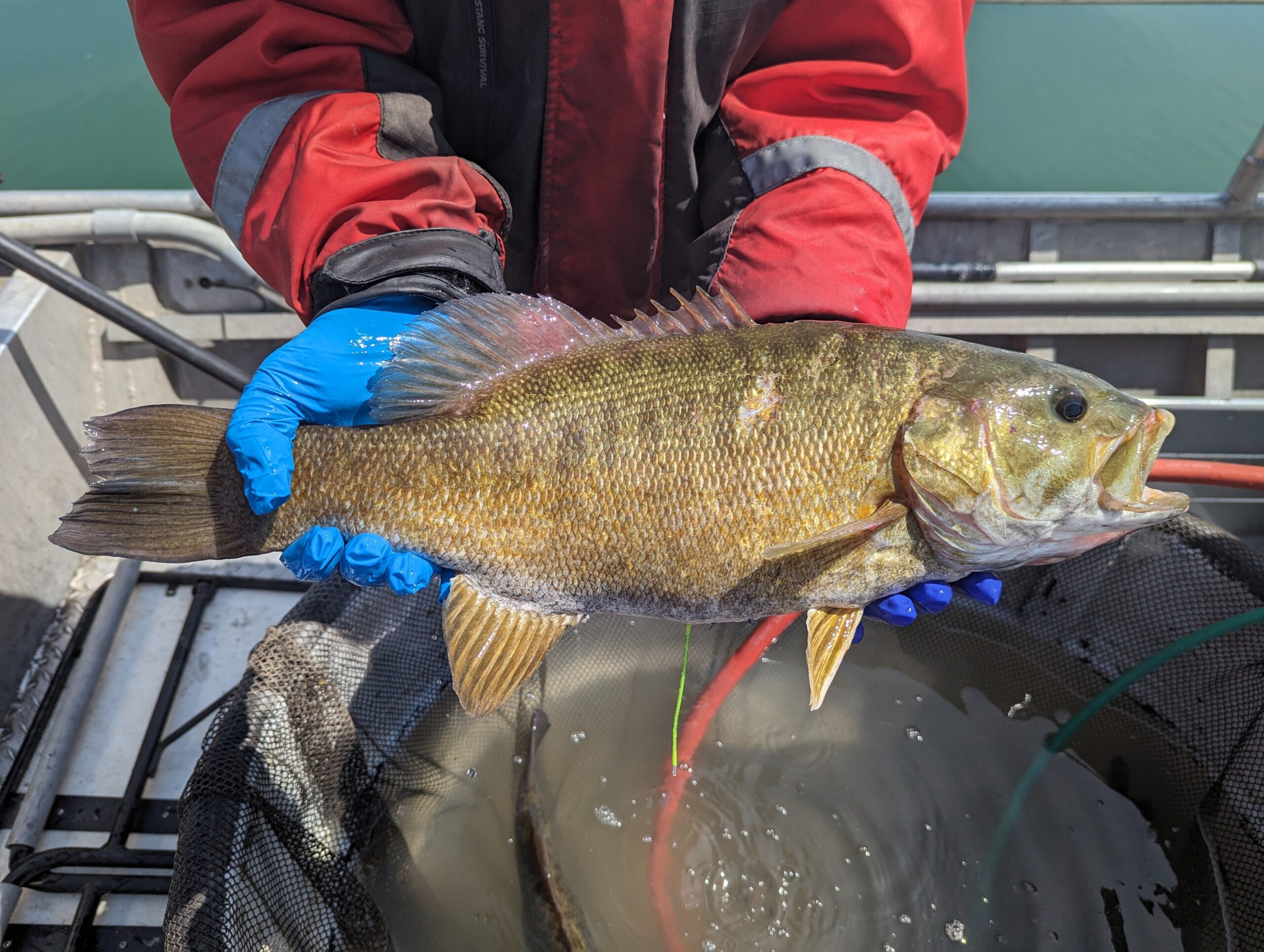
A DNR researcher holds a smallmouth bass on a research vessel on Lake St. Clair. Smallmouth bass in the lake have gotten bigger over the years, transforming Lake St. Clair into a “world class” smallmouth bass fishery. (Photo Credit: Jack Armstrong)
The DNR’s research provides a new explanation for the size increase, which some researchers previously attributed to a change in Lake St. Clair’s food web, Hessenauer said. One popular explanation for the increase in size was that the round goby, an invasive species, filled a gap in the food web that was preventing smallmouth bass from reaching their full potential.
Invasive zebra mussels concentrate energy on the bottom of the lake by filtering plankton out of the water. By removing plankton as a food source for species such as minnows, zebra mussels cause a cascading effect up the food web. But round gobies eat those zebra mussels and smallmouth bass eat round gobies, repairing a broken link in the food web and hypothetically allowing bass to reach greater sizes.
That’s problematic, according to Hessenauer. He said it’s because as an invasive species, gobies can be harmful to the ecosystem. For example, round gobies eat the eggs of many native species, including smallmouth bass. They also compete aggressively for food and habitat with native species and can transmit avian botulism and bacterial disease, according to the U.S. Fish and Wildlife Service.
“There’s no hope of really managing or reducing their abundance in the Great Lakes just because they’re so numerous,” Hessenauer said.
But according to the study, the rate of change in the growth of smallmouth bass was the same before the gobies were introduced. It also showed mortality rates had been decreasing at a steady pace.
Researchers suspect that’s because of the popular adoption of catch-and-release several decades ago. It’s become common practice to return caught fish back to the water alive, which allows fish to live to older ages and grow to larger sizes. Fish have indeterminate growth, Hessenauer said, which means they will keep growing throughout their entire lifetimes.
In the early 1970s, anglers on the lake were harvesting around 30,000 smallmouth bass per year and around 50% of the population was expected to die. Now, anglers harvest around 12-13,000 per year and the mortality rate is around 10-12%, Hessenauer said.
According to recent data from the DNR, anglers released 97% of the smallmouth bass they caught in 2023, which amounted to more than 32,000 fish.
That’s had a direct effect on the age and size of fish. In the 1970s or 1980s, the average age of a smallmouth bass caught in a trap net was 4.5 years old, according to the study. By 2023, bass averaged 6.5 years old
Sport fishing tournaments were instrumental in establishing catch-and-release as standard practice.
“Bassmaster kind of started the whole catch-and-release craze for bass fishing back in the 70s,” Gilliland said. “Among bass anglers, it’s become universal.”
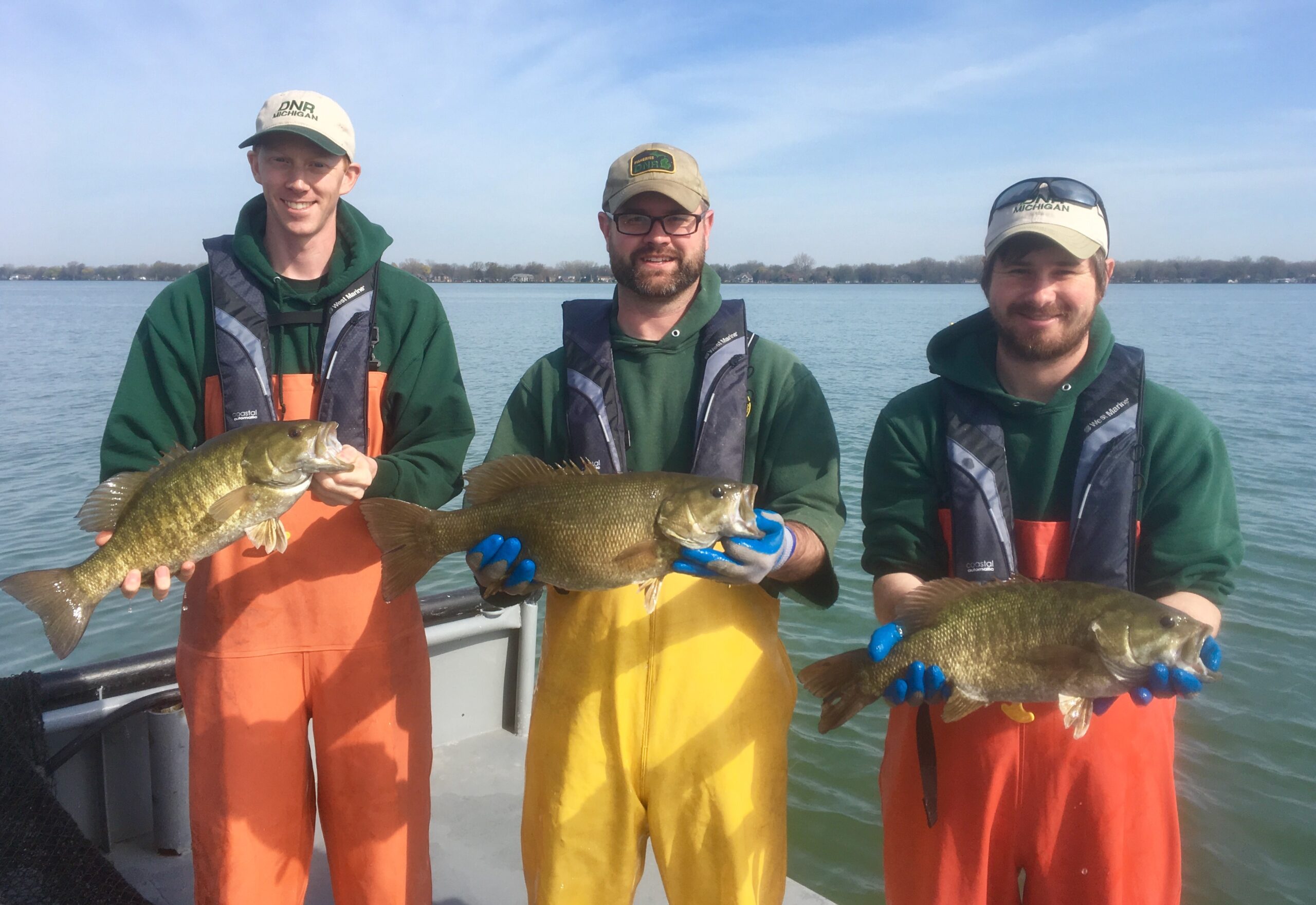
DNR researchers Andrew Briggs, Brad Utrup and Jan-Michael Hessenauer hold smallmouth bass on Lake St. Clair. Recent research from the DNR reveals bass in Lake St. Clair have grown bigger and bigger over the last several decades and now frequently reach “trophy lengths.” (Photo Credit: Jack Armstrong)
The Bassmaster Elite Series is a sport fishing tournament hosted by the Bass Anglers Sportsmaster Society. It’s one of the biggest events in professional bass fishing, and it’s been held at Lake St. Clair several times.
The practice trickled down into the angler community until it became typical.
“You see the same thing in other sports,” Hessenauer said. “Graphite sticks in people who play hockey are a big deal now, even your beer league guys aren’t using the wood sticks of the past.”
Part of the increase in catch-and-release practices also stems from an extended season. Anglers can fish for bass year-round, as long as they’re practicing catch-and-release, compared to the six-month harvest season that runs from June to December.
It’s possible other factors play a part in this change. The increase in size could be due in part to increased water quality and climatic factors like shorter and less severe winters, Hessenauer said.
Additionally, changes to size limits may have also decreased the mortality of the fish, Gilliland said. In the mid-90s, the DNR increased the minimum length of a fish eligible for harvest from 12 to 14 inches. With a higher limit, less fish are harvested, allowing the surviving fish to grow older and bigger, pushing far past that minimum.
“Most bass anglers aren’t getting too excited about 14 inch fish on Lake St. Clair,” said Jan-Michael Hessenauer, the study’s lead researcher. “I think that’s a great fish in a lot of other systems.”
The 2025 Yokohama Tire Bassmaster Elite is scheduled for Aug. 7-10 at Brandenburg Park in Chesterfield Township, Michigan.
Catch more news at Great Lakes Now:
Mapping the Great Lakes: Summertime fishing
I Speak for the Fish: Never underestimate a smallmouth
Featured image: Research on a DNR vessel cast a net in Anchor Bay in Lake St. Clair. DNR researchers use these nets to capture smallmouth bass, which they measure and weigh. (Photo Credit: Jack Armstrong)


