



By Vivian La, IPR
This story is made possible through a partnership between Interlochen Public Radio and Grist, a nonprofit environmental media organization.
Researchers from the University of Notre Dame have developed the most comprehensive look yet at how PFAS moves through the food web in the Great Lakes.
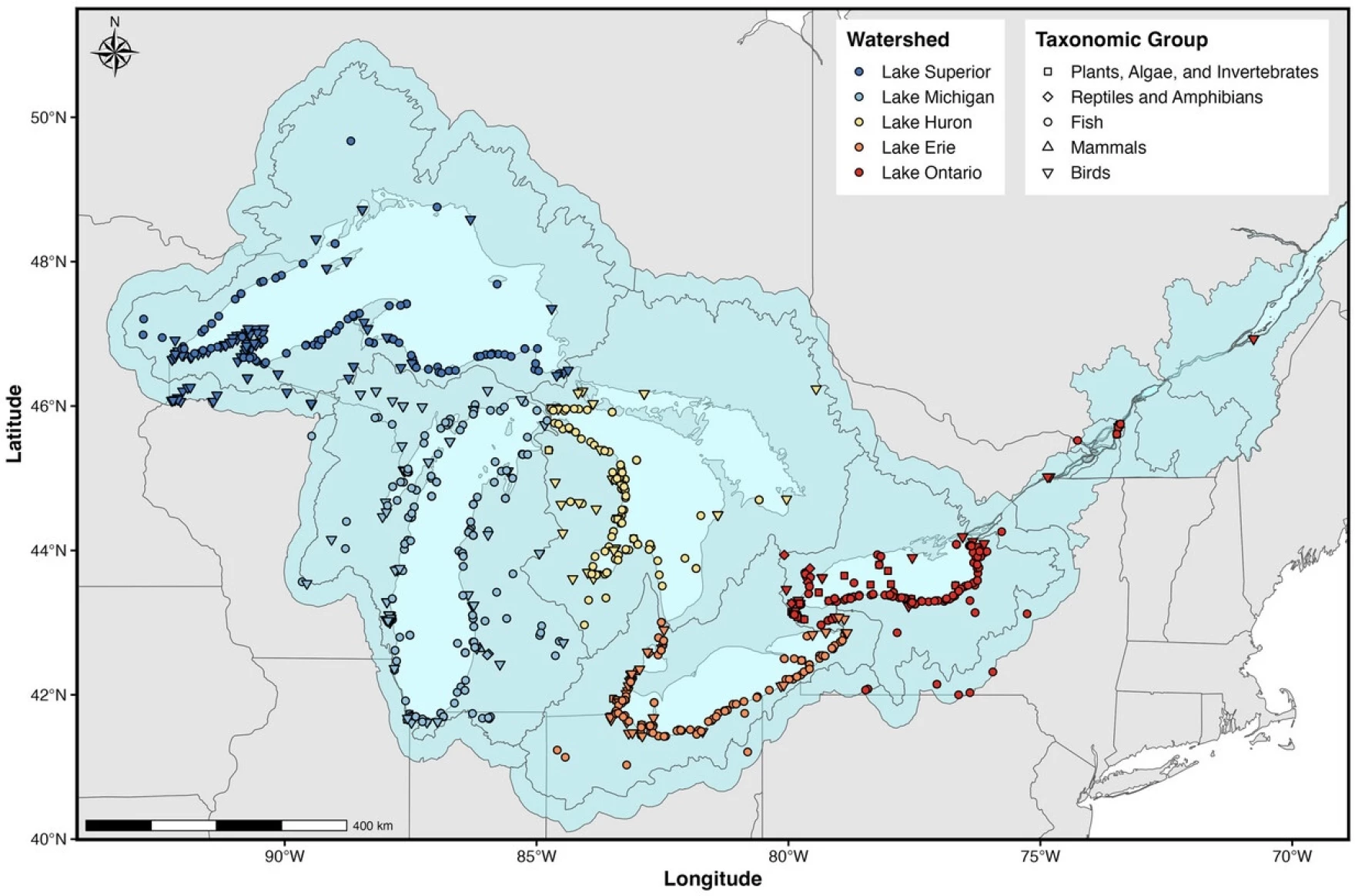
The study published this spring in the Journal of Environmental Quality analyzed 42 years of studies and combined nearly 2,500 samples of algae, fish, birds and other organisms — in what’s called a meta-analysis — to identify trends.
PFAS refers to a group of man-made and long-lasting compounds linked to a range of human health issues. It can enter waterways through landfills, wastewater and industrial facilities.
“What we’re finding is that the food web itself is a vehicle for transferring these chemicals from one organism to another,” said Gary Lamberti, aquatic science professor at Notre Dame and a study co-author. “So it’s a more holistic view than we’ve known before.”
The study identified a dramatic decrease over the last two decades of one PFAS chemical known as PFOS, following a voluntary phase out by industries in the early 2000s.
“If we stop manufacturing these chemicals, they will eventually reduce in concentration in the food web,” Lamberti said. “That’s kind of good news for how we can manage these chemicals.”
Those declines were seen in the lower Great Lakes — Ontario and Erie — likely because these areas are home to the heavy industries that used the chemical.
But there was little to no decline in PFOS in the upper Lakes Superior, Michigan and Huron, most likely because the water bodies are larger that the lower lakes. In contrast to the shallower Lakes Erie and Ontario, water can stay in the upper lakes anywhere from about 60 to 170 years.
The study also confirmed that these chemicals increase in concentration as they travel up the food chain. Algae and plants have the lowest concentration, according to the study, because they grow and die quickly.
But predators like salmon and eagles had the highest concentration because they’re eating a large amount of prey that have a lot of accumulated PFAS.
Potentially dangerous levels of these chemicals in fish have prompted warnings across the state on how much is safe to eat. Michigan has been testing fish for PFAS since 2012.
“If we can understand what the PFAS levels are in the food web, we can better communicate the risk of consuming those potentially toxic food sources,” said Katherine Manz, an environmental health professor at the University of Michigan who was not involved in the study.
But because PFAS chemicals are in everyday products and they’re very hard to avoid, Manz said her best advice is to use less. Online databases can help consumers avoid certain chemicals.
Manz said the study also pointed out some interesting gaps in research on PFAS dynamics, like a lack of data on certain species.
It was easy to find PFAS data on salmon, trout, and some birds, Lamberti said. But information on the “less glamorous” smaller fish, invertebrates or algae was harder.
The study only focused on six of the PFAS chemicals most commonly tested for, but there are more than 15,000 types out there, according to the National Institutes of Health.
Tools to analyze the range of these chemicals are still evolving, said Vernon Lalone, CEO of Traverse City-based startup Wave Lumina that’s developing a rapid testing kit for PFAS in water and soil.
“It’s like a chicken and an egg situation,” said Lalone, who wasn’t involved in the study. “You’ve got to have an analytical method that’s robust and reliable enough to measure these things before you can regulate them at certain limits.”
Lamberti said there’s still plenty of questions about how these chemicals will shift in the lakes as temperatures rise due to climate change, ice formation shifts and as industries introduce new chemicals.
“Anything we put into the Great Lakes will be there for an extremely long time, not only the water, but all the chemicals that it has, so we have to be very cognizant of how we treat the lakes and what we put into them,” Lamberti said.