
By Leah Borts-Kuperman, The Narwhal
The Great Lakes News Collaborative includes Bridge Michigan, Circle of Blue, Great Lakes Now, Michigan Public and The Narwhal who work together to bring audiences news and information about the impact of climate change, pollution, and aging infrastructure on the Great Lakes and drinking water. This independent journalism is supported by the Charles Stewart Mott Foundation.
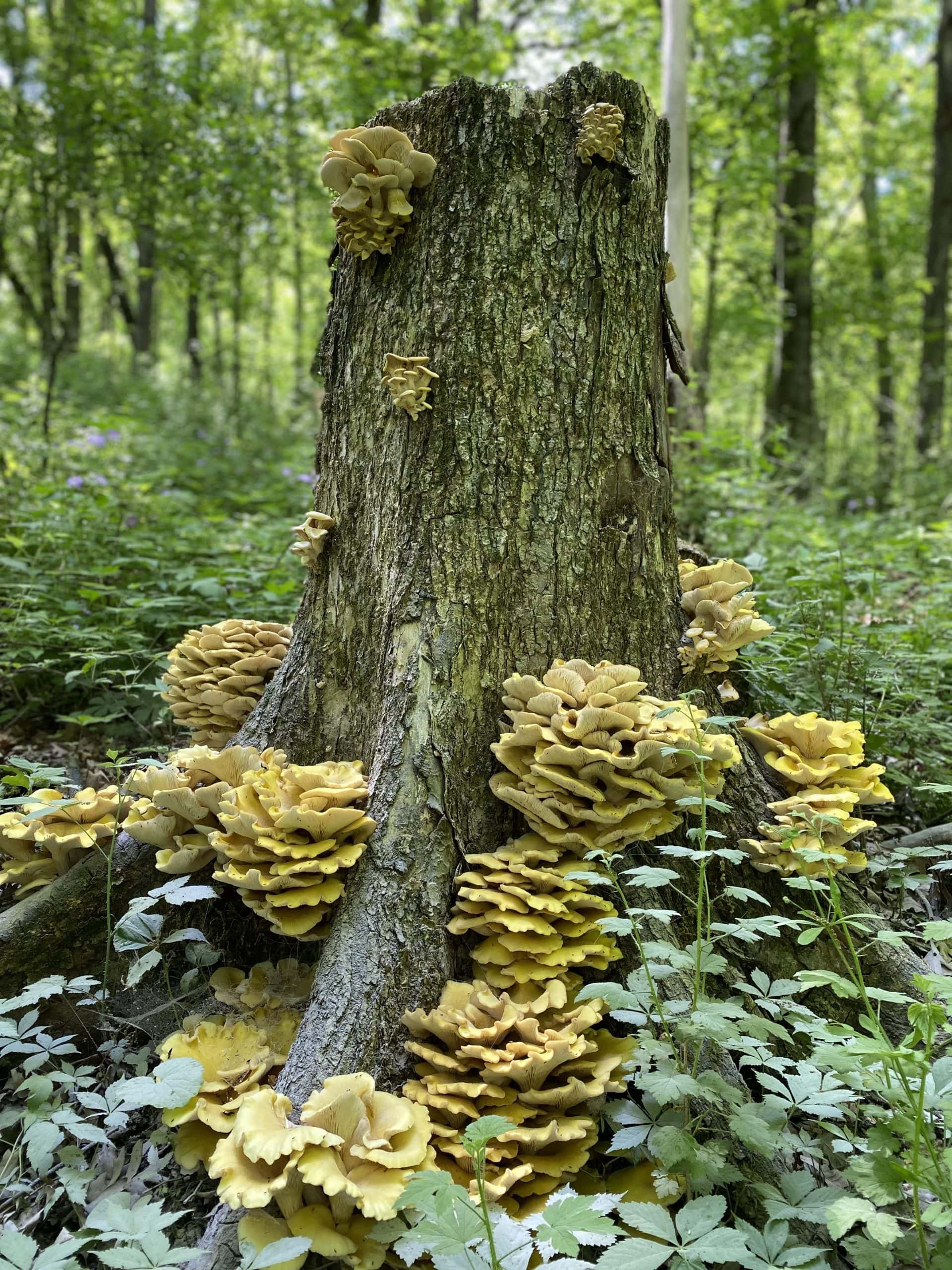
Mycologist Aishwarya Veerabahu regularly walks the forests near her home in Wisconsin, marvelling at the myriad shapes and colours of mushrooms, sometimes foraging for something to bring home and sauté in garlic and butter. It’s a landscape she knows well, but in the last few years, she’s been noticing a worrying and unfamiliar presence: vibrant yellow, tightly clustered invasive making itself at home.
Known as golden oyster, it’s a ’shroom completely altering native fungi communities in North America.
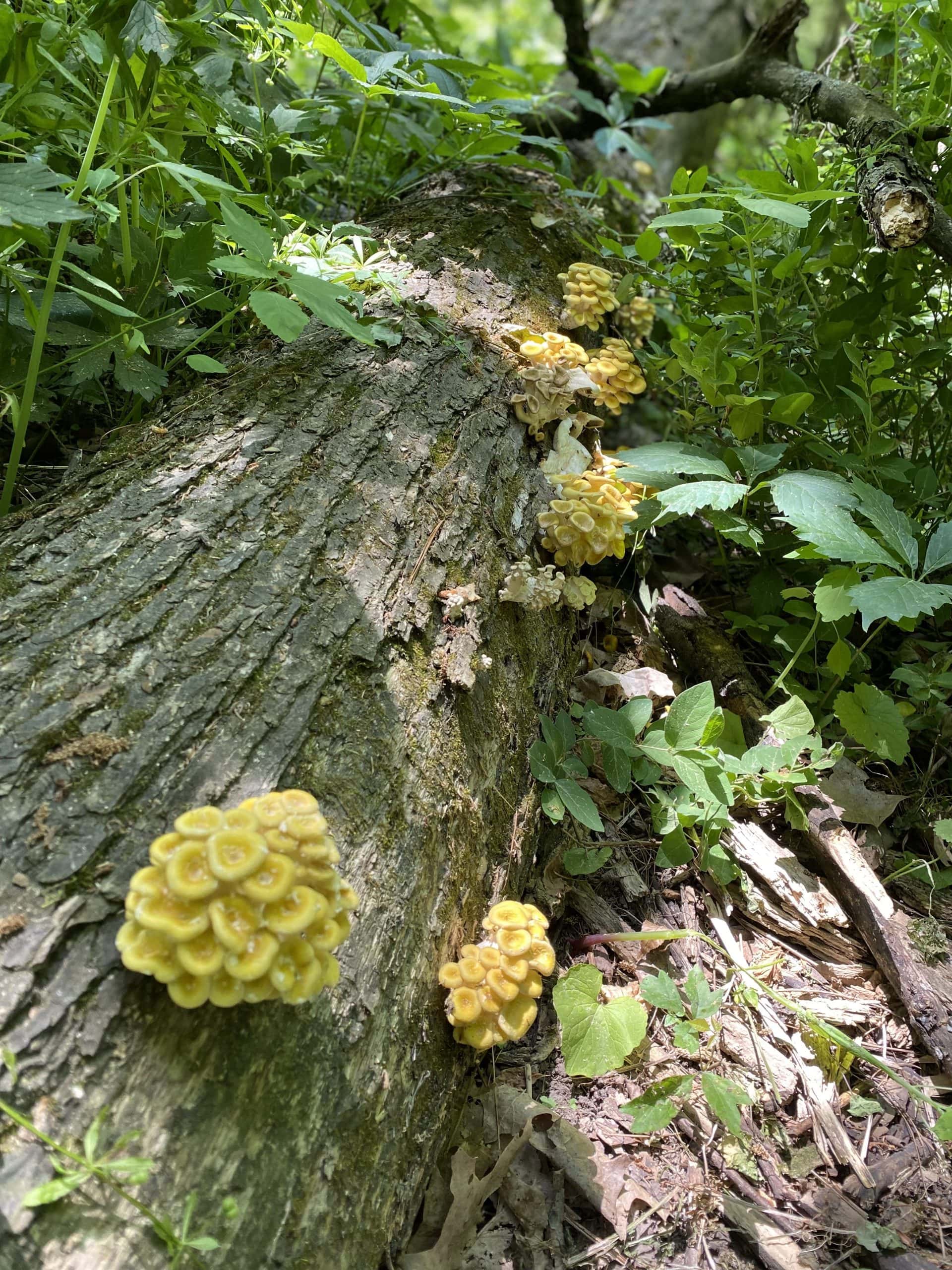
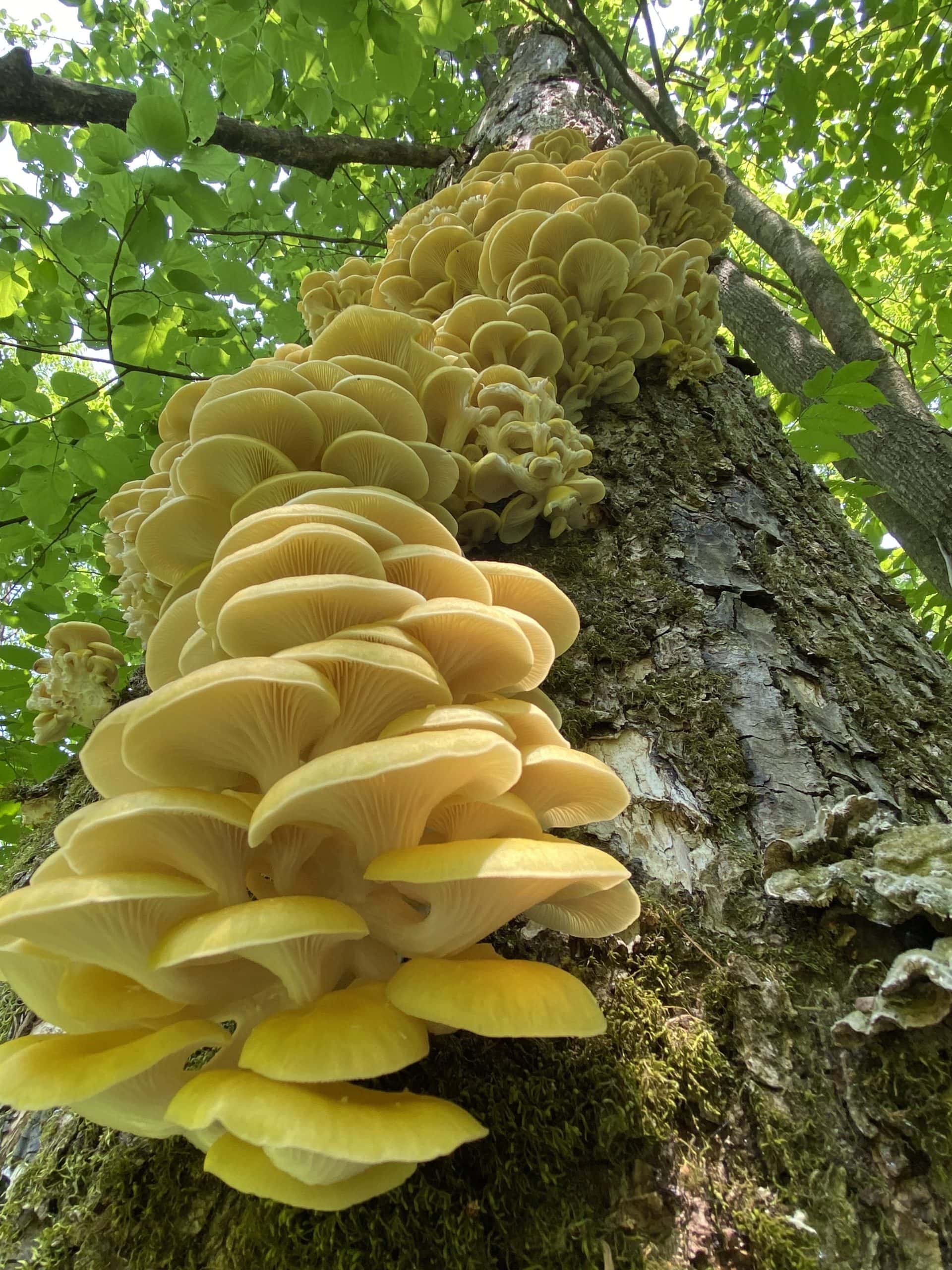
“Golden oysters will grow in an order of magnitude more than any other mushroom that you’d see. If you come up on a log with golden oysters on it, there’s always a ton of them, multiple clusters,” Veerabahu said.
The popular mushrooms, often found on menus and supermarket shelves, are native to forests in Russia and Asia. They were first brought to North America in the early 2000s for cultivation, and took to the forests by 2010, expanding their numbers and range rapidly.
“There are some times where I’ve gone through a forest and teared up because I know that there are other mushrooms that were in that wood that aren’t there anymore,” Veerabahu said. “It can be a very sad thing when now it’s just dominated by this one species.”
A researcher at the University of Madison-Wisconsin, Veerabahu published a study last August that used data from citizen scientists to confirm the trend she’s been seeing locally. Golden oyster mushrooms — scientific name Pleurotus citrinopileatus— are quickly invading North America, including Ontario.
And, scientists say, a booming home-growing trend may be accelerating their spread into forests and impacting biodiversity.
Golden oysters have been found in 25 states, “after escaping cultivation” of commercial growers and hobbyists. They’ve made their way to Ontario, where there have been more than 80 sightings logged on the iNaturalist app of the clusters growing out of dead hardwood in forests, provincial parks and even residential neighbourhoods.
While most golden oysters in Canada are still concentrated closer to the border with the United States, the species has already travelled as far north as Magnetawan, Ont., near Parry Sound, and is increasingly established around Georgian Bay, on Lake Huron. The speed and distance of its spread has been surprising, Veerabahu said.
“It has thoroughly been unleashed and rapidly spread over the course of a short decade,” she said, adding that the mushrooms have more recently appeared in Quebec. “The best thing that we can do now is to try and prevent it from getting to new regions.”
Provincial invasive species regulations don’t capture golden oyster mushrooms
Cassidy Mailloux is a guide at the Ojibway Prairie Complex in Windsor, Ont., who takes guests through the nature reserves year-round. She’s also working on a biodiversity study of the region’s native mushrooms as part of her master’s degree at the University of Windsor and has posted golden oyster sightings on iNaturalist, observations that helped inform Veerabahu’s study.
“We’ve only seen it in one of our parks out of the entire complex … and that’s one of our heavily foot-trafficked and most travelled parks,” she said, adding that this is a good sign that the invasion “hasn’t fully taken off yet.”
Still, she worries about the effect of invasive golden oysters on rarer species of fungi, such as the coral pink marulius, which is uncommonly reported but in large abundance in the Ojibway Prairie Complex.
“I’m worried the golden oyster mushroom might take precedence,” Mailloux said, given golden oysters are an aggressive species that can grow quickly and prolifically in many kinds of wood and even sawdust — unlike some native species that require specific conditions to thrive. Both the city and her organization are still trying to figure out the best way to manage the invasive — and say visitors documenting sightings can inform this work.
“Encouraging citizens to upload these observations can really help management and our ecosystem,” Mailloux said, “and just keeping a track on how bad it might be getting in the area.”
Despite the threat, the Government of Ontario has not added live oyster mushrooms to its prohibited or restricted invasive species lists, which would make it illegal to import, buy, sell — or sometimes even possess — an ecologically harmful strain.
Without this regulation, Veerabahu said, live cultures continue to be transported across borders. And, she said once golden oysters colonize an area, fewer other unique fungal species will be found there. The communities that do exist are also entirely changed.
“Let’s say in an uncolonized dead tree, you had a nice, rich community of fungi A, B, C, D, E. Once golden oyster colonizes, now it’s golden oyster and fungi X, Y, Z,” Veerabahu said.
This makes her concerned about a domino effect because fungal communities are primary wood decomposers of forests, playing an important role in cycling nutrients and storing carbon. “The identity of which species are able to coexist in that space is changing.”
Monica Liedtke, terrestrial invasive plant coordinator for the Invasive Species Centre, in Sault St. Marie, Ont., agreed. She told The Narwhal via email that non-native invasive fungi can significantly disrupt Ontario’s ecosystems and environmental processes that have developed over thousands of years.
“When non-native invasive fungi establish, they can interfere with important symbiotic relationships between native fungi, trees and plants,” Liedtke told The Narwhal. Golden oysters can quicken the rate of wood decay, which then impacts the birds and bugs that use dead and dying trees for homes and food. “Over time, these disruptions can affect biodiversity across the entire ecosystem.”
Meanwhile, climate change is creating warmer conditions that will make Ontario even more hospitable to these mushrooms, allowing them to expand their range. Veerabahu and her team used a climate prediction model developed by NASA to predict what might happen in the next 15 years. The model predicted that the North American region climatically suitable for golden oyster mushrooms to grow would almost double.
Grow-your-own mushroom kits threaten Ontario forests
Kyle McLoughlin, an arborist and supervisor of forest planning and health for the City of Burlington, said the reason he fears golden mushrooms is exactly why they’re popular among amateur growers.
“From an ecological perspective, they don’t have a niche. They can go anywhere. They’re very wide-ranging. They’re very comfortable in a lot of different types of wood and a lot of different environments,” McLoughlin said of golden oysters. “This is also why you can grow them so well.”
Kits with detailed growing instructions are readily available on the internet, with prices between $20 and $40. These are a “major source of their invasion,” McLoughlin said.
“It’s literally being introduced into people’s homes and their properties through grow kits,” McLoughlin said. “We shouldn’t be selling people potential invasive species to bring into their homes.”
Still, grow kits remain widely sold with little public awareness of the risks. Consumers are often not warned when they buy a grow kit that tossing spent soil onto the compost pile, or leaving a kit outdoors, could unintentionally help an invasive spread.
There are some ways people can help slow the spread if they spot oyster mushrooms. If someone sees a log on their own property pop with golden oysters for the first time, it could be helpful to burn it, Veerabahu explained. People can also forage the mushrooms from forested areas, collecting them in closed containers to prevent spores from spreading.
The challenge is to muster enough public awareness and political will before things get out of control.
“It’s kind of like cockroaches. Once you start to see them, you know there’s a heck of a lot more in your walls,” McLoughlin said. “They are putting billions of spores into the air when they’re fruiting. And this is happening constantly.”
Some companies that have sold these kits around the world, like Far West Fungi, North Spore and MycoPunks have since discontinued some products due to concern. In a blog post titled “Yellow Oyster Disaster Zone,” MycoPunks wrote: “No shade intended on any other vendors who choose to keep selling golden oyster kits … we’ve all got our own different moral codes, but it’s not something we feel able to do in good conscience any more.”
But, given a lack of regulation in the province, it’s still easy to import kits from within Canada or around the world to grow in Ontario.
“Gardeners [and] hobby farmers should carefully consider the species they are cultivating. Choosing native species helps to reduce ecological risk,” Liedtke, from the Invasive Species Centre, said. Some kits sell species such as lion’s mane or chestnut mushrooms, which are both edible and native to Ontario.
For those who are growing golden oysters, the Invasive Species Centre advises that used grow kits should be sealed in a garbage bag and left in the sun for several days to a week; this process, called solarization, helps kill remaining spores and fungal material. Then, the bag should be disposed of in municipal waste — not compost.
“Neither the producer nor the consumer wants to be part of that spread,” Veerabahu said. “The mushroom grow kits are a huge point of concern. They’re essentially a live culture that can be transported anywhere, but they’re not being regulated and I’ll never blame hobby mushroom growers for that.”