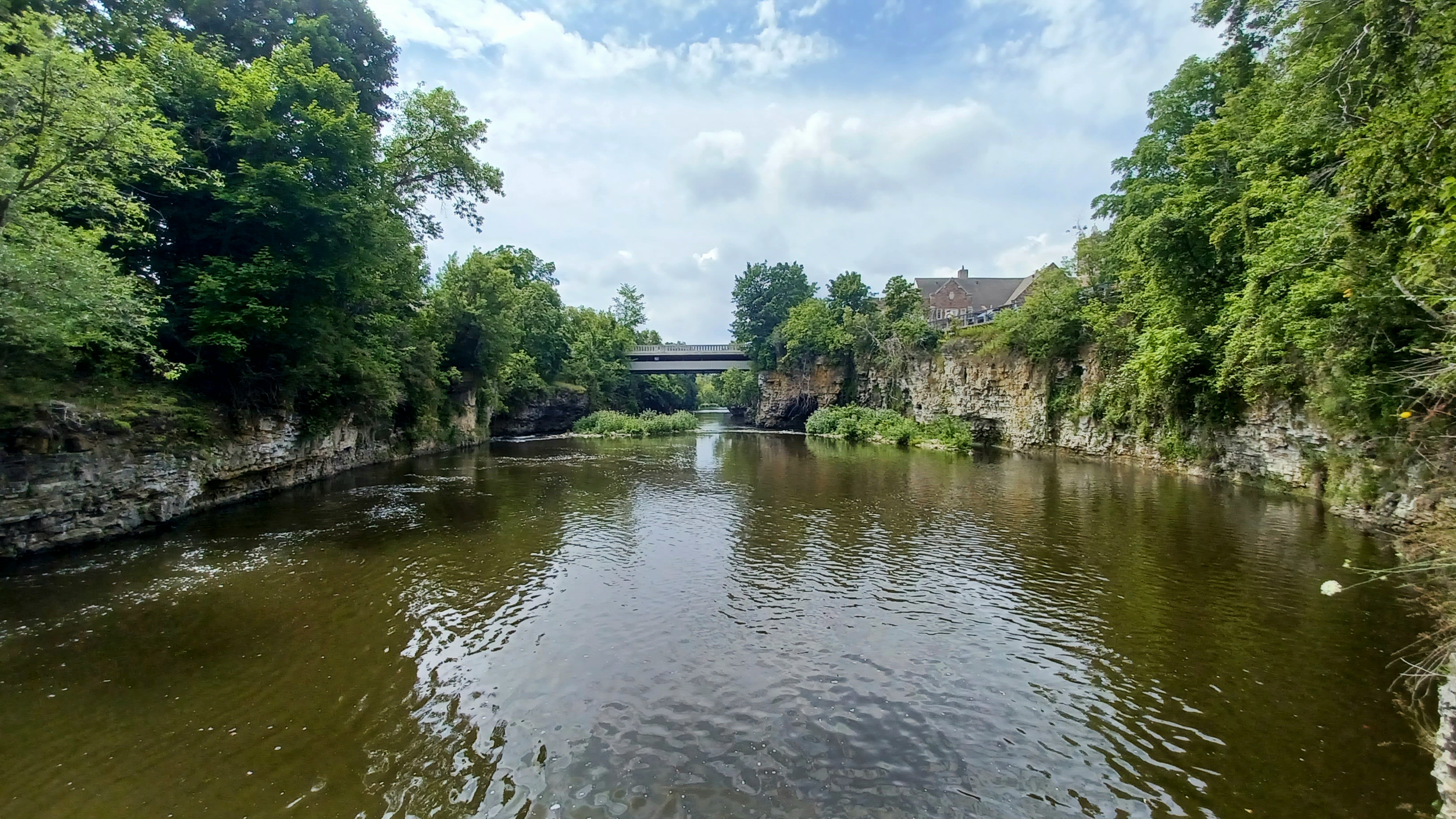

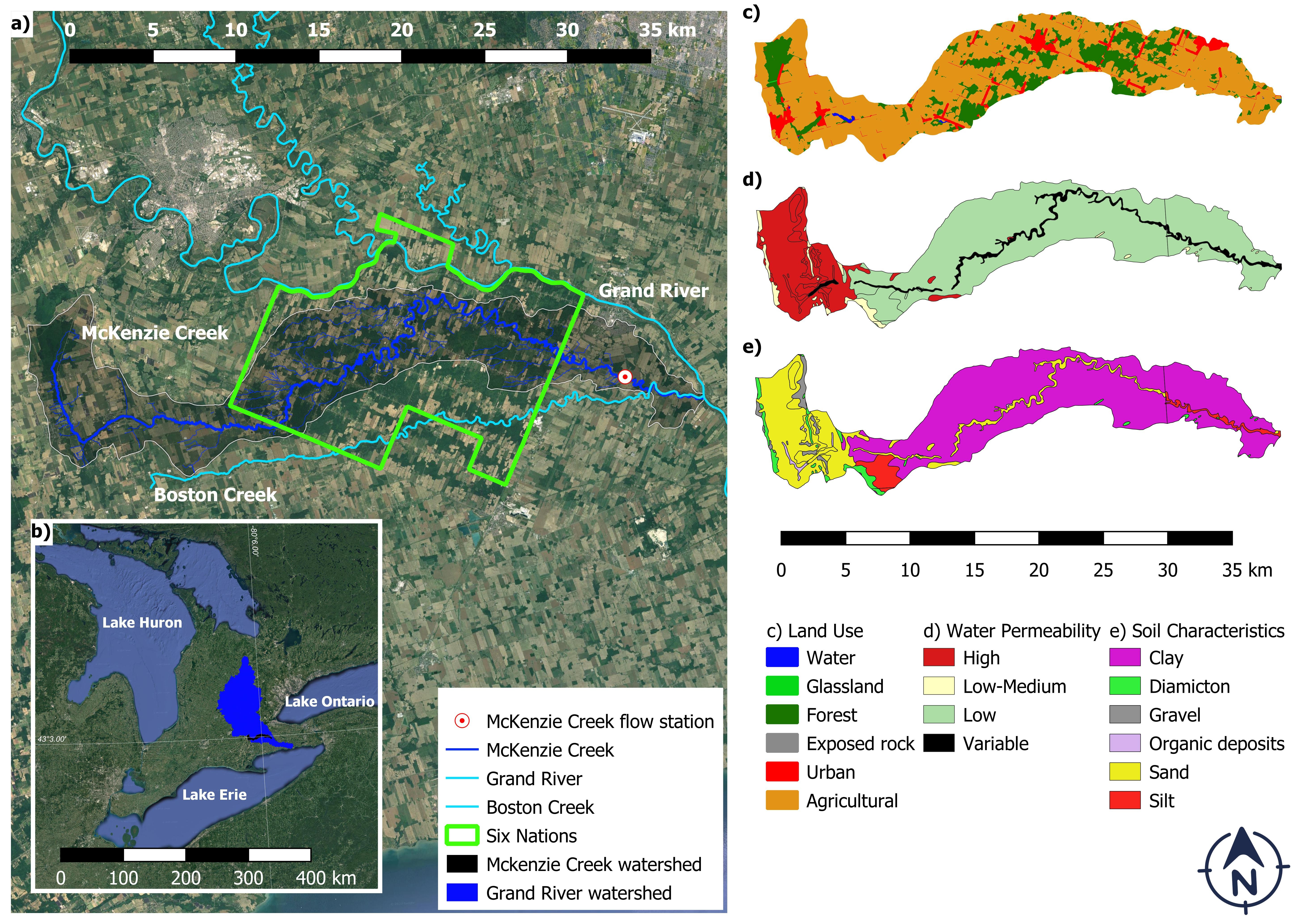
Six Nations of the Grand River is one of the most highly populated Indigenous communities in Canada with around 29,000 residents. A primary source of water is from the McKenzie Creek, which is mostly used for agricultural purposes for the Six Nations and non-Indigenous communities throughout the watershed.
According to a recent study, Ontario’s McKenzie Creek watershed is likely to face increasing levels of water scarcity throughout the rest of the century. This research examines how water scarcity, due to factors like climate change, land use and water consumption, will have impacts for agricultural production for the Six Nations.
“I live on reserve and it’s just something that you don’t really think about on a daily basis until you’re actually living it, where you see your appliances die early because of the hardness of the water,” said Six Nations Senior Manager of the Environment Sara Curley-Smith.
Of the water available for Six Nations, the people here also face ongoing challenges with water quality. This compounds the effects of water insecurity.
“You have the majority of families at Six Nations that are water insecure already, so if they’re water insecure in good times, you can’t imagine what’s coming our way in the next 50 years,” said emeritus professor of Indigenous Studies at McMaster University Dawn Martin-Hill, who was also involved with the study.
Martin-Hill leads the Ohneganos Indigenous Water Research Program, which the study was a part of. She is also part of an initiative to create a Haudenosaunee Environmental Research Institute that centers Indigenous knowledge to better understand these issues. Part of her interview is also featured in the article, “Water is Life, Six Nations lead international approach to long-standing water insecurity.”
“In the design of the project we consulted with the environmental folks at Six Nations, the fish and wildlife folks, leaders, traditional knowledge holders, we just got a sense of what their concerns and priorities were,” Martin-Hill said. “Climate change came up quite a bit because cities and towns have access to that information and modeling, whereas reserves and reservations do not.”
Throughout the project process, Indigenous traditional knowledge holders helped guide the scientists on where and when to conduct the research, Martin-Hill said.
This led to a focus on the McKenzie Creek subwatershed, which was understudied compared to the Grand River watershed, according to Tariq Deen, lead author of the study at McMaster University.
“That’s why that project was so beneficial in terms of process, because traditional ecological knowledge was the foundation of it,” said Smith.
Traditional ecological knowledge incorporates Western and Indigenous knowledge together in dialogue, Martin-Hill said, to better understand the environment.
The McMaster University study based its projections of water scarcity off of the Intergovernmental Panel on Climate Change (IPCC) Representative Concentration Pathway scenarios 4.5 and 8.5, which signify medium and high greenhouse gas emission and climate warming levels.
The study by hydrologists and geographers looks at the projected levels for two types of water; blue and green water. While the study anticipates increased levels of water scarcity for both types of water in the future, Six Nations has already experienced these challenges.
Blue water is fresh water that can be extracted for human activities.
To account for blue water scarcity, the study used two scenarios. The first was a low estimate scenario using monthly agricultural water consumption patterns. The second scenario estimated higher water consumption using the maximum amount of water that could be extracted, assuming this would occur with warming climate trends and an increase in agriculture.
“Under that scenario, we saw that blue water scarcity would increase to a level where it would negatively affect the ecosystem,” said Deen.
Another study on the Grand River watershed from the University of Guelph found similar trends in blue water scarcity considering increasing water demands due to climate change.
“This is a common trend where if you have more withdrawals and more agriculture use, there would be some scarcity that would be coming in,” said author and University of Guelph associate professor in water resources engineering Prasad Daggupati.
However, water use data for the Six Nations was not included in the water scarcity estimates of the McMaster University study. This is because the Grand River Conservation Authority, who manages the McKenzie Creek watershed, does not collect water use data for the Six Nations. This means the water scarcity levels projected in both blue water scenarios are a low estimate.
“Under climate change scenarios, we saw that green water scarcity would increase throughout the next century,” Deen said.
Similar future patterns for green water scarcity were also found in the University of Guelph study, which used the same Representative Concentration Pathways to account for future impacts of climate change.
Green water is the type of water that remains in the soil for plant growth.
“Moving into the future, obviously with increased precipitation, there would be more evapotransportation happening up, which would result in having less soil water available, which is green water,” said Daggupati.
Evapotranspiration is the process where water on land and in plants evaporates into the air.
On top of agriculture and climate factors, corporations like BlueTriton (formerly Nestlé) have a history of extracting water without consulting and securing consent from Six Nations.
“We believe there are good veins of water that are much deeper than what wells were dug to, and that’s the water that Nestlé had been taking which we didn’t know about — 3.6 million liters every day for the last decade,” Martin-Hill said.
According to Smith, this is a big issue because 70% of the community relies on groundwater. This issue is further exacerbated by the potential for wells running dry and the inability to support the agriculture that a lot of people at Six Nations rely on.
“I think our people have a problem with the way Western science compartmentalizes and silos things such as water,” Martin-Hill said. “We see ourselves as a part of the natural world.”
Editor’s note: This story was updated to clarify that Nestlé became BlueTriton and to correct a quote.