

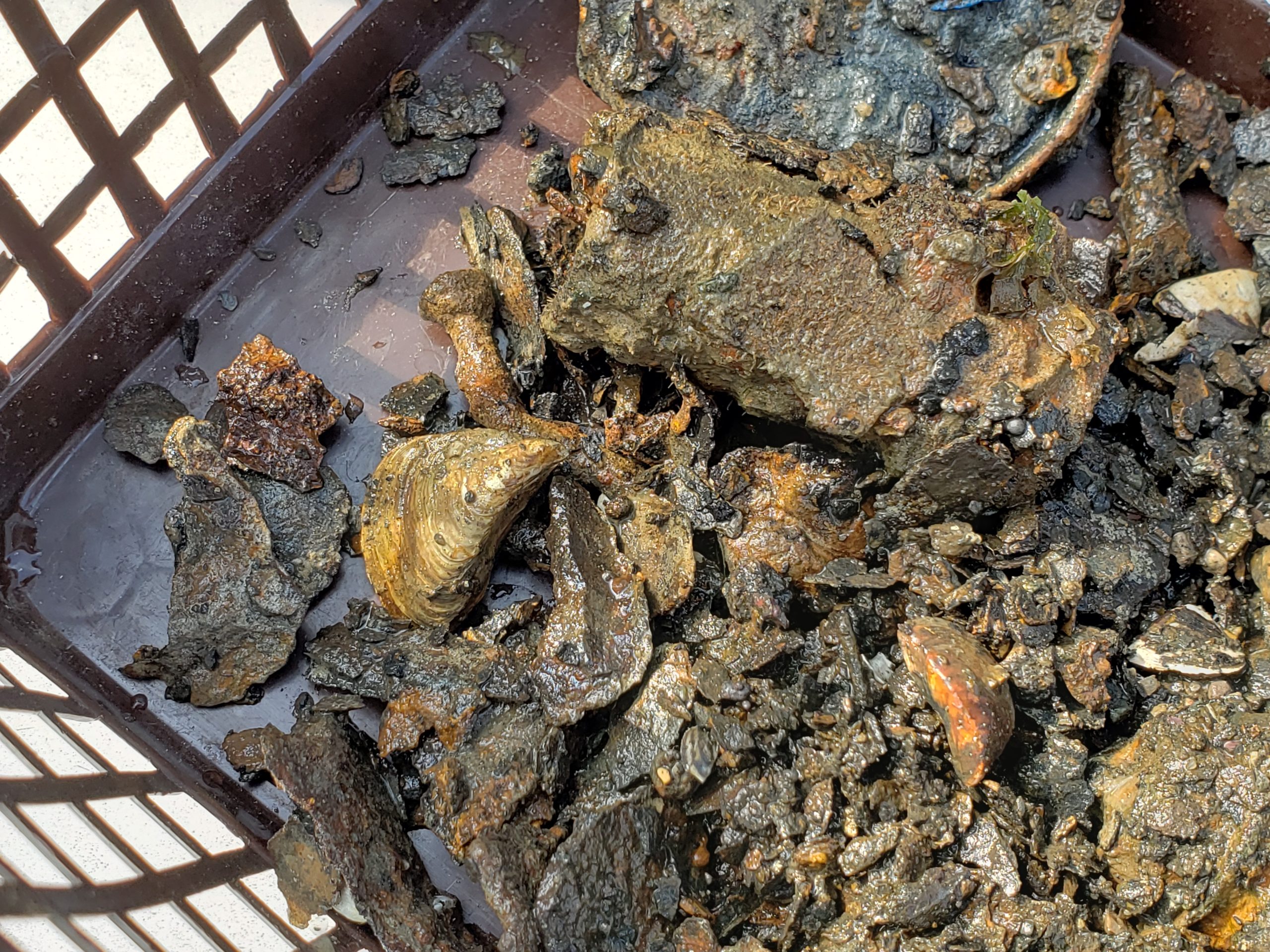
Zebra mussels are not native to the Great Lakes. They were first discovered in the area in the late 1980s, and it has been an ongoing battle to get rid of and control them ever since.
But what’s the issue? Mussels have long existed in the Great Lakes, and the dreissenid zebra mussels and native unionid mussels are both filter feeders.
The problem is that’s about where the similarities between the invasive and native species end.
For one thing, native mussels aren’t as efficient as zebra mussels, according to Diane Waller, a research fishery biologist with the U.S. Geological Survey. Waller studies zebra and quagga mussels at the USGS’s Upper Midwest Environmental Sciences Center.
A native mussel can take 3 to 5 years to mature, and they take a while to reproduce because they are parasitic.
Zebra mussels mature in a year and release their larvae into the water to develop.
The result is a storm of zebra mussels rapidly reproducing and spreading throughout the Great Lakes wherever the water takes them.
It’s an issue that has cost Canada and the United States separately billions of dollars.
But while many people know that zebra mussels are impacting the lakes, not many people know what that full range of impact is.
Here’s a list of those effects, both good and bad:
Coating pipes
One of the more well-known problems with zebra mussels is the way they rapidly coat water intake pipes, which is a problem for drinking water treatment plants, power plants and any other industry that’s pulling water out of the lakes through a pipe.
“Any facility that’s pulling water out of the Great Lakes has to deal with the potential for the mussel to be settling in their pipes and somewhere else in their system,” Waller said.
Sailing and shipping
Name an aspect of the boating or shipping industry, and zebra mussels are probably interfering in some way, whether it’s fouling up hulls, motors, docks or marinas.
Native mussels dying out
Freshwater mussels throughout the nation are already struggling, and it isn’t helping the situation when zebra mussels come in and take over their food and spawning grounds.
In many smaller inland lakes but also some areas of the Great Lakes where the invasive mussels have come in, native mussel species have been wiped out.
Harder for fish to spawn
Some Great Lakes fish spawn in reefs that contain piles of rocks and boulders, laying eggs in the crevices.
Zebra mussels have coated some of these reefs, resulting in the larvae not spawning well, affecting local fish populations, Waller said.
Dropping usage and values of beaches and beach property
Zebra mussel shells litter beaches and beachfront property around the Great Lakes, decreasing property values and the amount of beach use in those areas.
Changing research
The impact the mussels are having on research in the Great Lakes may not necessarily be bad, but there has been an undeniable effect.
At the Upper Midwest Environmental Science Center—the USGS research center Waller works at in La Crosse, Wisconsin—a chlorination plant was added to the facility once it started studying invasive species because of the risk involved in returning water to the lakes after it’s had contact with invasives.
“When you’re doing research, you have to follow all the prevention steps everyone else does and facilities are pulling water from all over the Great Lakes,” Waller said.
The way zebra mussels changed the Great Lakes ecosystems means the focus and base of knowledge for ecological and fisheries research has had to shift as well.
“We’ve had to reformulate our knowledge of things like nutrient cycles and trophic transfers and fisheries populations,” Waller said.
Cases of botulism
There appears to be a link between invasive zebra mussel populations and occurrences of botulism, according to Waller.
Botulism is a poisoning caused by toxins produced by Clostridium botulinum bacteria.
The theory is that the mussels filter out so much of the phytoplankton and suspended solids in the water that’s increased the growth of aquatic plants such as cladophora. When the cladophora dies and decays, it makes the water go low in oxygen, which could be what’s triggering the bacteria that causes botulism.
Changing food web
A water column is a conceptual column of water that runs from the surface of a lake to the lakebed.
With the zebra mussels coating lakebeds and filtering so much of the nutrients in the water column, a lot of energy is transferred to the bottom, which makes it more available for organisms living in the benthic—or bottom—zone of a water body.
Whether that’s a good or bad thing is up for debate.
“Initially we might say this particular species might benefit, but really I think we don’t yet know what some of those secondary effects might be even if it does look beneficial to a couple organisms,” Waller said.
Water clarity
Mussels are filter feeders, which means they feed by clearing nutrients from the water passing through them.
The rate of reproduction and spread of zebra mussels make them efficient cleaners of Great Lakes water, but whether that’s a positive or negative thing depends on who you’re asking.
“Some people do think the water clarity is a benefit,” Waller said. “I think that really depends. They can be accumulating like contaminants and bacteria that could be human pathogens, so it could be beneficial that they’re removing some of those, but then they also become a sink for it that could later be released.”
Featured Image: Invasive mussel shells among debris from the Detroit River (Photo Credit: Natasha Blakely)