
Bureaucratic and legal dawdling continues seven years after record bloom
Delay has been the watchword in dealing with Lake Erie’s algae problems since a record bloom hit the lake in 2011.

It was also in 2011 that then U.S. EPA Administrator Lisa Jackson told a gathering of Great Lakes advocates in Detroit that reducing nutrient runoff to Lake Erie would be a focus area for the agency.
Since then, little of substance has been done to combat algae, and the U.S. Environmental Protection Agency continues to push back on stiff regulation that could have a positive impact.
Delay surfaced again in federal court in Toledo this week, when Judge James Carr chose to focus on “procedural issues” at a Lake Erie hearing, according to Madeline Fleisher, lead attorney for the Environmental Policy and Law Center (ELPC).

ELPC, along with Advocates for a Clean Lake Erie, want the court to order the U.S. Environmental Protection Agency to force Ohio to put Lake Erie on a nutrient pollution diet known as a Total Maximum Daily Load (TMDL).
A TMDL would establish limits on the amount of nutrients that could flow to the lake and they’d be legally enforceable under the Clean Water Act.
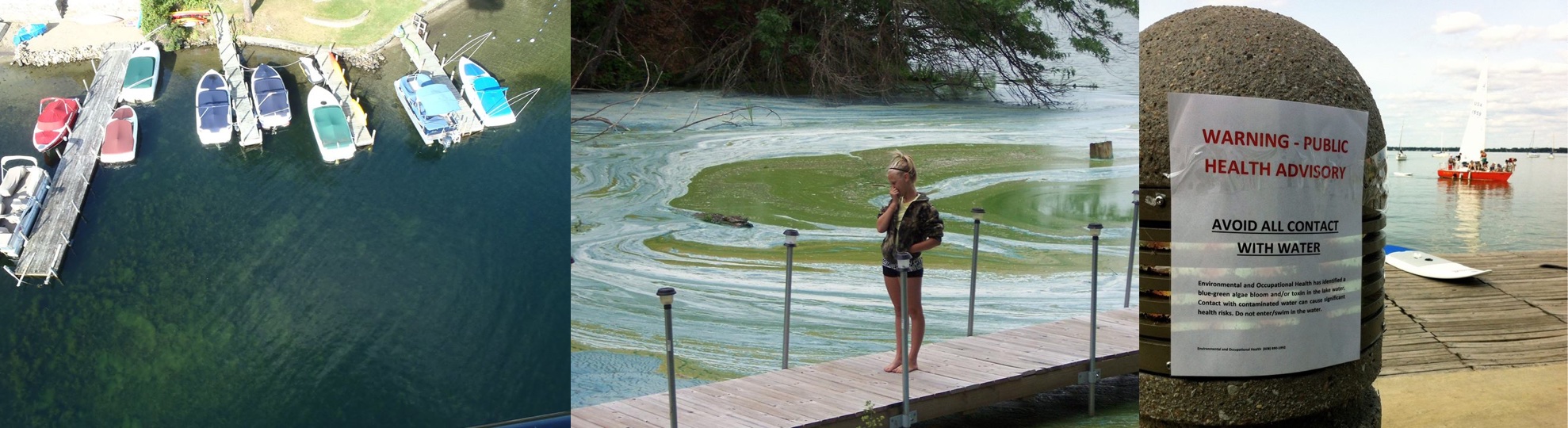
Nutrient runoff from farms is the primary cause of algae pollution and the Ohio EPA and the state’s agriculture interests have long-opposed a TMDL mandate. They say that voluntary measures by farmers can reduce the runoff to acceptable levels.
To date, those measures have been unsuccessful.
The U.S. EPA has generally let Ohio manage the algae problem.
“Ohio is violating the Clean Water Act”
Advocates for a Clean Lake Erie executive Mike Ferner told Great Lakes Now that “Ohio is violating the Clean Water Act” when it refuses to set a TMDL.
In previous hearings, Judge Carr has expressed skepticism about the U.S. EPA’s position that the plaintiffs’ case should be dismissed, to the point of questioning if the EPA was acting in “good faith.”
But instead of a ruling this week, Carr decided to deal with procedural issues “before he rules on the substance” of the case so those issues don’t impact his decision on appeal, ELPC’s Fleisher told Great Lakes Now.
Judge Carr told the parties to check in with him by phone on August 30th, and “meanwhile no substantive decision is forthcoming,” Fleisher said.

Ironically, Acting U.S. EPA Administrator Andrew Wheeler, while touring the Lake Erie region recently, said that a TMDL has been effective in dealing with similar algae problems in the Chesapeake Bay.
Asked to explain the disconnect between Wheeler’s statement and the fact that the agency is opposing a TMDL for Lake Erie, EPA spokesperson Enesta Jones did not address the TMDL issue.
In an email, Jones told Great Lakes Now that EPA works collaboratively with state and local governments on water quality issues throughout the country.
“EPA engages with states and local governments throughout this process to gain critical on-the-ground expertise that helps identify an approach that works best for the local community,” Jones said.
Whatever the policy approach, EPA’s goal is safe and clean drinking water, according to Jones.
Ohio Commission fosters more delay
In July, after years of not taking action, Ohio Gov. John Kasich issued an executive order that would require certain farming districts to develop plans to reduce nutrient runoff to Lake Erie.
But the order requires review by Ohio’s Soil and Water Conservation Commission and that group has ordered additional study of the issue which is likely to delay implementation, if it happens, into 2019. By then, a new governor will be in office who has no ownership of the order.
Action in the field would not take place until 2020.
That would be six years after the 2014 Toledo water crisis put a spotlight on Ohio’s Lake Erie algae problems.
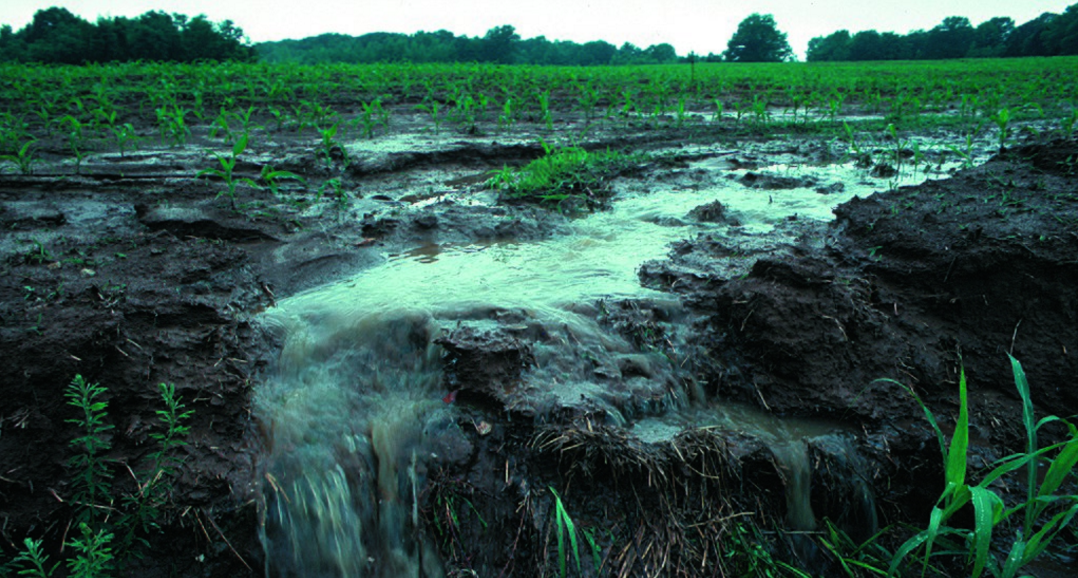
That Soil and Water Commission’s decision to do a study has the support of the Ohio Farm Bureau which has maintained that voluntary nutrient runoff programs are the answer.
Even if Kasich’s order is implemented, it’s not enforceable under the Clean Water Act, whereas a TMDL is.
In spite of the delays, the plaintiffs expressed optimism to Great Lakes Now.
“We’re still confident in our argument that Ohio can’t opt out of the Clean Water Act, but we know any lawsuit has to work its way through the process,” ELPC attorney Fleisher said.
Lake Erie advocate Ferner called the legal process “frustrating.”
He added, “It may take more time, but we’re hopeful Judge Carr will ensure the U.S. and Ohio EPA follow the Clean Water Act.”
Even if they lose in court, Fleisher said her group would continue to work on nutrient runoff issues at the state level.
Featured Image: Recreational water managers informational toolbox, Photo by epa.gov cc 1.0