
This article was updated after the executive order on August 27.
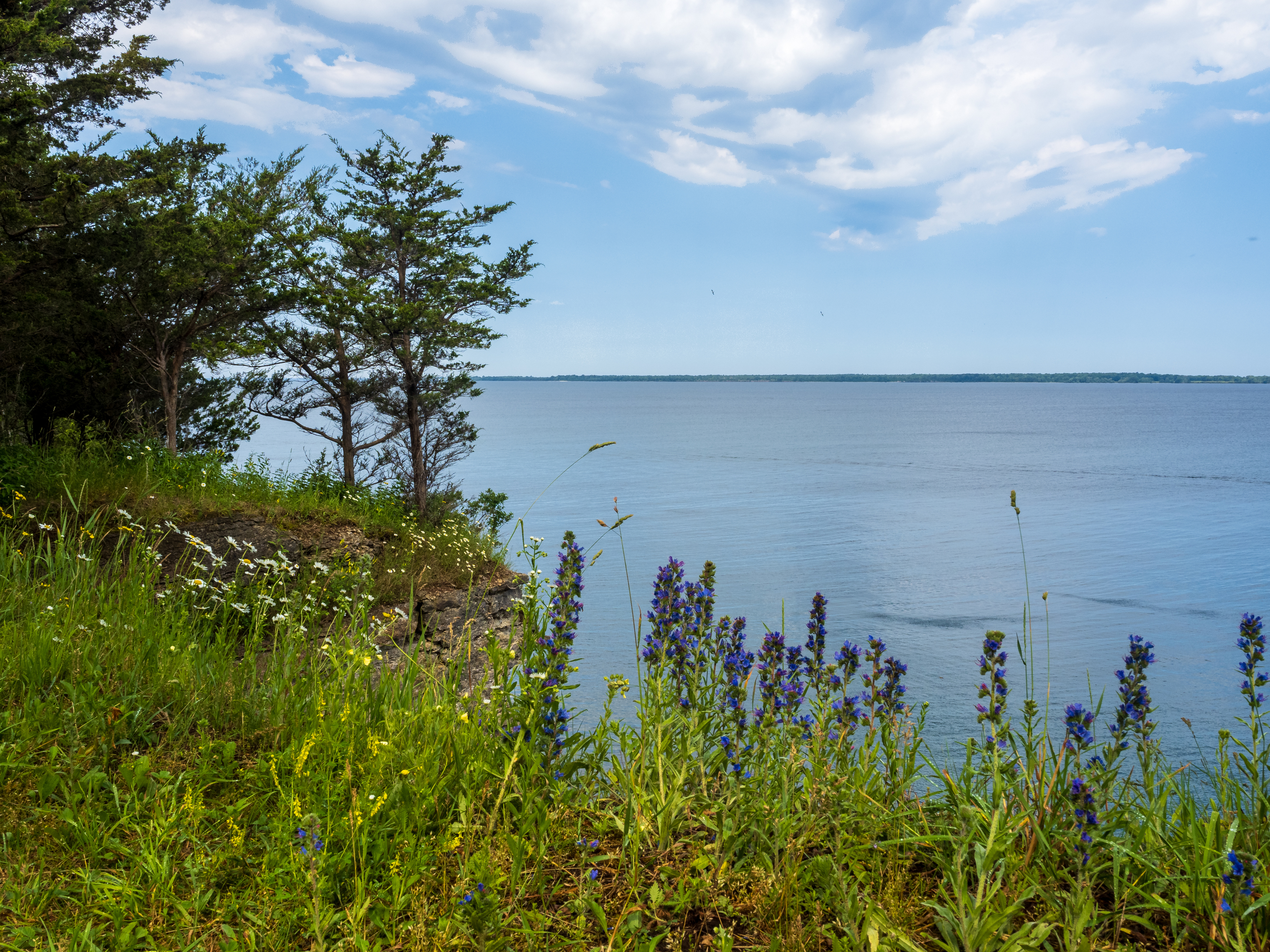
Will Pres. Donald Trump really rename Lake Ontario to Lake America? That was the question, after the U.S. President took to Truth Social on Tuesday, August 25 and said: “The United States is giving serious consideration to changing the name of Lake Ontario to Lake America in that we don’t expect to [be] doing much business with Ontario any longer.”
Only a few days later, on Thursday afternoon Trump signed an executive order to change the name of the great lake to “Lake America.” This was a similar process to when he initiated the name change from the Gulf of Mexico to the Gulf of America on January 20, 2025, on his first day in the Oval Office.
To change a geographic name in the U.S. is a months-long process after applying through the U.S. Board on Geographic Names. This comes on the heels of failed trade negotiations, in what is being referred to as an intensifying trade war between the United States and Canada. On the same day at the Truth Social post, Canada struck back with retaliatory tariffs on approximately $20 billion worth of goods from the United States.
But, just because one country changes a geographic name, does not mean other countries have to recognize the alteration. According to NewsNationNow, examples of this are how the U.S. still refers to the country of Burma even though the country changed its name to Myanmar in 1989. China’s South China Sea is referred to the Eastern Sea by Vietnam and the West Philippine Sea by the Philippines. And what the international community refers to as the Persian Gulf is called the Arabian Gulf by countries in the region.
“Ontario” is a transliteration or phonetic translation of an Iroquoian word thought to mean “lake of shining waters” or “beautiful great lake.” According to a 2025 interview with Ekaterina Mikhailova, Associate Professor in Border Studies at Norway’s Arctic University (UiT), experiences and sensory impressions are rooted in Indigenous place names to often describe the characteristics of historical events, resources or landscapes as part of a larger system.
“More Indigenous territory has been claimed through maps than with weapons,” said Mikhailova in the interview.
This is not the first time in the last two years that a U.S. politician suggested changing the name of one of the Great Lakes. Below is a revised version of Great Lakes Now’s reporting on that subject:
On March 14, 2025, Ohio gubernatorial candidate Vivek Ramaswamy said that perhaps Lake Erie should be changed to Lake Ohio.
According to reporting from Cleveland.com:
“Anybody think if there’s a Lake Michigan, maybe there should be a Lake Ohio around here?” Ramaswamy said, about 13 miles away from Lake Erie. “I’m feeling that. We’ll talk about that a little bit more as this campaign progresses.”
Ramaswamy said this at a GOP fundraiser in suburban Toledo. The Cincinnati Enquirer reported on March 17 “he was joking,” but prompting the initial statement, Ramaswamy talked about the advantages of Ohio’s proximity to Lake Erie and mentioned Trump’s decision to rename the Gulf of Mexico to the Gulf of America.
Edith Olmsted wrote in the New Republic: “And while many may had hoped that Trump was only joking about changing the name of the Gulf of Mexico to the Gulf of America, that’s exactly what he did on his first day in office.”
What’s in a name?
According to the Michigan Department of Environment, Great Lakes and Energy (EGLE), Lake Erie received its name from the Eries, a Native American tribe who once lived on the southern shore of the lake. “Erie” is shorthand for the Iroquoian word erielhonan, meaning “long tail.” From about 2,000 B.C. to 1700 A.D. Native Americans lived, hunted and fished on this lake.
When looking at history, changing the names of the Great Lakes is not completely unheard of. In a map made in 1712, Lake Ontario was known as Lake Frontenac, named after the French soldier and Governor General of New France.
Of course, before that, there were the names that Native Americans gave the lakes. For instance, Lake Superior was (and is still referred to) as Gitchi Gumee, which translates roughly to “big sea.” Lake Huron was once labeled as Lake Karegnondi on a 1656 map by Nicolas Sanson. “Karegnondi” was thought to be what the first inhabitants, referred to as the Wyandot (also known as Huron-Wendat) by French explorers, called the lake. Karegnondi is thought to mean “Lake of the Hurons,” “Freshwater Sea” or “lake.”
In today’s world, according to additional reporting from the Cincinnati Enquirer, there must be a compelling reason before “a proposal to rename a natural feature should be submitted to the U.S. Board on Geographic Names.” Also noting that it would take at least six months, “allowing time for consultation with states, tribes, mapmakers and other interested parties.”
What’s the impact?
According to The Conversation: “People in power have long used place naming to claim control over the identity of the place, bolster their reputations, retaliate against opponents and achieve political goals.
These moves can have strong psychological effects, particularly when the name evokes something threatening. Changing a place name can fundamentally shift how people view, relate to or feel that they belong within that place.”
The Conversation authors went on to discuss how when different leaders take power, and frequently change the names of places or geographic landmarks, that can lead to confusion in a never-ending name game. Identity and security are very much tied to our sense of place. They suggest an alternative: what is the renaming of landscapes was actually participatory?
For more on this specific cultural impact and the history of renaming bodies of water in the Great Lakes region, check out our contributor Staci Lola Drouillard’s July 2025 column of Nibi Chronicles.
“If you studied American History, but especially Native American history, you have a familiarity with the fact that not just in Ojibwe country, but throughout the country, missionaries often interpreted any place name, any personal name, that had the word ‘spirit’ in it to ‘devil,’” said Erik Redix, Ojibwe Language and Environmental Education Coordinator for the Grand Portage Band of Chippewa, in 2023 to Great Lakes Now contributor Drouillard. “So, the Devil Track River, Devil Track Lake — the Ojibwe name obviously isn’t [referencing] the devil. Its original name is Manido bimadagakowini zibi, which means, ‘Spirits walking on the Ice River.’ And to me that gives a much richer understanding of that place. It’s just a beautiful name.”