
Illinois is now the first Great Lakes state to classify plastic pellets as a pollutant.
Gov. JB Pritzker signed legislation late last week that is aimed at reducing a significant source of plastic pollution in the region’s waterways.
The new law, the Plastic Pollution Control Bill, requires the Illinois Environmental Protection Agency to establish regulations on manufacturers handling plastic pellets. Advocacy groups say the law will help prevent millions of pellets from entering fresh water.
Andrea Densham, regional director of government affairs for the Alliance for the Great Lakes, said this will set an example for other Great Lakes states.
“This is the first time that a Great Lakes state is going to be designating plastic pellets as a pollutant,” Densham said. “It allows us to hold the producers and transporters of these pellets responsible for not polluting them.”
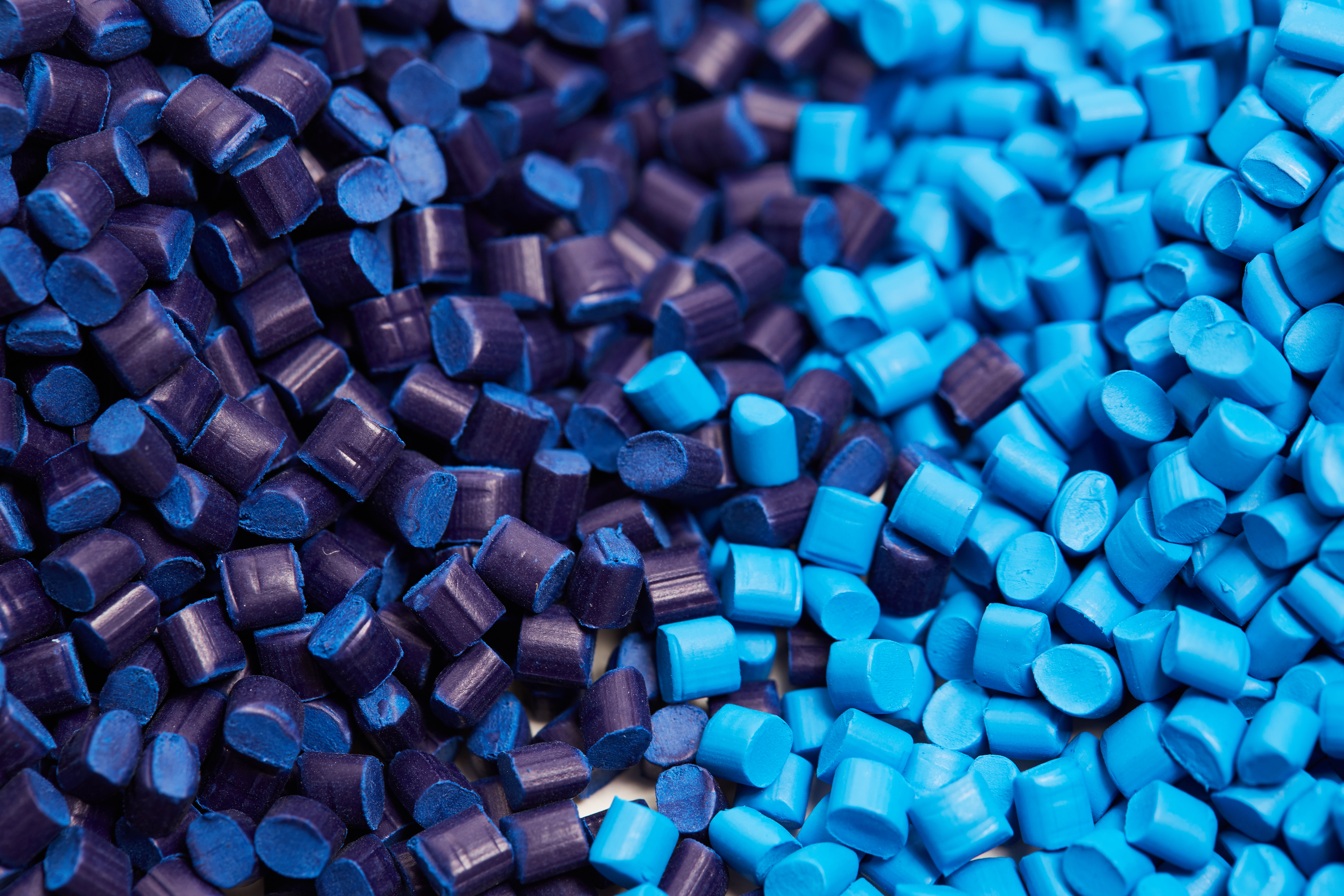
The lentil sized pollutants are transported by truck, train and ship before being manufactured into consumer products. Plastic pellets are melted together and then shaped into many everyday items, including food containers, water bottles and car parts.
Often, this results in spills on land and by waterways, Densham said.
Densham explained that from start to finish, these plastic pellets are manufactured in this region. From the petroleum and chemicals, to the creation of the pellets, and the final products like plastic water bottles.
“That’s why it’s so important to prevent the pollution at the source,” she said.
The law arrives amid growing concern about plastic pollution in the Great Lakes. Environmental groups estimate that roughly 22 million pounds of plastic enter the lakes each year, threatening wildlife, water quality and ecosystem health.
This comes amid heightening concern around plastic pollution in the great lakes. It is estimated that roughly 22 million pounds of plastic enter the lakes every year.
Although the pellets look seemingly small, researchers say they can be dangerous to wildlife, especially in large numbers.
Tim Hoellein, a biology professor at Loyola University Chicago, documents plastic pellet contamination in fresh waterways. During studies in waterways around urban areas, his team repeatedly found pellets at sampling sites.
“We’ve now done these measurements at a variety of sites in the Chicago area,” Hoellein said. “We find these pellets are at almost every site that we go to.”
At one site, he says he was even able to trace the pellets to a nearby manufacturing facility that was releasing them into water.
“These little pellets represent what we would call a point source,” Hoellein said. “They represent a real opportunity to potentially reduce their occurrence in the environment by focusing on those point sources.”
The pellets can pose major risks to wildlife. To fish, birds and other aquatic species, they resemble natural food sources like fish eggs or seeds. Hoellein says this causes digestive issues for the animals.
The pellets often are coated in dyes, fire retardants or other chemicals—which can dissolve into the organisms if ingested.
“Some of those are toxic or are hormone mimics,” Hoellein said.
Hormone mimics are also known as endocrine-disrupting chemicals (EDCs), and according to the National Institute of Environmental Health Science they are “natural or synthetic substances that interfere with the body’s endocrine system by binding to hormone receptors and inappropriately triggering or exaggerating cellular responses.”
These reasons make the bill that much more necessary, Emily Kowalski, Associate Director of Environment Illinois said.
“This is really a common-sense first step,” Emily Kowalski, Associate Director of Environment Illinois, said. “Plastic pellet pollution is an unnecessary source of plastic pollution, and taking steps to prevent pellet loss during manufacturing is an important step.”
This isn’t the first type of bill to be introduced in the Great Lakes Region.
“This sort of bill has been brought up in Michigan, Minnesota, and also similar bills have been brought up in the U.S. Senate.
A bill in Michigan’s Senate was introduced in late 2025 that would ban plastic microbeads.
In 2015, Minnesota passed a law prohibiting the manufacturing of synthetic plastic microbeads.
Yet, neither of these pieces of legislation work to prevent microplastics in the Great Lakes as the Illinois Plastic Pollution Bill does.
“There’s a lot of different sources of plastic pollution,” Hoellein said. “And there’s just as many different solutions to it. This approach represents one part of that wide array of solutions.”