
By Kelly House, Bridge Michigan
The Great Lakes News Collaborative includes Bridge Michigan; Circle of Blue; Great Lakes Now at Detroit PBS; Michigan Public, Michigan’s NPR News Leader; and The Narwhal who work together to bring audiences news and information about the impact of climate change, pollution, and aging infrastructure on the Great Lakes and drinking water. This independent journalism is supported by the Charles Stewart Mott Foundation. Find all the work HERE.
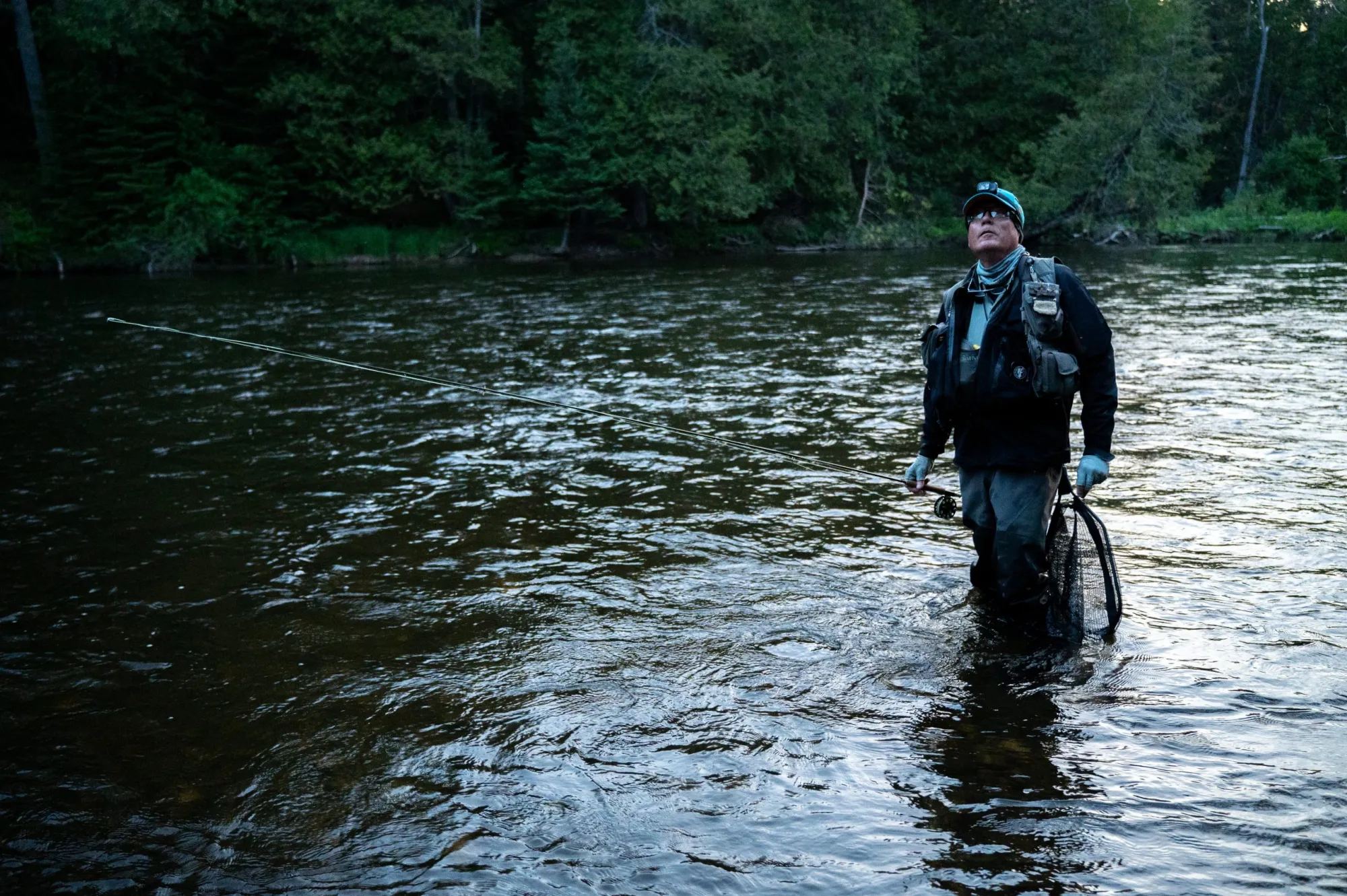
On any given summer evening along this storied Michigan river, Tom Buhr can be found fly fishing in cold, rushing water that makes him feel “more complete and better” than anywhere on Earth.
Fifty miles downstream on a pontoon in one of the Au Sable’s lake-like reservoirs, Douglas Ridenour can relate to the feeling.
The agreement ends there.
Despite a shared love for the river, the men stand on opposite sides of a struggle for its future, prompted by Consumers Energy’s proposal to sell 13 century-old Michigan dams — including six on the Au Sable — to a private equity firm.
For the company, it’s a financial decision designed to avoid hundreds of millions in maintenance costs and liability for high-hazard structures that don’t generate enough electricity to pay their way.
For many residents along the nationally-renowned 138-mile waterway that originates north of Grayling and empties into Lake Huron at Oscoda, a regulatory review of the deal has become a proxy for a deeper battle over whether the dams should exist at all.
The struggle for the future of the Au Sable mirrors a national debate. It pits environmentalists and fly fishers like Buhr, who favor free-flowing rivers with colder water and more fish, against flatwater enthusiasts like Ridenour who value the lakefront living created by reservoirs.
Across the country, “you’ve got old mill dams and old power dams that were important things at the time, but now maybe aren’t,” said Bob Dalton, a national dam safety expert based in Illinois. The question then becomes “what are we going to do now, and what’s it going to look like 100 years from now?”
At stake are not just the environment and ways of life for water users, but public safety, taxpayer dollars and the future of scores of businesses and communities that have popped up along the artificial lakes.
A nationwide issue
Across the nation, thousands of dams have exceeded the standard 50-year lifespan and face mounting maintenance costs.
The average US dam is 65 years old, while Michigan’s average is 80.
Consumers Energy’s 13 dams on the Au Sable, Grand, Kalamazoo, Manistee and Muskegon rivers average 106 and generate only 1% of the utility’s annual power output, while the cost to maintain them keeps growing.
In view of that math, Consumers wants to sell them for $1 apiece before their federal operating licenses expire in the coming years. The proposition has drawn rebuke from critics, who fear new owners won’t pay to keep the structures safe.
A state judge has advised utility regulators to reject the sale in a final decision expected this September.
Consumers officials say such an outcome would lead them to seek removal of all 13 dams — an effort sure to trigger yet more regulatory review and intense public debate.
Federal records show licenses for another 15 Michigan hydropower dams will expire in the coming decade, likely prompting similar debates about whether to keep, sell or remove them.
Nationwide, some 100 dams were dismantled last year, including six in Michigan. Experts expect the number to keep climbing as owners look to avoid costly repairs.
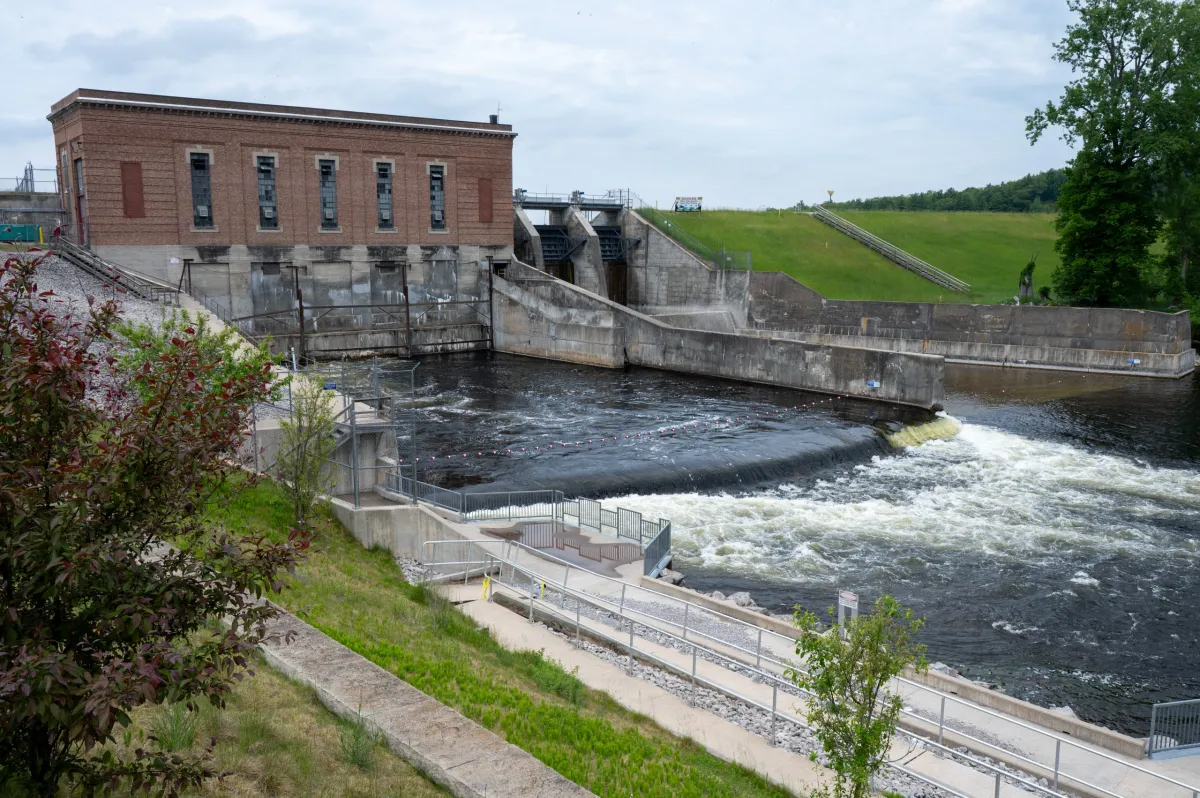
Here on the Au Sable, uncertainty about the fate of its six dams has reignited an age-old debate about what a river should be, and who gets to decide.
“Rivers are defined as flowing water,” said Bryan Burroughs, executive director of the river advocacy group Michigan Trout Unlimited. “You shut that off, and it’s going to cause a lot of problems.”
But to folks like Ridenour, who lives near the lowest Au Sable dam and has been recreating in its reservoir for more than 50 years, the impoundments enhance the river’s variety in ways too important to lose.
The Au Sable in its current configuration is “100% nature,” Ridenour said, but “I have no interest in being here if the river is only 20 feet wide.”
The river of dreams
Unlike other regions, where coldwater rivers are disappearing due to climate change, Ice Age glaciers blessed Michigan with a sandy landscape rich in frigid springs that produce blue-ribbon trout rivers.
The Au Sable stands out among them, a mystique owing to good publicity and relative proximity to Michigan’s population hubs.
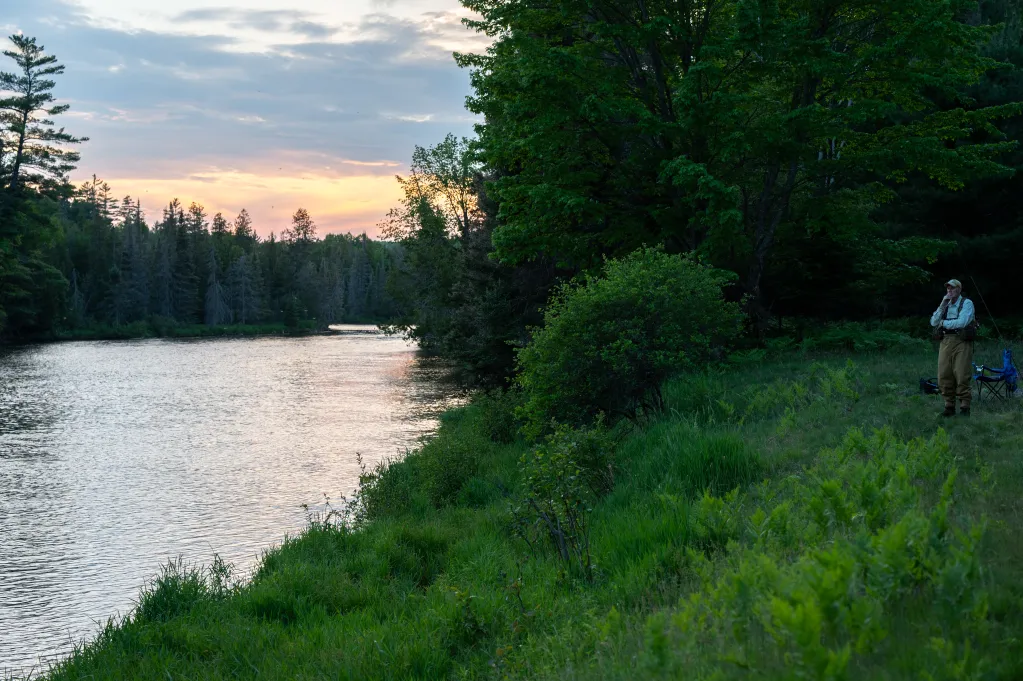
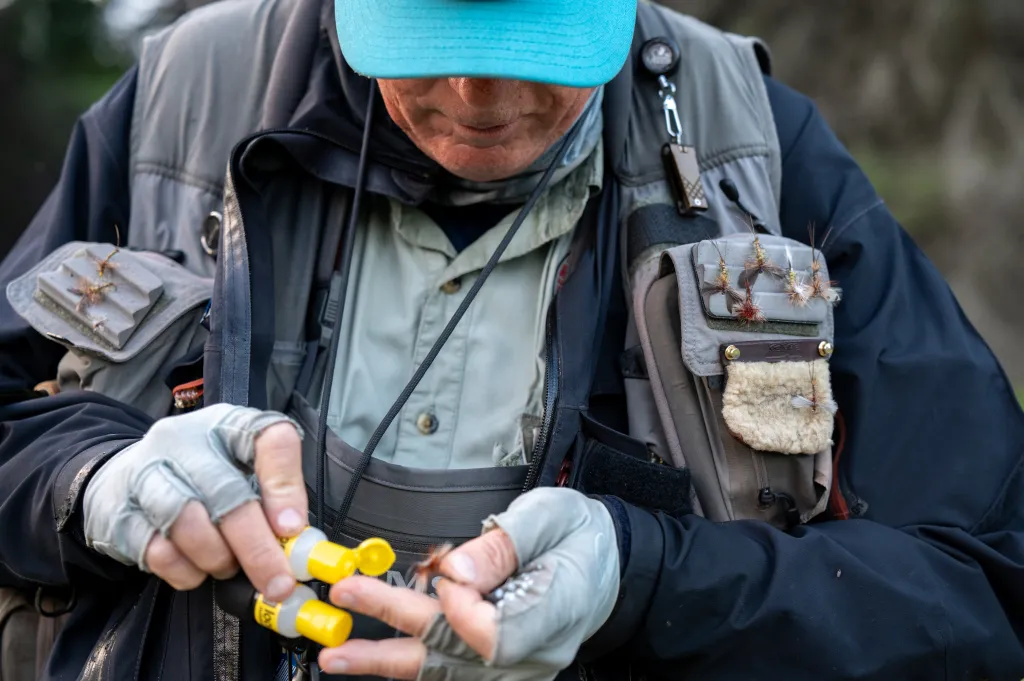
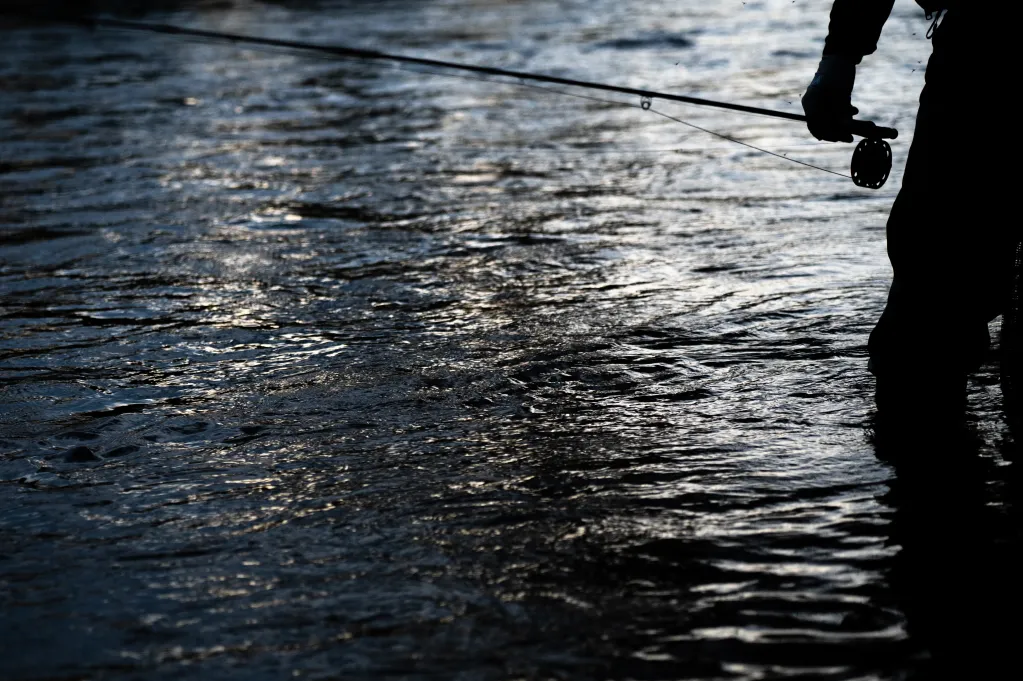
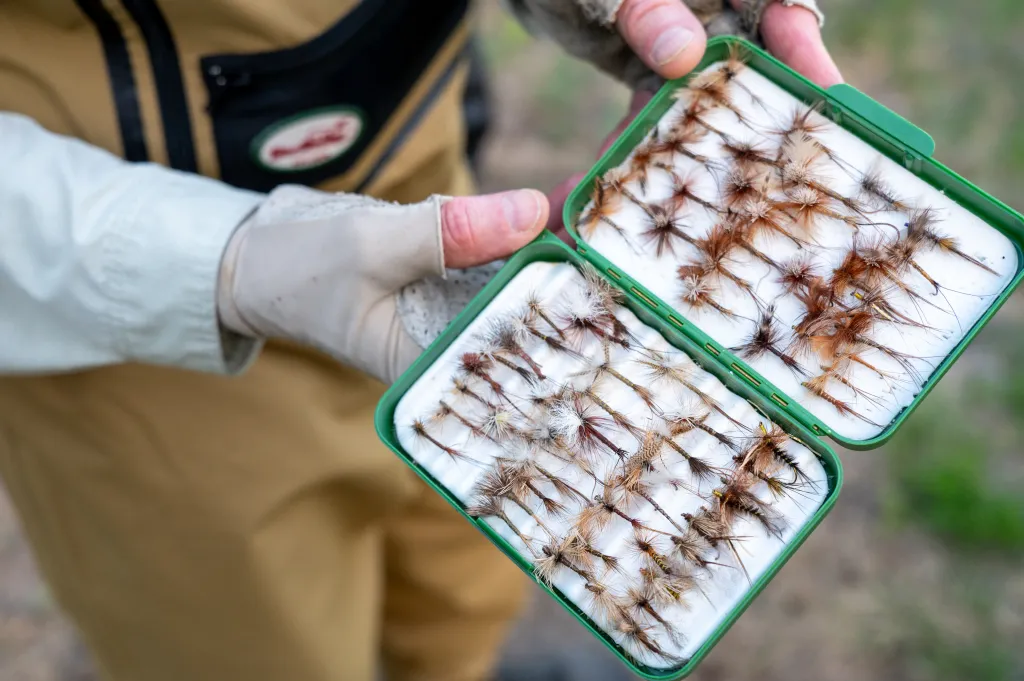
The river’s easy accessibility from Detroit, Flint or Saginaw has won it some influential boosters, from early 1900s lumber baron William Mershon to the founders of Trout Unlimited, a national river advocacy group that was born on its banks.
Au Sable disciples often describe it in near-spiritual terms: An 8-mile stretch near Grayling is known as “the holy waters.” A sign downtown glorifies it as “the best of all rivers.” People interviewed for this story called it “my cathedral,” “my happy place,” and “the place where I’m most at peace.”
On a late spring evening, it’s easy to understand the hype.
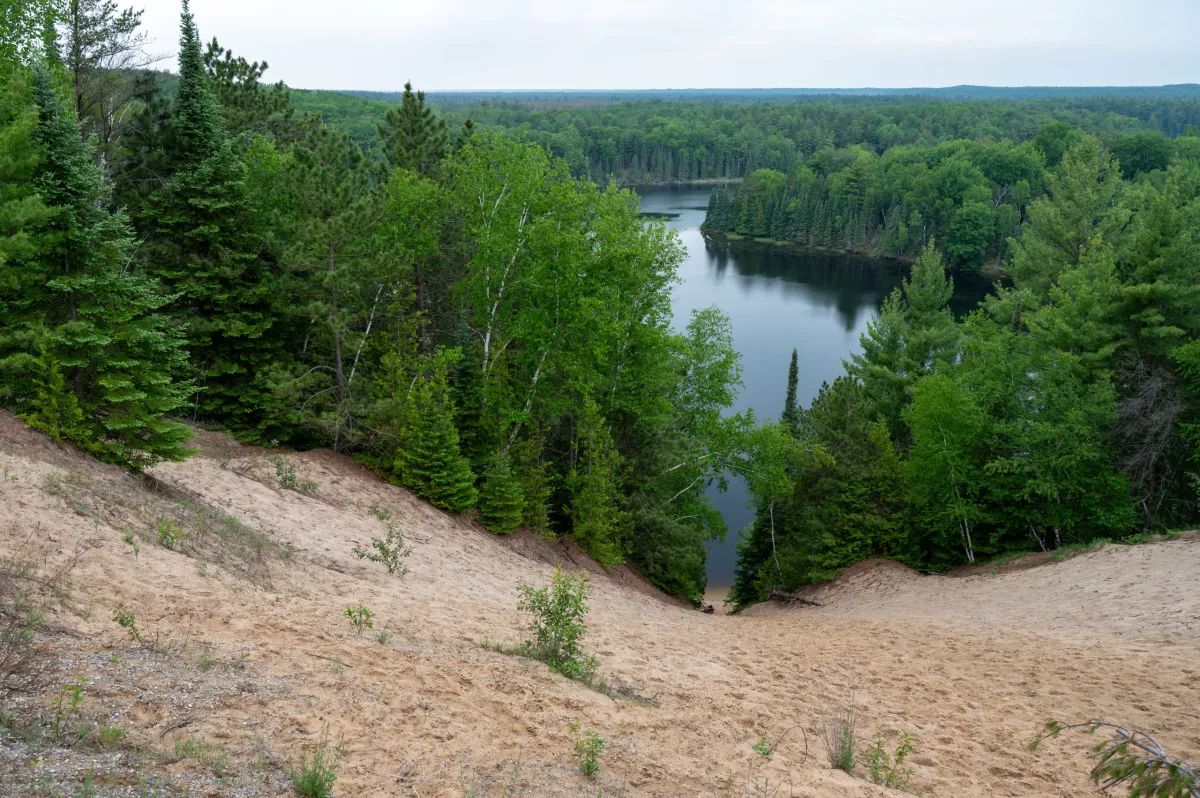
Bullfrogs bellow in the cedar swamps, trout leap from the water to feed on mating mayflies, loons glide between cattails and wild rice beds in stillwater reservoirs surrounded by towering dunes.
But pristine as the Au Sable may seem, it has been dramatically altered by humans — a period Buhr, the fisherman who has written two books about the river, laments as its “225-year monetization.”

The fur trade virtually emptied the watershed of its beavers. Unregulated commercial and sport fishing drove Arctic grayling to local extinction and dramatically reduced sturgeon, walleye, whitefish and sucker populations. Timber companies razed the pine forests, leaving the Au Sable sunbaked and sand-choked.
The subsequent building of hydroelectric dams fragmented the river into seven sections, submerging 59 miles between Mio and Oscoda under vast artificial lakes and prompting generations of debate about whether it was a good idea.
Should they stay or should they go?
Few along this river seem to be comfortable with Consumers’ plan to essentially give the dams away to a Maryland-based private equity firm in a deal that would cost ratepayers $3.4 billion and leave few guarantees about the structures’ future.
Prospective owner Confluence Hydro has vowed to shore up the dams to keep them operating for decades to come, but the deal doesn’t hold the company to those vows.
Many, including the judge who recommended denying the sale, wonder how Confluence intends to turn a profit on such costly assets. They fear the answer lies in skipping maintenance required for safety, or selling off thousands of acres of landholdings that surround the dams.
But given Consumers’ vow to dismantle the dams if the sale doesn’t proceed, some fans of the impoundments are willing to take the gamble.
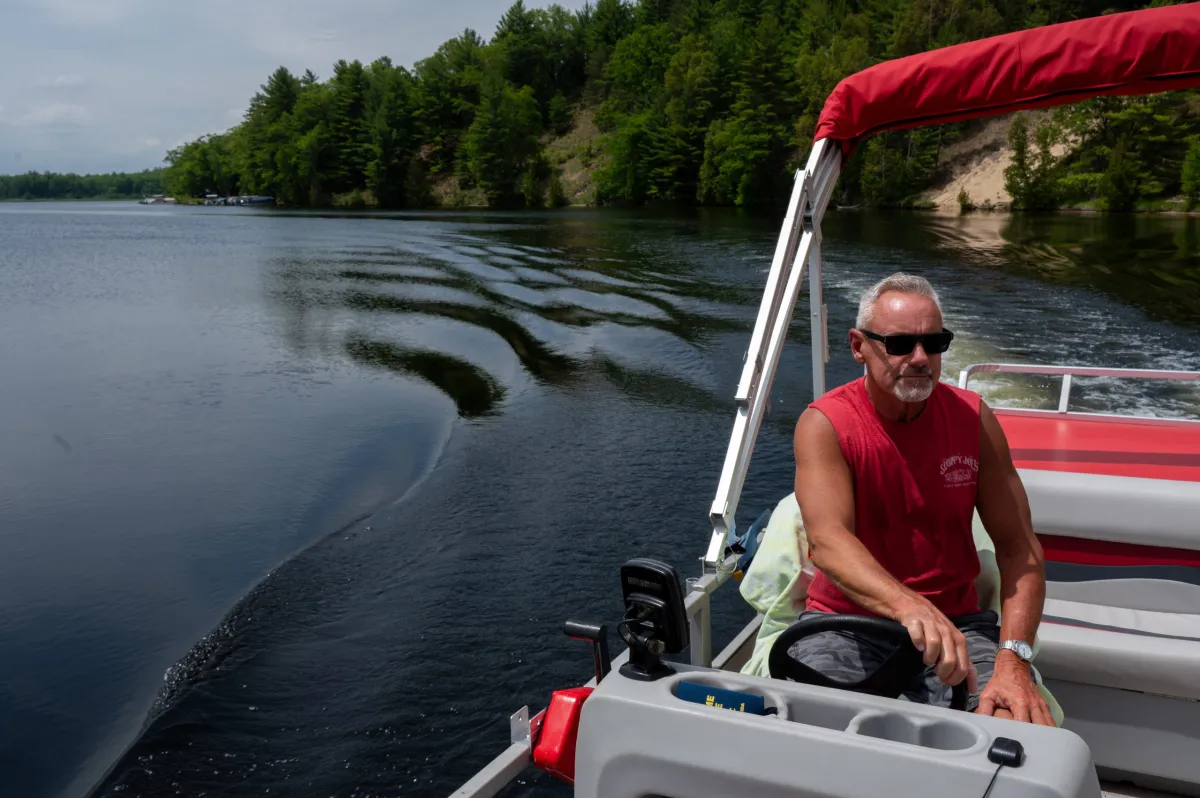
“They are the only horse traveling in our direction right now,” said Ridenour, the reservoir resident who co-administers a pro-dams Facebook group that has grown to 3,400 members. “So we kind of feel like the only choice we have is to hop on.”
The environmentalists and trout fishing enthusiasts who oppose dams see that as a perilous choice. In their eyes, removal is the best way to eliminate safety risks posed by the aging structures while righting a historic wrong.
Thanks to decades of tree-planting, sediment removal and other restoration work, the Au Sable has partly recovered from its industrial past, said Karen Harrison, president of the local Trout Unlimited chapter, “but it can come further.”
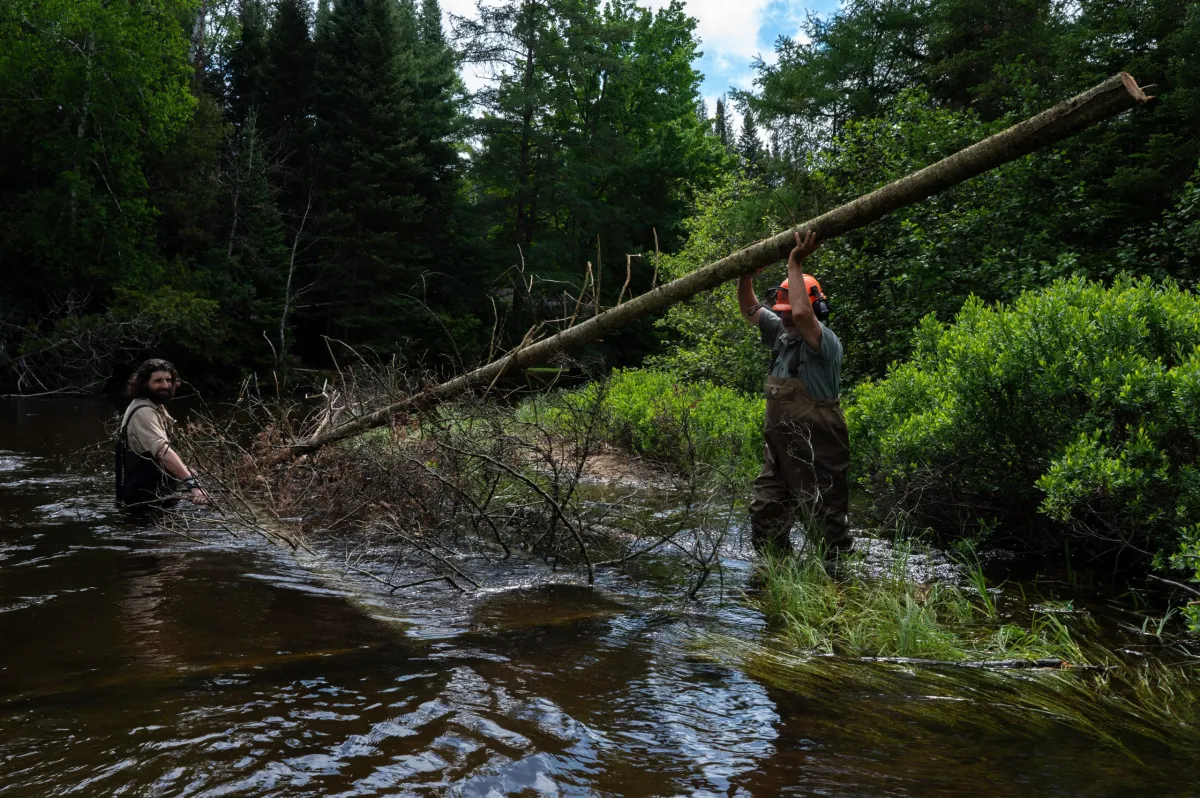
The dams block migratory fish from their habitat, contributing to sharp declines for a host of species. They trap sediment, starving the river of nutrients while muck piles up in the reservoirs. Fish die in the spinning hydroelectric turbines and the sun beats down on the pooled water, warming it to unsafe temperatures for coldwater fish.
Three of the Au Sable dams warm the river so badly they violate state standards, complicating their path to relicensing.
Were it not for the dams, officials with the Michigan Department of Natural Resources have estimated, the lower Au Sable river could support millions of salmon and steelhead, tens of thousands of lake sturgeon and abundant trout, walleye, whitefish and other species.
Experience with other dam removals has shown changes can happen quickly.
Burroughs of Trout Unlimited recalls a dam removal on another Michigan river, in which “before we even finished with the excavator, we saw trout moving upstream.”
Old dams are also prone to failure without constant maintenance — which Buhr called his primary reason for supporting removal.
“They aren’t getting any younger,” he said. “I think getting the dams out — or at least most of them — has to be done from a safety standpoint.”
And then there’s the question of cost: By Consumers’ estimate, removing all 13 dams would be tens of millions of dollars cheaper for its ratepayers than keeping them in place and relicensing them, although critics on both sides have disputed that math.
“We have a responsibility to prioritize customer affordability in decisions about the future of the dams,” company spokesperson Katie Carey said.
But in the communities surrounding the dams, removal is seen as a threat to local economies and a way of life.
In their century of existence, the dams have helped cultivate a multi-million-dollar tourism economy in a region with few other economic opportunities.
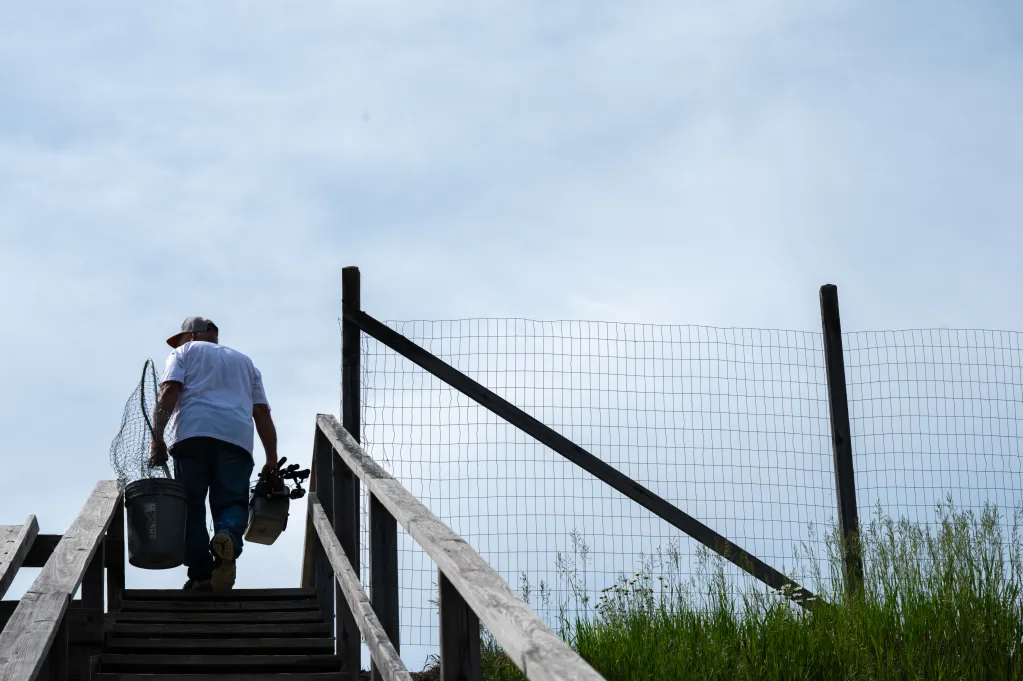
Public boat ramps and campgrounds have cropped up along their collective 10 square miles of reservoirs, attracting swimmers and water skiers, pontoon cruisers and RVers who supply welcome business to area restaurants, bait shops and grocery stores.
While Consumers owns much of the shoreline and bottomlands, it has leased dock access to hundreds of private residents, making them de-facto lakefront homeowners. It’s not clear what would happen to that land if the reservoirs were drained.
Portaging over the dams has become a rite of passage for participants in the river’s annual canoe marathon, which boasts Consumers Energy as its chief sponsor.
And while the dams have displaced coldwater and migratory fish, they’ve created habitat for lake species like bass, perch and bluegill. The lowermost barrier — Foote — blocks invasive sea lamprey that might otherwise travel upstream to spawn by the millions.
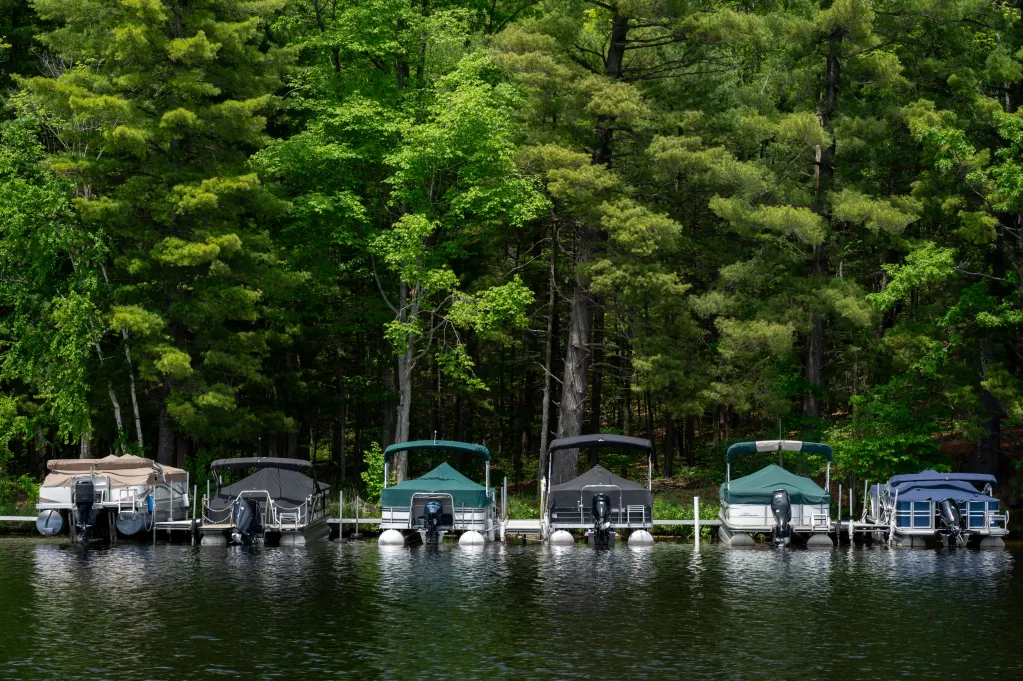
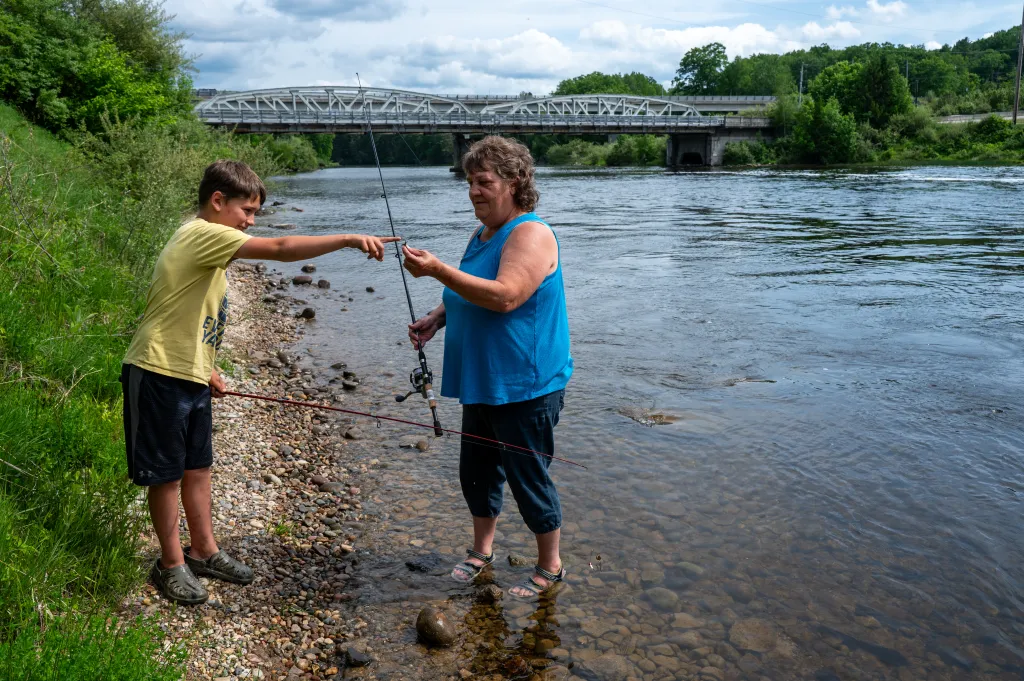
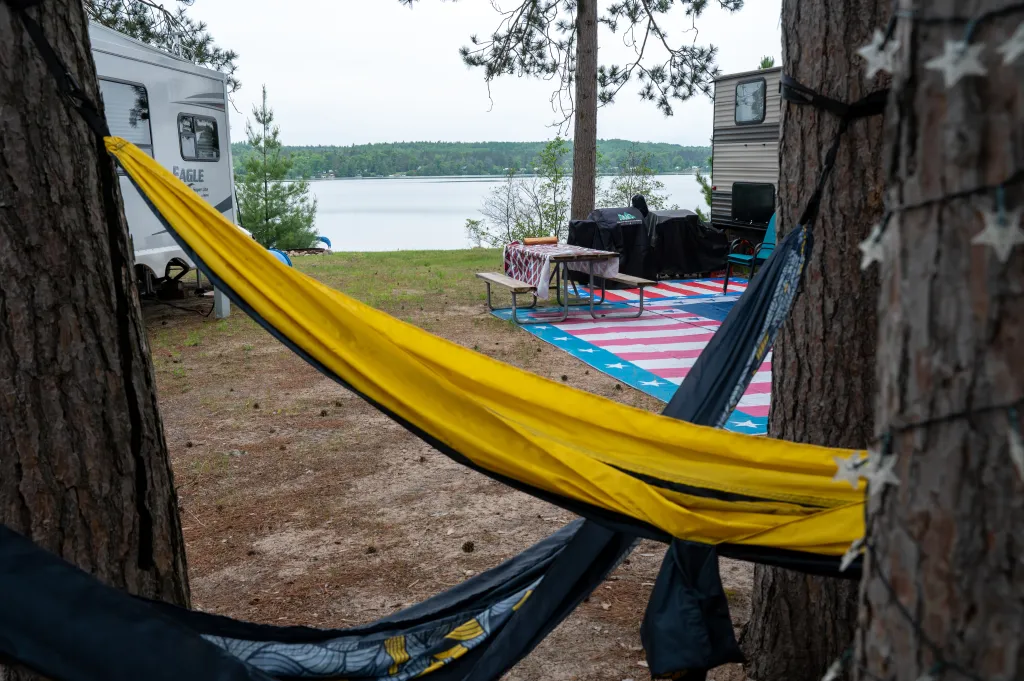
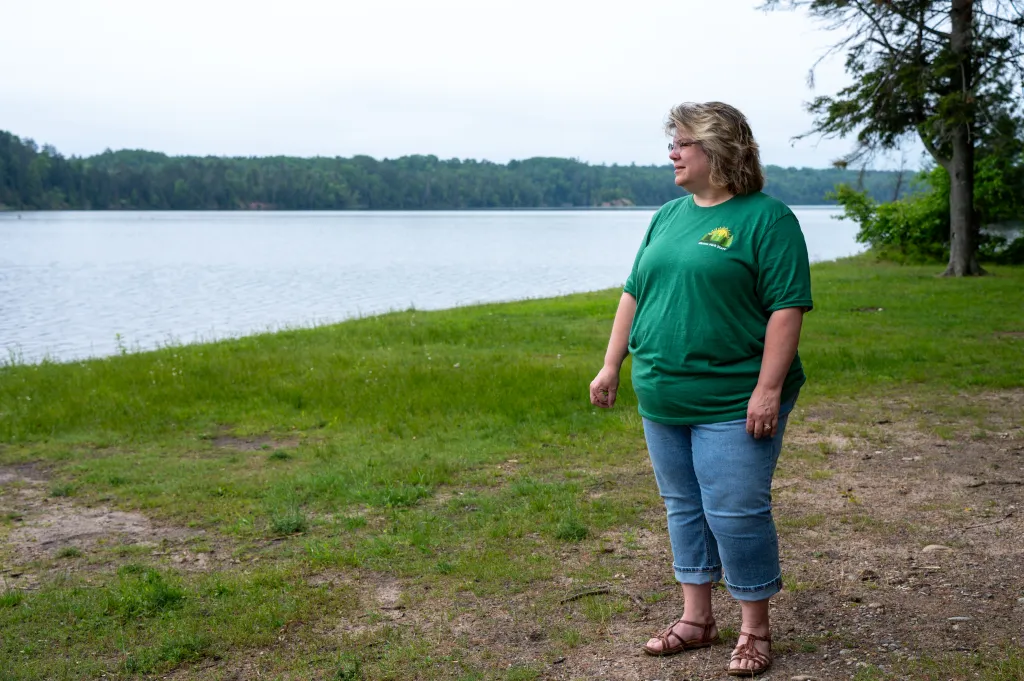
If all that went away, “there goes the summer revenue,” said Debbie Sytek, who manages the office at Alcona Park, a 440-site campground on the reservoir created by the thirdmost-downstream dam.
With a summer staff of 23 people, Alcona Park qualifies as a major employer in an area this remote.
“What draws people here is the pond,” Sytek said. “The beauty, the slowness … What does this park look like if the water’s not there?”
Economic studies commissioned by Consumers found that removing the Au Sable dams would reduce gross regional product by $8.7 million while costing 278 jobs.
“It’ll be another Air Force leaving the area,” predicted 68-year-old Ray Rolwing, who owns a home near Cooke Pond and remembers the boarded up shops and population exodus that followed the military’s 1993 closure of its Oscoda base.
Fans of flowing rivers have criticized the analyses by Public Sector Consultants, arguing a free-flowing river has greater economic potential than researchers acknowledged.
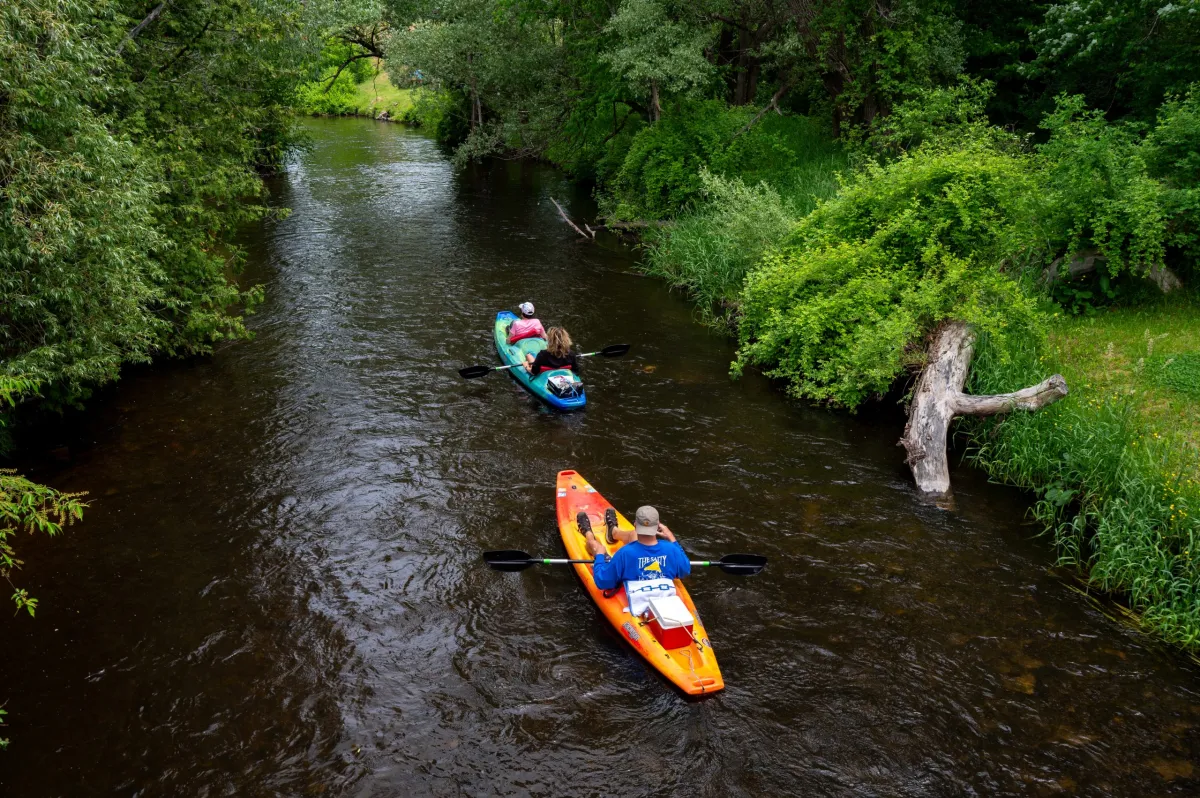
Upstream of the dams, in the reaches famous for their stable currents and abundant trout, canoe liveries, fly shops, motels and restaurants bustle with visitors all summer. As diminishing snowpack imperils coldwater rivers from Montana to Minnesota, some predict Michigan’s reliable springfed flows will become an even bigger draw.
“People will travel from all over the world to fish a run of Atlantic salmon up the world-famous Au Sable, or to fish for trout in sections of river that haven’t been fished for a hundred years,” predicted Josh Greenberg, a fishing lodge owner who leads the conservation group Anglers of the Au Sable.
Room for compromise?
In view of the tradeoffs, some on the Au Sable see room for a compromise in which some dams stay and others go.
Many see Foote Dam — where Ridenour lives — as a strong candidate to stay in place. Beyond its utility as a lamprey barrier, it impounds the river’s largest and most popular reservoir, generates more electricity than any of the other five dams, and needs the least near-term investment, according to 2022 estimates Consumers shared with area residents.
Many dam opponents see the upper impoundments — Mio, Alcona and Loud — as prime targets for removal. Taking them out would mitigate the river’s temperature problems while extending its free-flowing section by dozens of miles.
Savings from decommissioning rather than repairing the dams, Buhr suggested, could compensate residents who’ll lose lakefront property while helping affected communities transition to a river-based economy.
“I won’t be satisfied unless the local economy and property owners are satisfied,” he said.
It’s a reasonable prospect to Curtis Township Supervisor Kevin Perry, whose community surrounds the Alcona Dam.
“I would rather not lose the dam, because let’s face it, change always hurts,” Perry said. But “if you market it correctly,” an undammed river could become an asset, just as the reservoirs are today.
Back at Alcona Park, campers Marjon and Michael Jones spent a recent breakfast pondering what such an arrangement would mean for them.
Every summer for the past 16 years, the Detroiters have parked their RV along the shoreline and spent the season fishing, boating and watching sunsets over the Alcona Dam Pond.
Were it to be replaced with a narrow river, Michael said, “we would have to go somewhere else.”
Marjon agreed. But noting Michigan has thousands of other lakes to explore, she said she would still support dam removal.
“In spite of how much we love this place,” she said, “if you really want things natural, then dams are an unnatural thing.”