
By Isabella Figueroa Nogueira, Bridge Michigan
The Great Lakes News Collaborative includes Bridge Michigan; Circle of Blue; Great Lakes Now at Detroit PBS; Michigan Public, Michigan’s NPR News Leader; and The Narwhal who work together to bring audiences news and information about the impact of climate change, pollution, and aging infrastructure on the Great Lakes and drinking water. This independent journalism is supported by the Charles Stewart Mott Foundation. Find all the work HERE.
Michigan Attorney General Dana Nessel has announced a $108 million settlement with Monsanto Co. to address longstanding environmental contamination from polychlorinated biphenyls (PCBs) across the state.
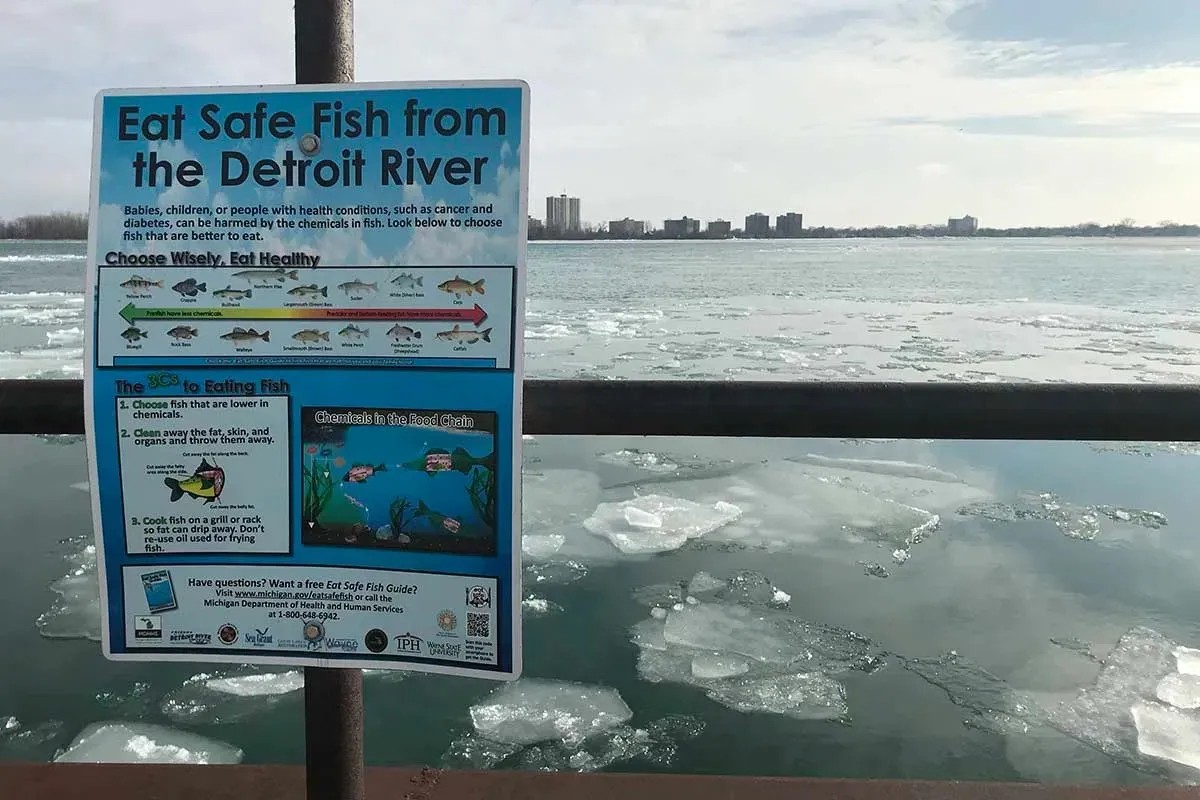
States, including Michigan, filed lawsuits against Monsanto over long-term environmental contamination caused by PCBs, a toxic industrial chemical the company manufactured for decades before it was banned in the United States in 1979. The states allege that PCBs persist in waterways, soil, and wildlife and continue to pose risks to public health through environmental exposure and fish consumption.
The cases seek to hold the company financially responsible for cleanup costs and damage to natural resources.
The settlement funds will support cleanup and restoration of PCB-impacted sites across Michigan, with oversight shared by the Michigan Department of Environment, Great Lakes, and Energy and the Michigan Department of Natural Resources. Officials said the money will be used to reduce contamination risks, improve water quality, and restore damaged natural resources.
Under the agreement, Monsanto will pay Michigan $32 million in June and another $32 million in March 2027. Additional contingency payments tied to related litigation could range from $44 million to $176 million, bringing the total potential value of the settlement to as much as $240 million.
EGLE officials said no specific cleanup projects have been selected yet, but the agencies will work together to determine where funding can remediate PCB-contaminated sites and restore impacted natural resources. The agencies plan to consult with local governments, tribes, and environmental organizations, and may distribute some funds through grants and matching programs.
Nessel said the settlement ensures accountability for longstanding pollution tied to the chemicals.
“Despite being banned for years in the United States, PCBs leave a toxic legacy that continues to threaten our health and environment,” she said in a statement.
Michigan Attorney General Dana Nessel has announced a $108 million settlement with Monsanto Co. to address longstanding environmental contamination from polychlorinated biphenyls (PCBs) across the state.
States, including Michigan, filed lawsuits against Monsanto over long-term environmental contamination caused by PCBs, a toxic industrial chemical the company manufactured for decades before it was banned in the United States in 1979. The states allege that PCBs persist in waterways, soil, and wildlife and continue to pose risks to public health through environmental exposure and fish consumption.
The cases seek to hold the company financially responsible for cleanup costs and damage to natural resources.
The settlement funds will support cleanup and restoration of PCB-impacted sites across Michigan, with oversight shared by the Michigan Department of Environment, Great Lakes, and Energy and the Michigan Department of Natural Resources. Officials said the money will be used to reduce contamination risks, improve water quality, and restore damaged natural resources.
Under the agreement, Monsanto will pay Michigan $32 million in June and another $32 million in March 2027. Additional contingency payments tied to related litigation could range from $44 million to $176 million, bringing the total potential value of the settlement to as much as $240 million.
EGLE officials said no specific cleanup projects have been selected yet, but the agencies will work together to determine where funding can remediate PCB-contaminated sites and restore impacted natural resources. The agencies plan to consult with local governments, tribes, and environmental organizations, and may distribute some funds through grants and matching programs.
Nessel said the settlement ensures accountability for longstanding pollution tied to the chemicals.
“Despite being banned for years in the United States, PCBs leave a toxic legacy that continues to threaten our health and environment,” she said in a statement.
Officials with Monsanto, now owned by Bayer AG, said the settlement resolves PCB-related claims without any admission of liability or wrongdoing. The company said PCBs were a legacy product it stopped producing in 1977 and noted that additional payments are tied to a separate lawsuit over whether former industrial customers must help cover PCB-related legal and cleanup costs.
Michigan is among a growing number of states that have reached settlements with Monsanto over PCB-related claims. According to the company’s litigation update, it has settled with 12 states, including Michigan and Rhode Island.