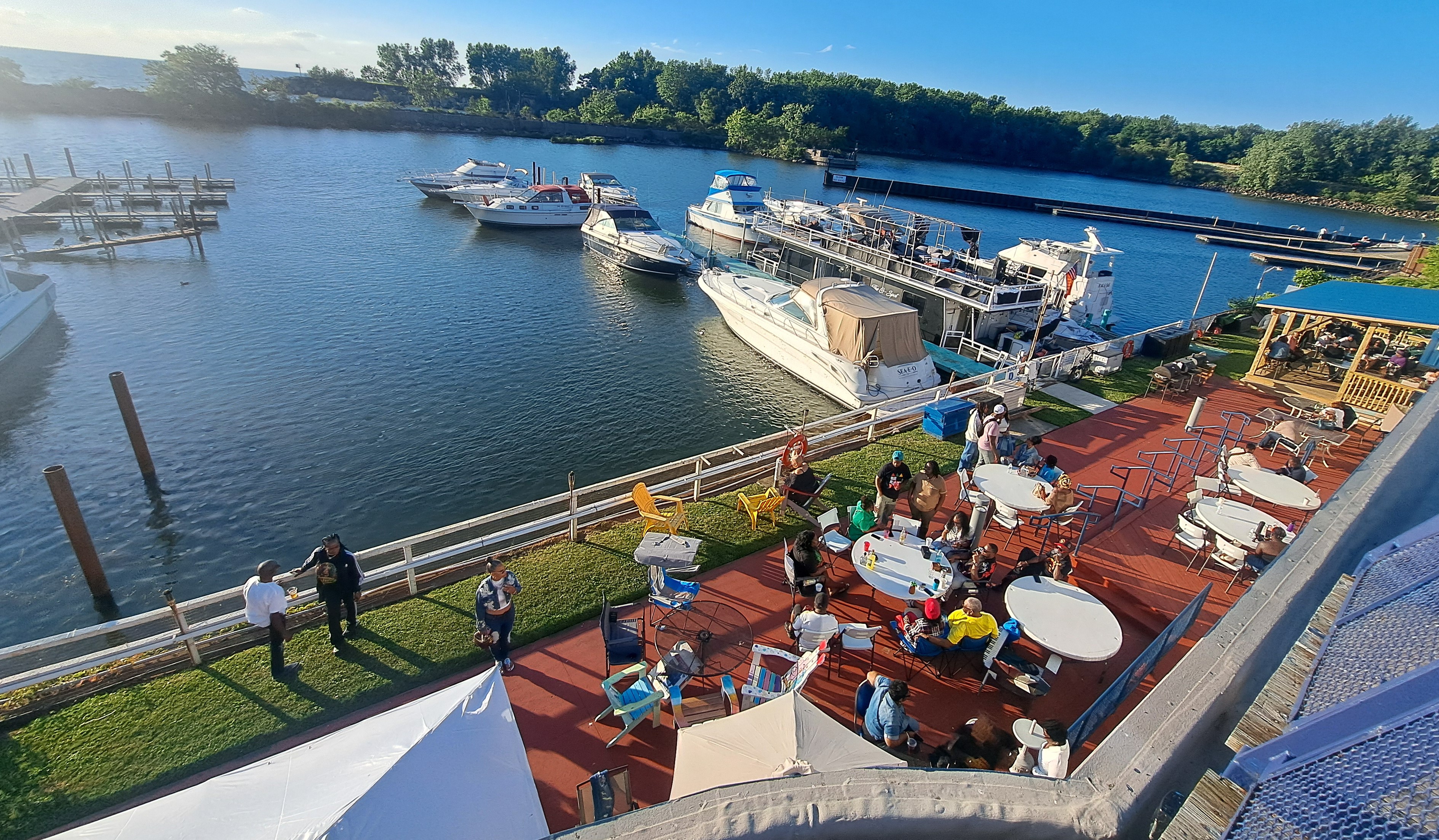

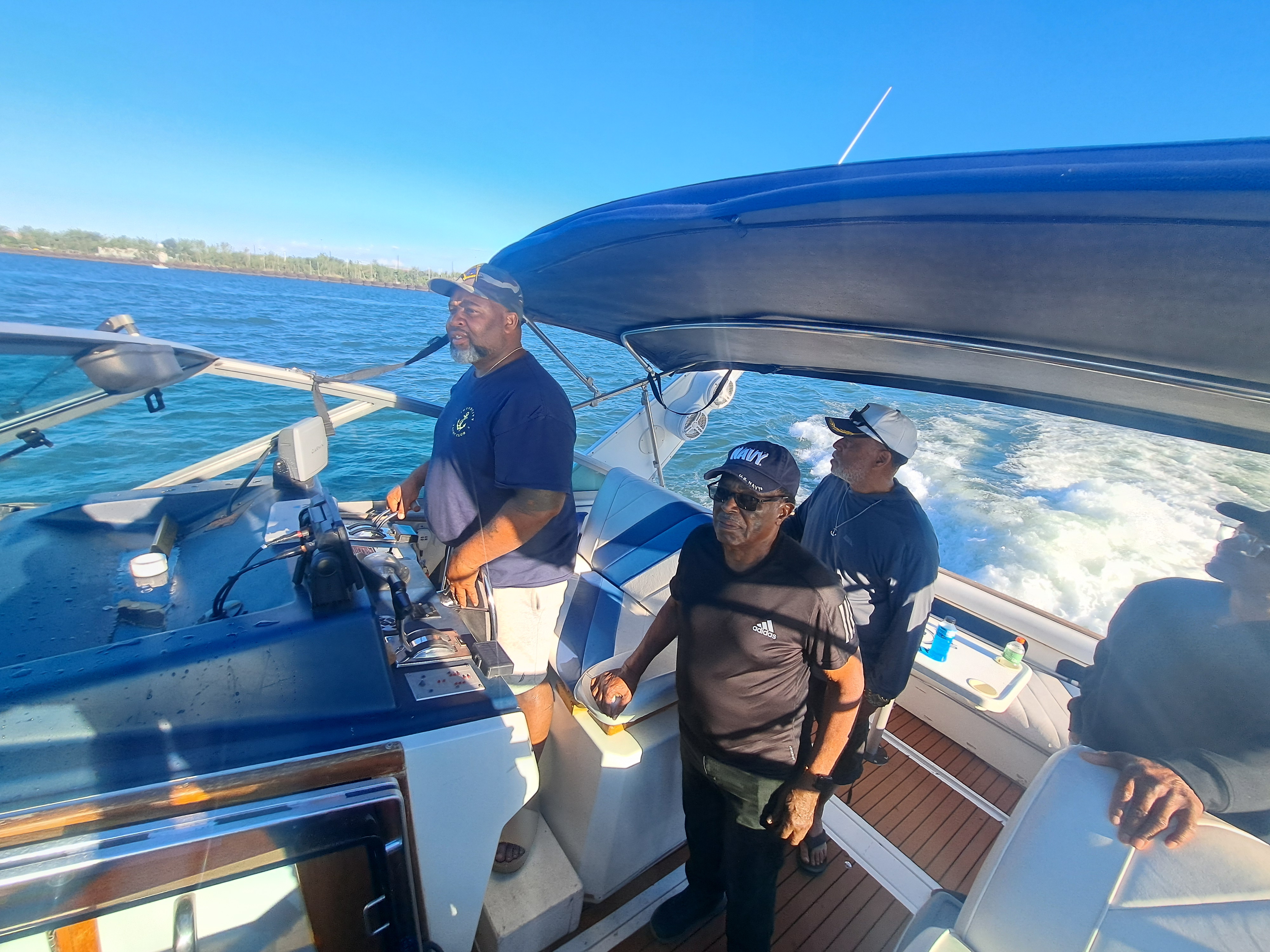
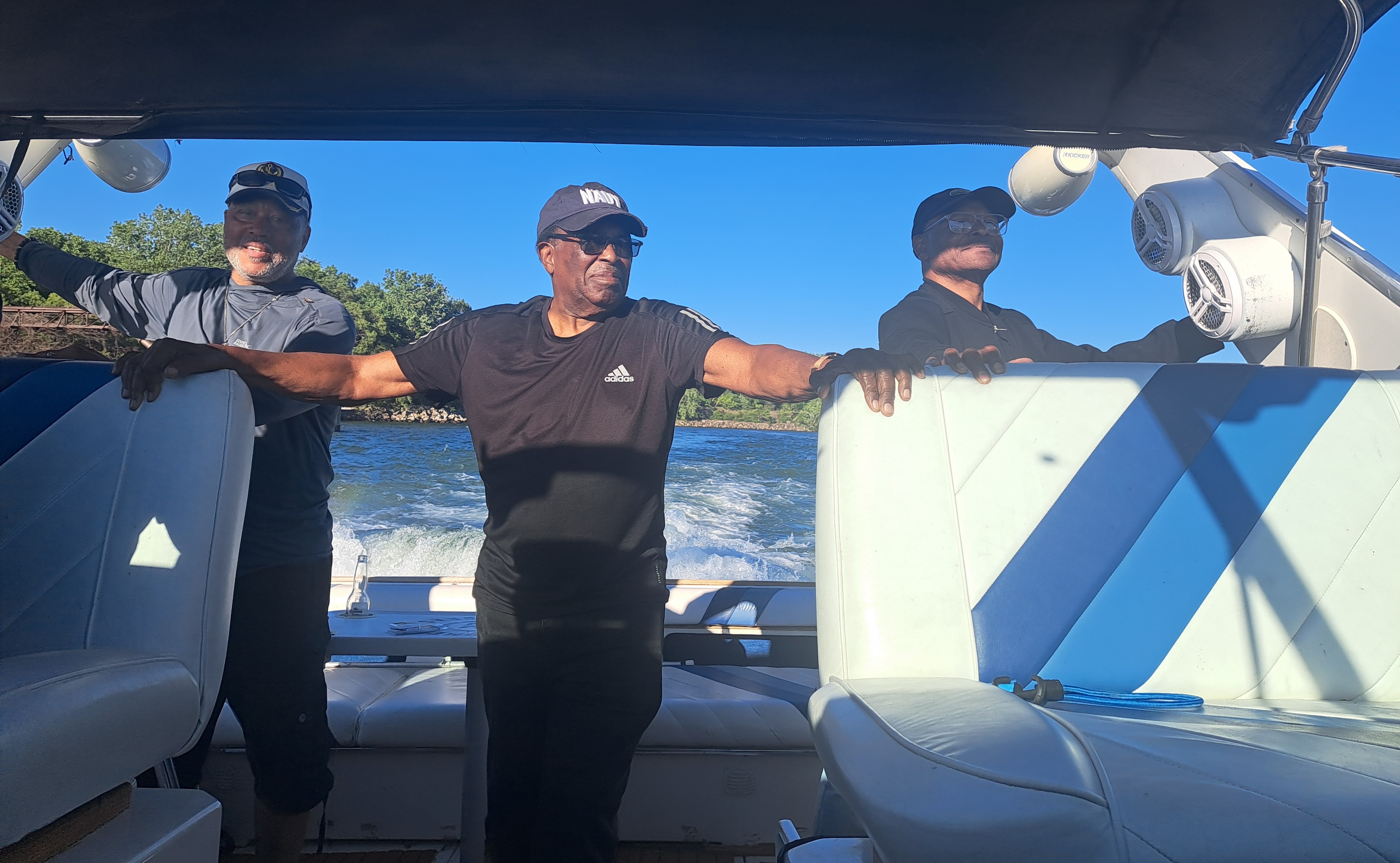
James Gillium slowly and carefully guides his Sea Ray 340 Sundancer motorboat off a Cleveland dock, past a sea wall and out into the shimmering water of Lake Erie. A small sailing boat skirts the shoreline; further out the lake, a tourist boat carries a dozen or so people back to shore. Gillium and his fellow boaters on board take a collective, relaxed breath as they hit the open water.
It’s around 7 p.m. on Juneteenth and back at the Inter City Yacht Club where Gillium and his friends are members, a party is about to get started. There are dozens of revelers outside on the club’s deck, as a DJ sets up inside. In the parking lot, guests mingle and catch up surrounded by huge boats and trailers. Underfoot, mayflies carpet the grass, docks and boats.
Without saying so, Gillium’s body language gives the impression he’d prefer to be out cruising on the water than surrounded by activity.
“Sometimes, the best time to get out here is at 5 a.m.,” he said.
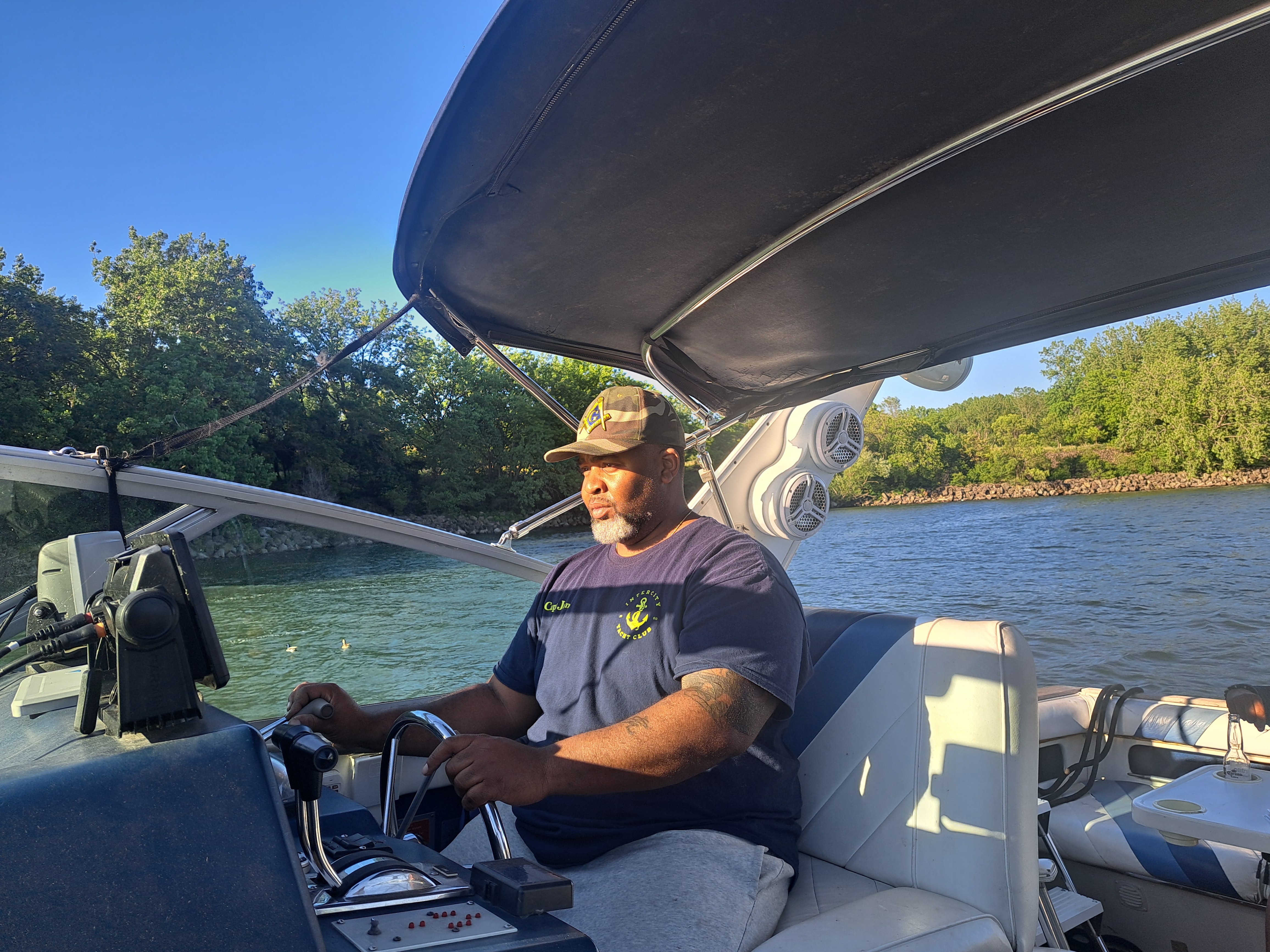
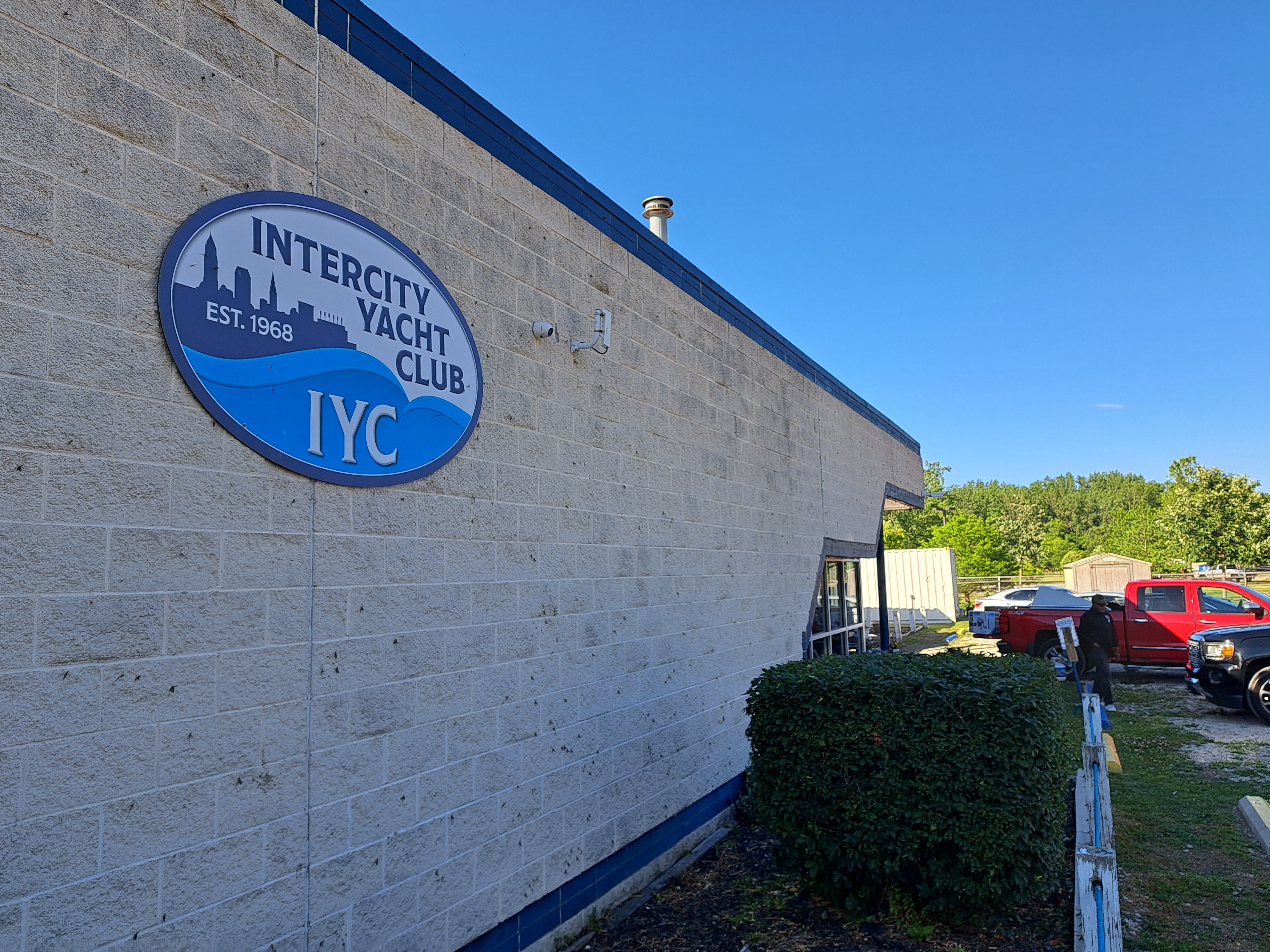
A Black-run boating club, the Inter City Yacht Club was founded at the height of the Civil Rights Movement in the late 1960s, making it one of the first established anywhere in the country.
“We’re boating, we’re yachting; we’re doing something that our culture is not used to doing,” said Rodney Middleton, the club’s vice-commodore.
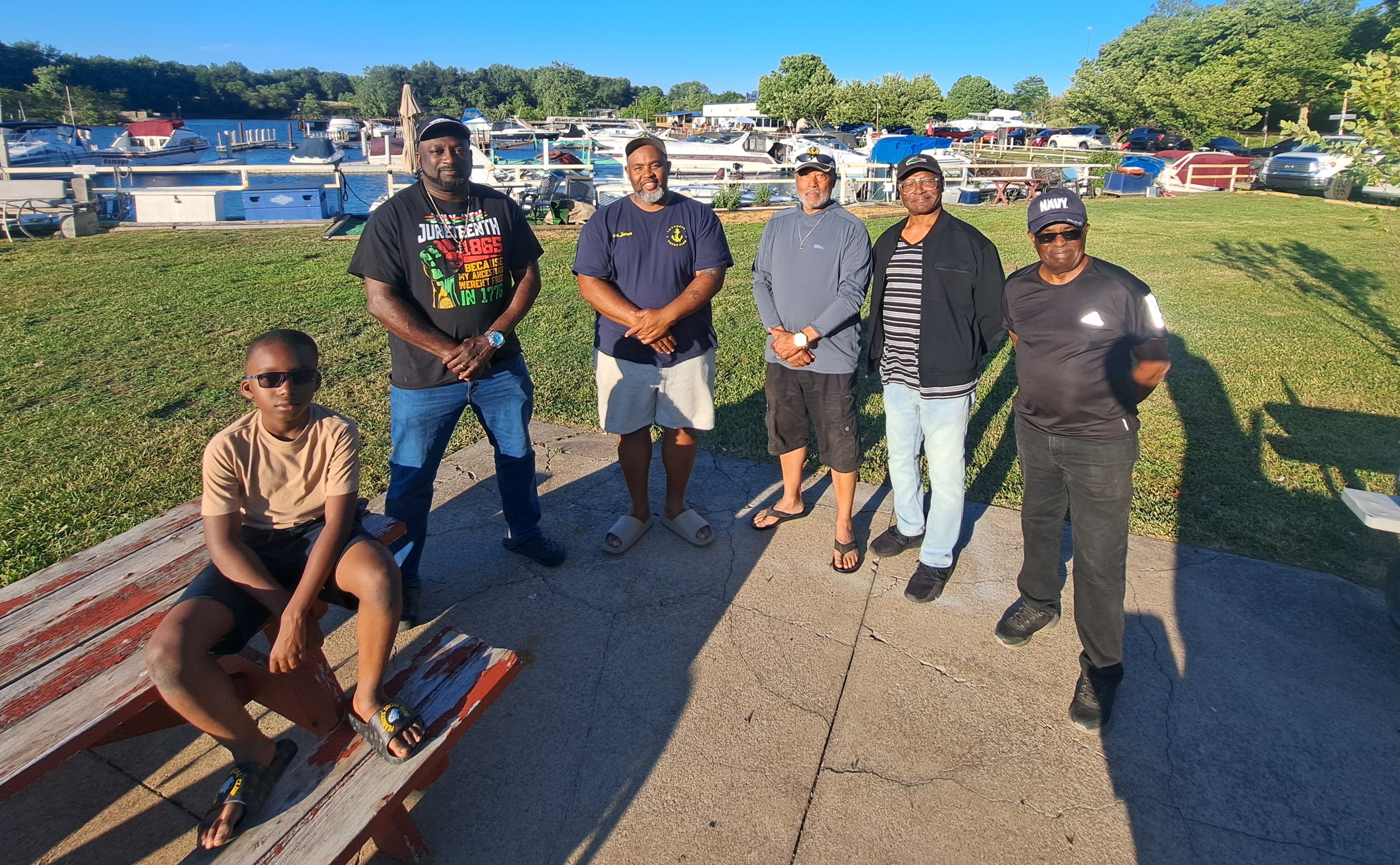
“There’s a very small percentage of individuals in our culture who own a yacht or even know someone with a yacht. It’s a matter of access and awareness.”
At that time in the 1960s, parts of Cleveland were a hotbed of racial tensions and repression.
Relations between Black residents in the overcrowded Glenville district that abuts the yacht club and city authorities and other city residents ran high. In 1968, the year the club was founded, civil rights leader Dr. Martin Luther King was assassinated in Memphis, and Glenville was the site of a shootout that left three Black nationalists and three police officers dead. Riots followed, leaving three more people dead and millions of dollars’ worth of property damage.
Many Black Cleveland residents at the time were confined to cramped apartments in the searing summer heat. Getting out on Lake Erie with family and friends to take relief with its cool breeze was largely a dream, until the club was established.
“When I was a kid back in the 50s, my dad used to take us to the baseball games downtown. But my eye was always on the boats,” recalls Aaron Oliver, who has been a member of the Inter City Yacht Club since 1989.
“These antique, wooden boats with a single motor on them, they would go up and down [past] East 9th Street. I used to ask my dad if we could get one.”
For decades, until the 1960s, African American boaters in the Cleveland area who wanted to dock or get gas for their watercrafts had to sail 70 miles west to Sandusky to be served.
“Black residents were essentially unable to enjoy meaningful access to the lakefront in Cleveland prior to the late 1960s. It’s not that there were legal barriers, [but due to] discriminatory customs and private lakefront clubs,” said Mark Souther, professor of history and director of the Center for Public History + Digital Humanities at Cleveland State University.
He says that in addition to the private clubs that controlled the marinas, there was also a general lack of public parks along Cleveland’s lakefront.
It was this and other forms of open segregation that prompted local boating enthusiasts such as James ‘Slim’ Parks to set about establishing a boating facility for black boaters in Glenville, that was home to the city’s largest African American community, in 1968.
“The Civil Rights Movement of the 1950s and especially 60s did begin to improve the situation [for Black residents]. You had the election of Carl Stokes as the first African American mayor of a major American city in 1967. The barriers were falling,” said Souther, who is also the founder of Green Book Cleveland, a project highlighting the history of recreation for Black residents of the greater Cleveland region.
“In this climate you had a real motivation for Black Clevelanders to carve out places of their own.”
Today, nearly 60 years later, the club is believed to be one of only two predominantly Black-run boating clubs in the country and boasts a fleet of summer events including this Juneteenth party and a commodore’s ball at the end of the boating season.
“[Racism] was the whole idea behind [establishing the club] in 1968. We just didn’t have access to the water, the gas, the resources, as boat owners,” said Middleton.
“They were totally excluded. It was compelling in terms of just having a place of our own. As you can see, we’ve got women, men, kids; this is our safe haven and that’s what the driver behind wanting to formulate a safe place to come and enjoy the water and not feel excluded from a traditionally white-driven sport.”
Today, much progress has been made.
“We are the only minority yacht club that sits on its own body of water that’s private in the United States of America. My goal is to make us so seen that we can’t be unseen,” said club commodore Ryan Weekes, who moved from Barbados to Cleveland in 2004 and found here a welcoming boating community that he says didn’t exist in the Caribbean.
Having fished from the shorelines of Barbados since he was a child, Weekes got into boating after his wife, Regina, got a small aluminum boat for fishing. Then his obsession grew from there: he bought a 16-footer, then a 28-footer and today he owns a 40-foot boat.
“When these guys pull into the Flats [district of Cleveland], you see the respect that is shown by other Black folks. You see kids saying: ‘Mommy, daddy, look, they are doing it; let’s go see the boats.’”
But while the club has survived and thrived over the decades, challenges remain.
A tornado in August 2024 tore the roof off the clubhouse, forcing it to close for reconstruction work that was lengthy and expensive. Today, the clubhouse is open to the public for social events and weddings.
Then, there’s the ever-rising cost of gas. Gillium estimates that the cost of filling the tank of his motorboat is around $1,500. Away from the club, some boatowners offer private boating and fishing charters to the public that helps cover costs.
Weekes says that outside of their own club, Black boaters are still not adequately represented in the outdoor and boating communities in Cleveland.
“There’s no magazine you can open and see someone like us,” he laments.
This year, the Cleveland MetroParks opened a community sailing center, which boasts retail, food and education facilities.
“If you go into that center it ain’t for us; it ain’t for the average joe. It’s for a specific class of people,” he said.
“We don’t feel represented by that.”
What’s more, with the lease of the land upon which the club resides (which is owned by the Cleveland Metroparks) coming up next year, Weekes is concerned that it may not be renewed.
Emails sent by Great Lakes Now to the Cleveland MetroParks asking if it plans to renew its lease with the Inter City Yacht Club were not responded to.
Still, the club has endured for almost fifty years.
Having dropped significantly following the 2008 Great Recession, after which, Weekes says, there were only two running boats in the club, membership today is steady at around 50 people. The club also offers a social membership for people who do not own a boat but want to learn more about it or want to peruse the club’s shoreside facilities.
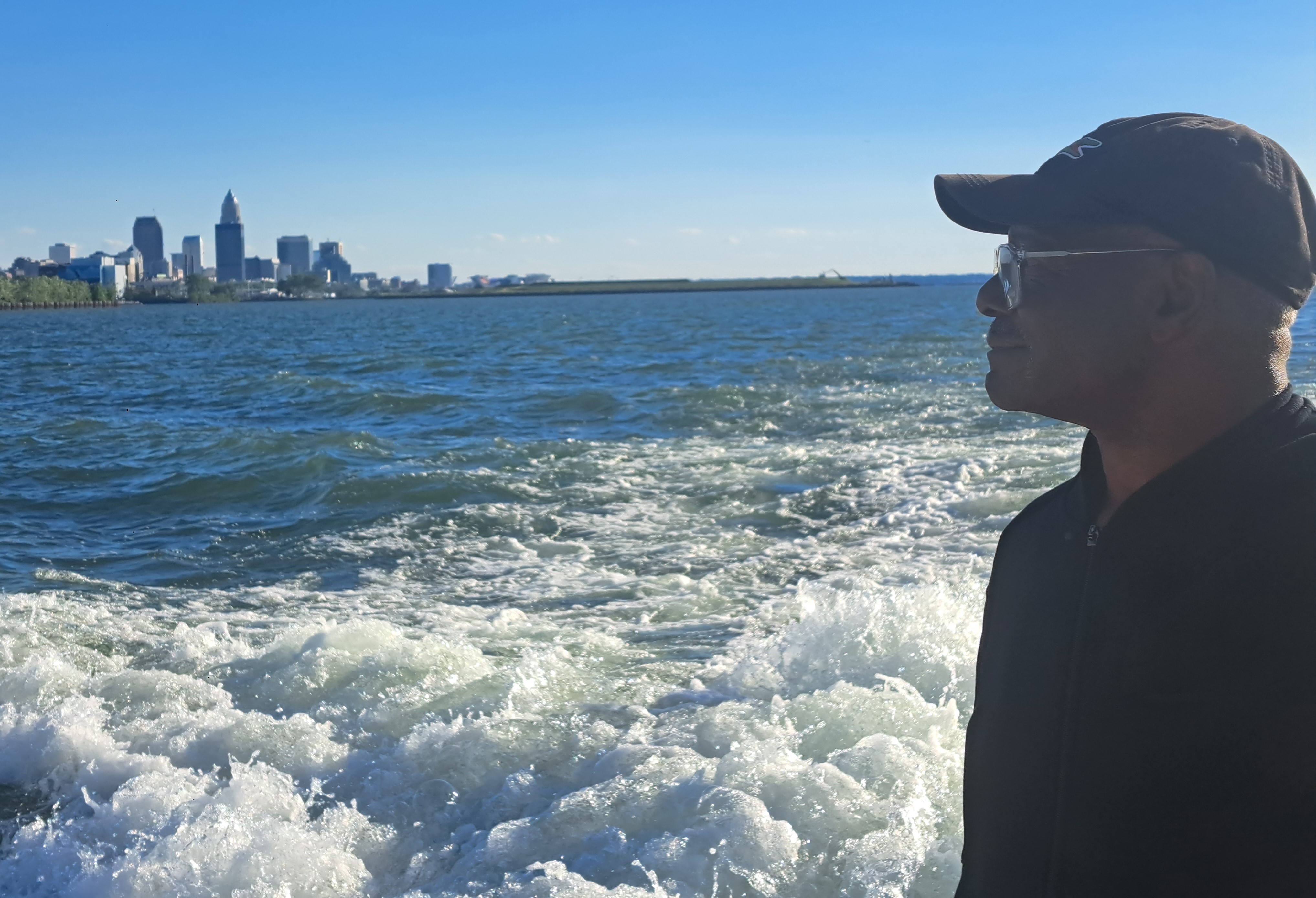
In a world today dominated by screens, the view of the lake offers a refreshing if somehow forgotten vista for millions of Clevelanders. To this end, the club has teamed up with the Ohio Marine Trade Association and Cuyahoga Community College to get students involved in boating and out on the water.
“We want them to let us be the first step to the lake,” said Weekes.
In a part of Lake Erie that has suffered from water pollution more than much of the rest of the Great Lakes, the club recently focused on environmental justice and how Black Clevelanders are being especially affected by rising temperatures and access to the outdoors.
But for many of the club’s members, it’s just about having fun.
“You meet boaters and captains; you become part of the brotherhood. You see the kids here — we’re bringing up the next generation of yachters,” said Middleton, who jokes that ‘BOAT’ stands for Breaking Out Another Thousand.