
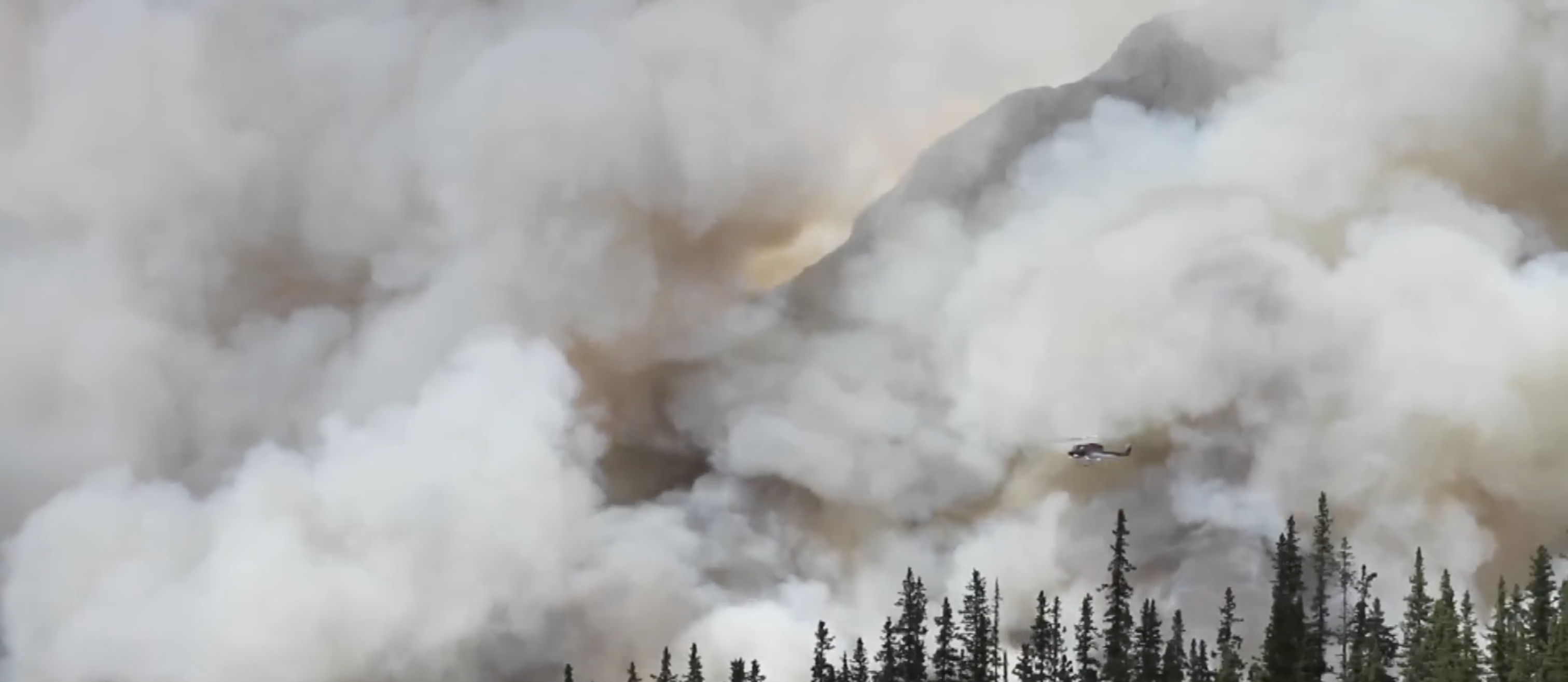

While health officials urge people to stay indoors due to the smoke draping the Midwest, experts say we should remember that the same polluted air affecting humans is also threatening animals.
On July 16, Detroit ranked as the worst air quality in the world with a 724 index– climbing past the 300-point threshold on the Air Quality Index, where air quality is considered hazardous. In second sat Toronto, Canada, then Minneapolis Minnesota and in fourth was Chicago, Illinois.
According to Dr. Jack Harkema, a Veterinary Pathologist at Michigan State University, said the effects of wildfire smoke on animals isn’t just a single symptom.
“It doesn’t affect just the lungs, but also the cardiovascular system and the metabolic system,” Harkema said. “We’ve actually even looked at the effects on the brain, and there’s increased inflammation in the brain as well.”
Wildfire smoke may be even more harmful to animals than the everyday air pollution found in cities, Harkema said.
“Wildfire smoke is probably even more toxic than our regular urban particulate matter,” Harkema said. “These particles create a lot of oxidants, they damage tissue, and they cause inflammation locally in the lung, but then that inflammation can spread to other organs.”
Wildfire smoke contains a mixture of pollutants, including fine particles known as PM2.5. Those microparticles are small enough to go deep into the lungs and, sometimes, enter the bloodstream.
“PM2.5 particles are inhalable,” Mayra Oyola, an Assistant Professor in the Department of Atmospheric and Oceanic Sciences at the University of Wisconsin Madison. “They can get into the lungs and, just like in humans, they stay there. They can damage respiratory and cardiovascular tissue in anything that breathes. So it’s not just us.”
The fires that are impacting the midwest are mainly contained towards the lower part of Ontario, Canada. The smoke from these fires have migrated from wind paths to reach the midwest.
“Animals close to the fires, that’s the biggest concern, because they will be displaced,” Oyola said. “More often than not, they move into human-populated areas. That creates risk for both humans and the animals.”
Birds are especially vulnerable to wildfire smoke because their respiratory system is more efficient than other mammals, according to research scientist at Cornell University’s Lab of Ornithology Olivia Sanderfoot. While that helps them get more oxygen, it also means they breathe in more harmful particles from polluted air.
“Birds are able to take up twice as much oxygen with each breath compared to mammals, which also means they’re getting an extra-heavy dose of anything toxic in the air,” Sanderfoot said.
“We’ve known for a long time that birds are more vulnerable,” Sanderfoot said. “So I’m especially worried about them in this smoke.”
Other outdoor animals can also suffer, like horses. Because of respiratory diseases, like heaves, livestock that spend their time outdoors are exposed for days or weeks to smoky conditions which heighten risks, Harkema said.
“If this continues, you’re going to see more illness in humans and animals,” Harkema said.
For pet-owners, Dr. Jennifer Henderson, a veterinarian at Vetco Total Care in Chicago said taking the same precautions you would take for yourself is ideal.
“The same concerns apply to our pets that apply to humans,” Henderson said. “You just want to keep them inside or limit their activity outside so it doesn’t cause any flare-up.”
Owners should also watch closely for signs that smoke may be affecting their animals.
“I think respiratory symptoms, with the coughing and the lethargy, are the main things to watch for,” Henderson said.
She also recommends monitoring for bloodshot eyes, squinting or other signs of eye irritation.The guidance is ultimately simple, Henderson said, if the air isn’t healthy for people, it probably isn’t healthy for pets either.
“Similar to how they’re dealing with it for themselves, apply the same concerns and strategies to their pets,” she said. “You can’t put a mask on a dog, so it’s really just keeping them out of the environment or limiting their time.”
Harkema recommends limiting walks to brief bathroom breaks and avoiding strenuous exercise.
“You don’t want to exercise them because more of these particulate matter and other air toxicants can get into the lung and cause inflammation,” Harkema said.
Sanderfoot said keeping pets in cool, air-conditioned spaces with clean, filtered air whenever possible is best.
As wildfire seasons grow longer and more intense, Sanderfoot says she expects poor air quality events to become a more frequent occurrence across North America.
“The issue is that climate change is supercharging these fires and lengthening our fire season,” Sanderfoot said. “The bigger the fire, the more smoke.”
According to Oyola, research shows wildfire smoke will become a persistent problem.
“It’s very clear that climate change is real and that it’s not slowing down,” she said. “With drier conditions and warmer conditions, we should expect more events like this.”