

By Kyrmyzy Turebayeva, Great Lakes Echo
This article was republished here with permission from Great Lakes Echo.
While urbanization continues to displace natural ecosystems across the Great Lakes region, one declining wetland bird has managed to adapt to city life.
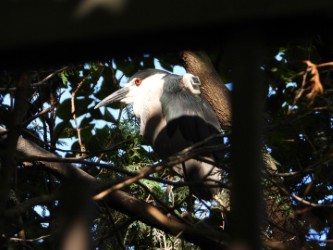
The black-crowned night heron (Nycticorax nycticorax) has unexpectedly found refuge in the very heart of Chicago.
Today, the largest colony of these birds in the region is located not in isolated, natural wetlands, but on the grounds of Chicago’s Lincoln Park Zoo.
A new study shows that this heavily urbanized environment has become a critical sanctuary for the species.
“This colony is one of the last major black-crowned night heron rookeries in the entire state of Illinois — and probably one of the last strongholds for this species in the entire Great Lakes,” said Sarah Slayton, the study’s lead author and an avian ecologist at the University of Illinois Urbana-Champaign.
According to Slayton, only three colonies remain in Illinois. Two are quite small — one in the Champaign area and another at Emiquon Nature Preserve in western Illinois.
Black-crowned night herons are listed as endangered in the state.
The primary colony, boasting between 500 and 700 individuals, resides on the grounds of Chicago’s Lincoln Park Zoo during the spring and summer.
“Because this is the largest group of this species left in the Great Lakes and it is a species that is at risk, it is vital for us to know how they are doing health-wise, how they are surviving in the city and how the overall regional population is doing,” Slayton explained.
Researchers note that such a high concentration makes the colony particularly vulnerable.
Localized threats such as severe storms, disease outbreaks and human disturbance could cause the birds to abandon the site, meaning the region would lose a huge chunk of the population.
Black-crowned night herons are colonial wading birds whose numbers have been declining across the Great Lakes and the northeastern United States, driven largely by habitat loss.
“To most city dwellers, they are just big charismatic birds that you might see near the water,” Slayton said. “But to ecologists, they are an important indicator species for the health of these environments.”
The primary driver behind their shrinking numbers is the destruction of wetlands, Slayton said
“We have destroyed about 90% of the wetlands in Illinois,” she said. “As those environments disappear, the birds are forced to adapt and look for new places to successfully breed and survive.”
Interestingly, populations in Florida and along the Gulf Coast remain stable because the birds are year-round residents, while migratory populations face the greatest hardships. Birds from the Chicago colony spend the winter in Florida, Louisiana and Cuba before returning north to the Great Lakes in the spring to breed.
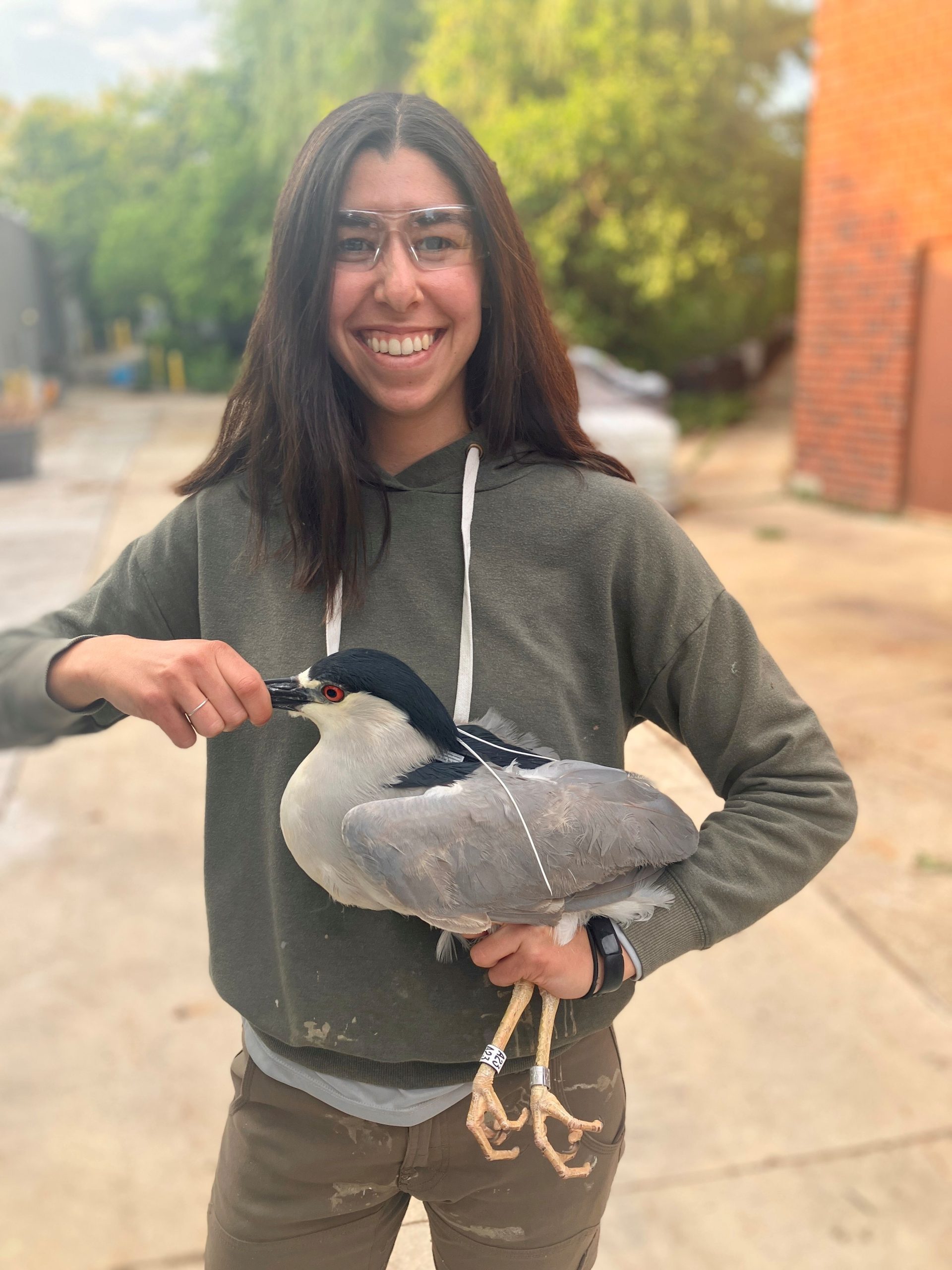
To understand how night herons survive in a concrete jungle, Slayton and her colleague Henry Adams from Lincoln Park Zoo’s Urban Wildlife Institute launched an ambitious research project using modern technology.
The scientists equipped the birds with miniature GPS trackers – weighing just 16 grams (0.56 ounces) – which the birds wear like tiny backpacks. The solar-powered devices collect location data via satellites and transmit it to researchers whenever they connect to standard cellular towers.
The tracking results surprised the ornithologists.
Instead of avoiding humans, the herons actively exploit urban infrastructure, using city parks, fishing lagoons, the Chicago River and even the coastal structures of Lake Michigan.
One of the most unexpected findings was that the night herons regularly forage in the deep open waters of Lake Michigan.
“We don’t normally associate these birds with that kind of water body because the water is so deep. Most wading birds forage in shallow water. They stand really, really still and wait for a prey item to swim by before ambushing it,” Slayton said.
“However, these birds have taken advantage of the docks in the harbors and breakwaters, the large concrete structures out in Lake Michigan that help reduce wave action. They use them as perches to forage directly into Lake Michigan in a way that is very different from what we would expect in a natural wetland environment.”
The herons have also proven to be highly opportunistic feeders with a broad diet.
While other heron species are specialized and picky about their food, black-crowned night herons eat almost anything from fish and frogs to small mammals. Scientists even suspect that in Chicago, they have taken up hunting small urban rats.
GPS data also revealed that individual birds possess distinct behavioral strategies. Some individuals are highly conservative, sticking to a single foraging ground and returning to the exact same park lagoon every day. Others constantly experiment, moving between different parks, the river and the harbors based on prey availability.
“The amount of individual variation in the birds was really, really cool,” Slayton noted.
“For example, we would see them hunting in the harbors when there were fish spawning events, when fish would concentrate in these areas to breed. They might take advantage of those opportunities and feast for a couple of days, and then once those periods were over, they would go to another spot.”
Furthermore, the data showed a clear behavioral split between breeding and non-breeding birds. To conserve energy and feed their chicks, active breeders rarely forage more than 10 kilometers (about 6 miles) away from the zoo colony. Non-breeding birds, on the other hand, face less pressure to stay close and freely wander across the entire Chicago metropolitan area.
A major breakthrough of the study came from long-term GPS monitoring that spanned several years. This allowed scientists to map the herons’ movement patterns outside of Chicago in detail for the first time, while previous tracking data had been fragmented and limited to single seasons.
“We had one individual who we captured in Chicago – she was my favorite bird,” Slayton recalled. “Her band code was A24, and we were able to collect several years of tracking data on her.”
For two years in a row A24 followed a remarkably consistent annual cycle. After the breeding season in Chicago, she flew north to spend the post-breeding season in Green Bay, Wisconsin.
From there, she migrated south to winter in Florida, spending months at a time in restored wetland complexes near Lake Okeechobee. Then she returned to Chicago for the breeding season.
“We caught her a second time and collected a bunch more samples, and then we found her nest and she was raising three adorable chicks,” Slayton said. “Getting to see her do this cycle over and over again was incredible because we had never seen data like this before.”
The GPS maps also showed that while A24’s precise migratory paths varied slightly from year to year, her final destinations remained exactly the same, showing very high site fidelity.
According to Slayton, capturing this level of movement data would be impossible without trackers.
“This data is critical because these birds can only come back to breed if they make it through the rest of the year,” said Slayton. “Learning about what’s happening in other parts of their migratory paths and what threats they might be facing is also really important for the conservation of this whole colony.”
Researchers say uncovering how night herons navigate and survive in Chicago could ultimately inform conservation strategies for other migratory bird species sharing the same flyways and habitats.
Scientists emphasize that this data is more important than ever as wetlands loss continues and pressure mounts on the natural ecosystems of the Great Lakes region.
The study does more than just document a threatened bird adapting to city life – it highlights the growing role of urban green spaces as unexpected, yet vital, refuges for wildlife conservation.
Ultimately, Slayton notes that her team’s vision extends far beyond Cook County, aiming to support black-crowned night heron conservation throughout their entire regional range.