
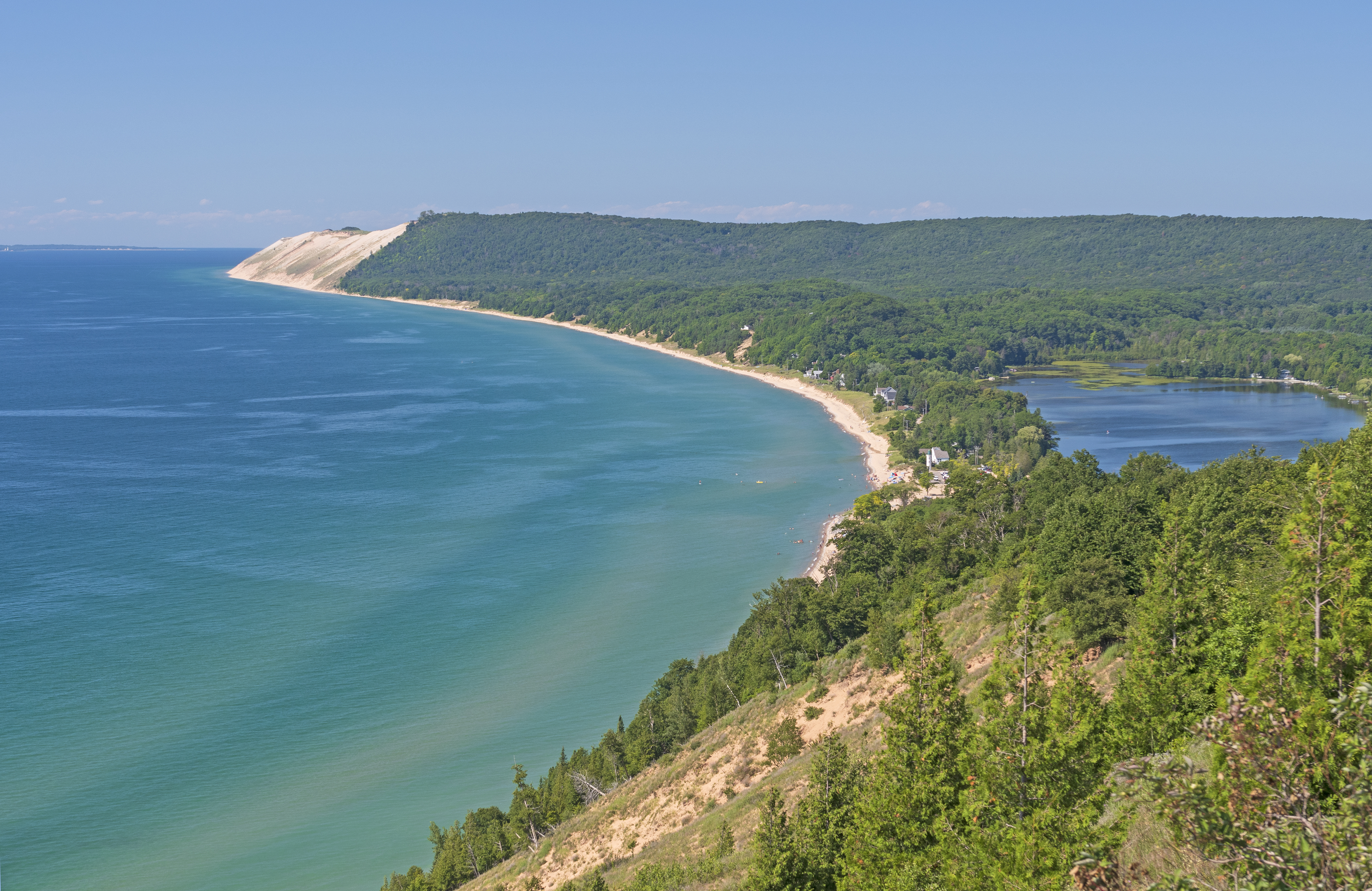
Across the Great Lakes are dozens of organizations who monitor and forecast weather, water quality and lake conditions on the world’s largest freshwater system. The Great Lakes Observing System (GLOS) is a binational NOAA-funded program that brings this data under one roof and makes it publicly available to any Great Lakes user.
Data from GLOS and its partner organizations may help municipalities monitor drinking water quality or inform a boat captain whether it’s safe to take their client for offshore fishing. The information is housed on the Seagull platform.
“If you’ve checked wave height before taking your boat out or water temperature before letting your kids swim, you’ve probably used data that this system supports,” explained GLOS Chief Executive Officer Jennifer Boehme.
The 20-year-old organization is part of NOAA’s Integrated Ocean Observing System (IOOS) Office, which on Oct. 8 announced a five-year federal funding agreement. IOOS will receive $45.7 million in the first year, with over $3.3 million directed toward GLOS.
“This is money that pays for the core of our information system,” Boehme said. “So it provides data management for the Seagull platform and support for the new Seagull Coast.”
The Seagull Coast app is a newer project from GLOS to make their data more accessible. Over 70% of users are “public,” rather than private like aquaculturists or shipping companies. Boehme said the app’s quick access to real-time and forecasted Great Lakes conditions aims to mitigate drownings and other dangerous situations.
“The people most at risk often aren’t looking at a data portal, so that app is specific to folks who are looking for an answer in real time,” she explained.
Other new projects include adding coastal cameras to various locations around the Great Lakes, and supporting the installation of a new underwater cable in Lake Superior.
However, Boehme said much of the funding will support normal GLOS operations like managing data from its partner organizations and deploying and maintaining their own sensors. One of these is the Cooperative Institute for Great Lakes Research (CIGLR), housed at the University of Michigan.
Ayumi Fujisaki-Manome, an associate director and associate research professor with CIGLR, studies Great Lakes ice cover and hydrology forecasting and uses Seagull data as the basis of her forecasts.
“It’s like a one-stop shop of home available real-time observations, and that’s really beneficial to us as researchers,” Fujisaki-Manome said. “And I do know that there’s a lot of users beyond scientists, like navigation, shipping communities, beach users.”
She adds that this recent funding will help CIGLR consolidate their separate Great Lakes forecasting models into one: NOAA’s Unified Forecast System. Fujisaki-Manome hopes it can make forecasts more approachable to researchers and the public alike.
Specific funding amounts will be set year-to-year, but the investment is actually an increase from the $41 million budget that IOOS received in 2021, at the beginning of their last five-year cycle. It comes amid repeated attempts from the Trump administration to reduce NOAA’s budget by over $1 billion, which has worried Great Lakes scientists.
For example, the Great Lakes Environmental Research Lab, another NOAA-funded program, lost about 40% of its staff last year.
“We work very, very closely with our NOAA partners, and when they experience their staff reductions, that reduces their capacity and their ability to respond and continue the type of partnerships that we’ve had in the past,” Boehme said.
For Boehme, the partnerships between federal, regional, state and private organizations make GLOS unique. Only 25% of the data on Seagull is from sensors or systems that GLOS directly manages. The other 75% is from partner organizations that use Seagull as a data-sharing platform.
Boehme worries that individual states may not prioritize funding a free, regional data-sharing platform, and that smaller organizations or universities don’t have the public reach that GLOS does. Fujisaki-Manome agrees, and appreciates that GLOS can connect research from across the region.
“The real strength of GLOS observations is it really covers all of the Great Lakes, and then within the lake it covers multiple locations,” she said.
Both believe securing federal funding represents a positive step for Great Lakes science, observation and forecasting. Although Congress has not yet approved the 2027 federal budget, Boehme believes the recent agreement represents a “strong vote of confidence” from federal lawmakers.
She says the funding helps GLOS maintain and improve their environmental observation network, and continue sharing it with people across the Great Lakes.
“That’s where the value lies: being able to measure once and use it many times,” Boehme explained. “And that’s what GLOS really provides is that information ecosystem, that backbone for making good decisions.”