
“Nibi Chronicles,” a monthly Great Lakes Now feature, is written by Staci Lola Drouillard. A Grand Portage Ojibwe direct descendant, she lives in Grand Marais on Minnesota’s North Shore of Lake Superior. Her nonfiction books “Walking the Old Road: A People’s History of Chippewa City and the Grand Marais Anishinaabe” and “Seven Aunts” were published 2019 and 2022, and the children’s story “A Family Tree” in 2024. “Nibi” is a word for water in Ojibwemowin, and these features explore the intersection of Indigenous history and culture in the modern-day Great Lakes region.
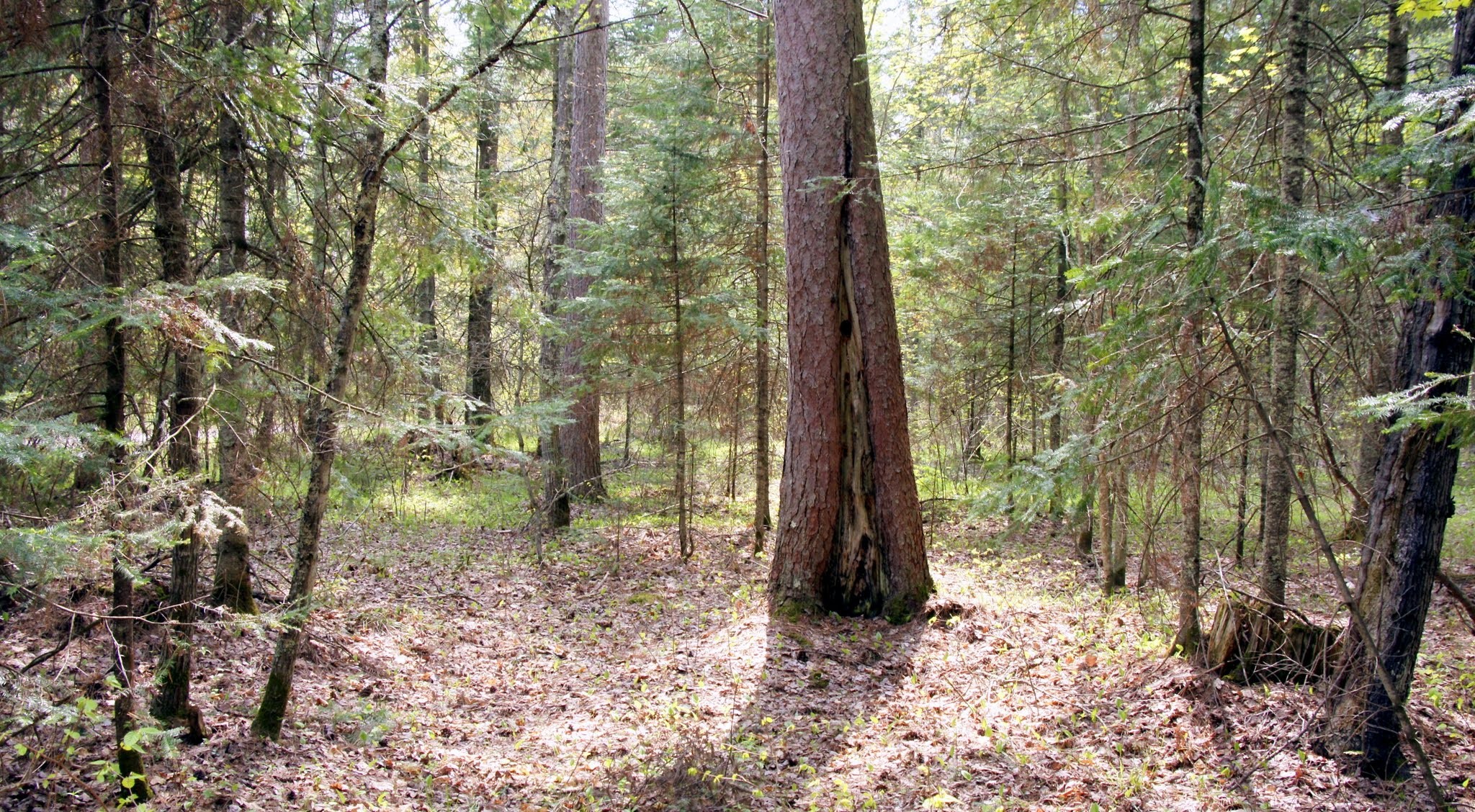
For anyone raised with Smokey Bear lore and the story of Bambi, wildfire is usually seen as an uncompromising destructor. This viewpoint seems to resonate, after a series of lightning-caused wildfires in July of 2026 threatened forests and Ojibwe communities across northern Minnesota and Ontario, and destroyed infrastructure and buildings at Namaygoosisagagun First Nation (Collins) in Ontario.
People across the Great Lakes region experienced the smoke from those fires. Based on anecdotal accounts, summer conditions across the Great Lakes region were extraordinarily dry, temperatures were high and humidity was low. The northern Boreal forests are experiencing a heavy fuel load because of spruce budworm damage, an infestation that occurs every 30 to 40 years. These factors combined to create a perfect storm of dangerous fire conditions.
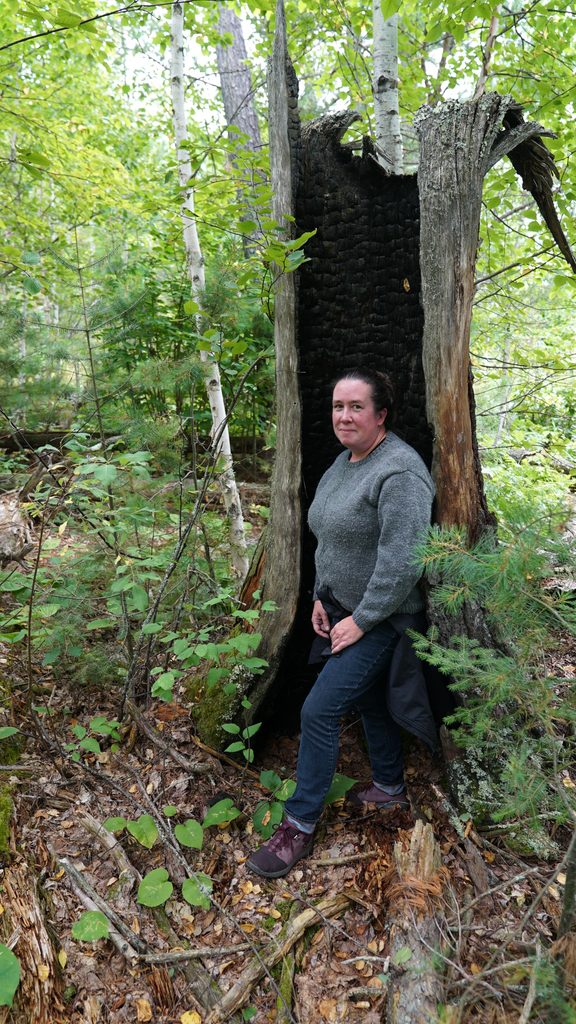
“When [elders] would tell these things, I would imagine myself as if I was there,” said Nisogaabokwe Melonee Montano, who is an enrolled member of the Red Cliff Ojibwe Band and runs a non-profit called Ethical Embers. “It’s so easy for us as humans to remember what we’ve seen in our lifetimes, but we’re removed from what happened in the lifetimes before us, because we weren’t living that, we didn’t see it, we didn’t interact with it. So, it’s not as tangible in our minds, and that’s the same thing with fire.”
Montano now advocates for a renewed relationship with fire (ishkode) and believes that young people should grow up with a positive connection to fire, rather than seeing it in a catastrophic sense. She recently co-authored the children’s book “Ishkode — A Story of Fire” with Evan Larson.
Larson teaches in the Department of Environmental Sciences and Society at the University of Wisconsin–Platteville. The book was originally published in 2025 by Black Bears and Blueberries Press and will be reissued by the University of Minnesota Press on October 13, 2026.
Together they explore the evolving relationship between human beings and wildfire, and how Western science is just now beginning to catch up with Indigenous understanding and knowledge about the role that fire plays in maintaining healthy ecosystems.
Trees With Stories to Tell
Montano and Larson share a connection to Lac La Croix, a large border lake, and also the home of Gakijiwanong First Nation — a place where Montano was brought to learn from, and help an elder, Ron Geyshick-iban. During her time there, she was exposed to teachings and cultural stories about fire.
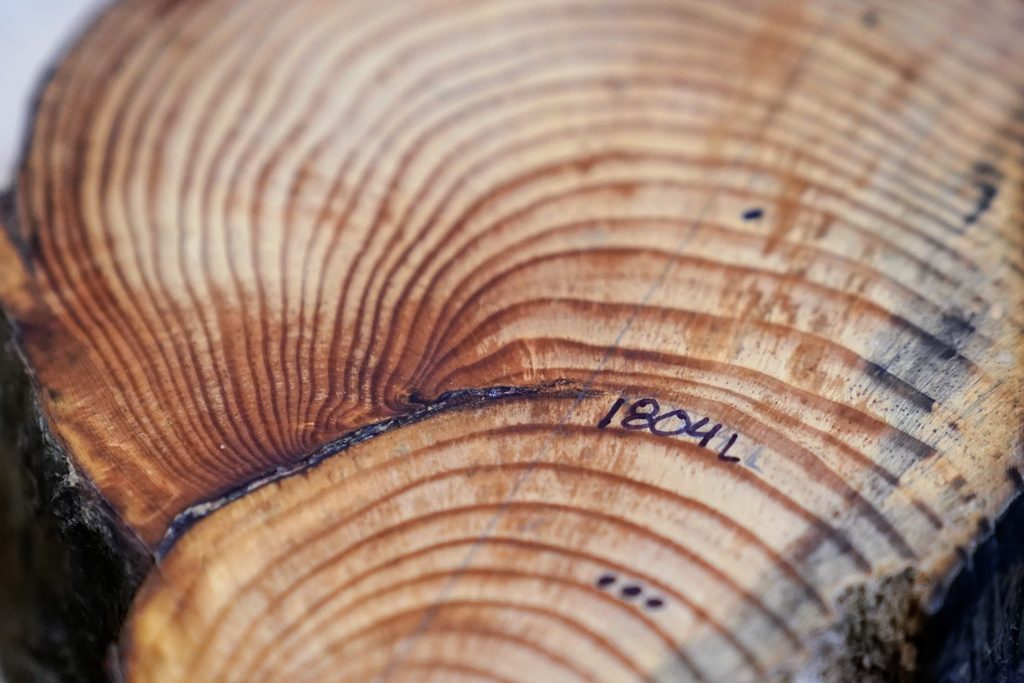
Larson is a dendrochronologist, or tree-ring scientist. Beginning in 2012 he collaborated with Kurt Kipfmueller and research specialist Lane Johnson from the University of Minnesota, and their students, on a five-year research project. In a 2017 article about the history of human influence in the Boundary Waters, the research team examined rings from 75 red pines at Lac La Croix, building on prior research by Miron “Bud” Heinselman, a preeminent scientist and Wilderness advocate.
During the 1960s and 1970s, Heinselman focused on the ages of trees in the Boundary Waters established after severe fires. He also examined fire scars recorded in the growth rings of living trees to determine when wildfire had passed through. What Heinselman speculated, and what Larson’s group of scientists later confirmed, is that forests at Lac La Croix and other places in the Great Lakes region were groomed and shaped by the use of human-ignited fires over long periods of time — specifically in areas where wild berries, medicines and other fire-dependent trees live.
“The fire patterns illustrated by our data are stark,” said Larson. “Fires were most common along the Border Route. In some places, the open stands of red pine we see today experienced fires every five to six years during the 1700s and 1800s — the period when fur-trade networks were expanding across the region. Our data makes a strong case that many of these spectacular red pine stands are, in part, legacies of the region’s cultural history.”
Each tree tells its own story and each have distinct fingerprints when it comes to determining patterns over time. Larson’s group used cross-dating methodology to identify fire scars in remnant stumps, producing a network of sites with fire history that spans the wilderness and tells a detailed story of fire activity over the last 400 years.
This of course, is not news to Ojibwe-Anishinaabe communities, whose ancestors lit many of those fires on purpose. This old relationship between Indigenous people and plants resonated with the work of Robin Wall Kimmerer, author of Braiding Sweetgrass, who wrote the foreward to “Ishkode.”
“I had been friends with Robin Kimmerer for a few years,” said Montano. “I had met her down in Menominee Nation, and we spent some time together just bonding over Indigenous knowledge and those kinds of things.”
Larson also knew Kimmerer through his work at University of Wisconsin-Platteville. After spending the day with her discussing a research opportunity, Larson shared that Kimmerer was working on a new project. As Larson related, Kimmerer was “trying to figure out how to share the voice of plants for the people who can’t hear it, but in a way that they also don’t think that she’s crazy.” So, Larson and Kimmerer made plans to travel to Lac La Croix together, as part of a new fire-related research project.
Kimmerer ended up not making it to Lac La Croix, so she connected Larson with Montano. That connection laid the foundation for future collaborations.
Separating the People from the Land
Central to “Ishkode” is the vital relationship and dependency that humans have to plants. As Montano explained, there is great importance in learning about and maintaining our ancient relationships with other living things. Especially because, humans are the last ones placed here on Earth — according to our teachings as Anishinaabeg.
“We look at fire as our relative too,” said Montano.
Maintaining these relationships has become more difficult over time, which is proved by the tree-ring data recorded in places where Ojibwe people used to live. In 2022, the two writers and their team used cross-dating to determine the history of fire activity at Minnesota Point (Park Point) in Duluth and across the entrance to the bay at Wisconsin Point. This tree-ring data showed that old-growth red pines in both locations experienced late-season fires regularly from 1750 until about 1854. Wisconsin Point was chosen specifically as a “socioecological” site, because it was once the home of Chief Joseph Osaugie who lived and operated a canoe-building operation on Wisconsin Point.
Chief Osaugie was a well-known and respected member of the Fond du Lac Band of Lake Superior Chippewa, and a signatory on the 1854 Treaty of La Pointe. Their research brings together the history of fire and Indigenous approaches to forest development, to tell a more complete history of human engagement with the land
As viewed from this holistic vantage point, it’s not a coincidence that the old trees found along Anishinaabe travel routes have few fire scars after Ojibwe people moved away — a result of government acts designed to remove people from the landscape. Evan Larson talked about the repercussions of severing people from the land in this way, framing it as one of the important lessons he hopes to convey.
“Some of the most beautiful places that we’re most profoundly connected to, are that way because of the relationship that people have maintained through time with those places,” said Larson. “It’s not just the pines . . . it’s all of the plants and insects and birds and all these other beings that need those conditions too,” drawing the direct connection between purposeful fire, healthy ecosystems and our human responsibility to care for the land.
Larson and Montano also warn against telling a single story when it comes to our human relationship with the land, and protecting the stories told by trees. For Larson, this is a process of re-engagement and remembering that those trees have carried this story, and that it is literally rooted to place.
He describes this threat as “generations of a society that are intentionally trying to eliminate and disappear this memory or all of these stories, because it doesn’t line up with the worldview or economic system.”
“And it’s not necessarily that one is good or bad or right or wrong or anything, but it’s just realizing all of these knowledges are important because the world doesn’t speak just one knowledge,” adds Montano.
Through the Eyes of Many Communities
Bringing this story to the page involved a wide array of collaborators. According to Montano, they reached out to other tribal members and elders for guidance and input along the way. They asked what names to use and tried to make sure it wasn’t just about Evan’s perspective, or Montano’s perspective, in order to tell the story of fire as a being through the eyes of many communities. Montana’s daughter Animikiimiikanikwe is also written into the story, deepening the inter-generational reach of the narrative.
Both authors admitted that incorporating Ojibwe words into the story exposed some of the differences that exist between very different linguistic structures.
“We had a lot of funny conversations,” said Montano. “Evan [would say] ‘hey, I’m going to insert this word here and this word for that, because I looked in the dictionary and this is the translation’, and I had to reel him back a little bit and say, ‘you know that’s not actually what we would use and how we would use it.’”
Working with Ojibwe speakers and linguists, the duo hopes to work on a full Ojibwe translation of the story, as part of the next phase of their collaboration.
Fire and Water
When asked about the restorative aspects of fire, and how Ojibwe people knew where and when to safely use fire, Montano returned to the stories and cultural knowledge of the people.
“I’ve been thinking a lot about how fire is healing — not just directly, but also indirectly. Because it brings some of those plant medicines that we need to help heal ourselves, but also the presence of it when used in a good way, and when cared for.”
She added, “When you have that knowledge on how to work with fire, how good that can be for your spirit.”
Montano explained that even though restorative fire techniques are in a state of return, the presence of fire in Ojibwe life is still strong.
“We’ve still maintained it as part of our ceremonies, at our sweat lodges, to light our pipes, fire at our funerals as the first thing that we do . . . and quite a few of the elders have reminded us as a group — where fire goes, water needs to go.”
She went on to describe how as spirits, water and fire need to go together.
“I think, because of colonization and the fire suppression policies and whatnot, we’ve separated them, even as Indigenous people,” said Montano. “And it’s time to make sure that they’re walking with each other, that we can help that to happen.”
Montano was raised around what she calls rebels and treaty activists. Her father was Frank Montano, who was friends with Walt Bresette (a leader and environmental activist from Red Cliff). This community includes those who organized some of the first Nibi (water) walks around Lake Superior as a ceremonial way to honor the life-giving force of nibi.
“I often think back about those times and about the talk that was shared — around not just treaty rights but about honoring water and about carrying water and the gift of water and ‘water is life’ and it definitely became a part of me . . . but what wasn’t connecting in my being for the longest time, was that fire is at that same level as water, meaning fire can both give and take life,” said Montano. “So, I think because of Smokey Bear and all those kinds of things, in our generation we’ve even been removed from realizing that fire also is life, and just like water, your life can be taken out there if you’re not careful.”
To learn more about Melonee Montano and Evan Larson’s work visit: Ishkode.