
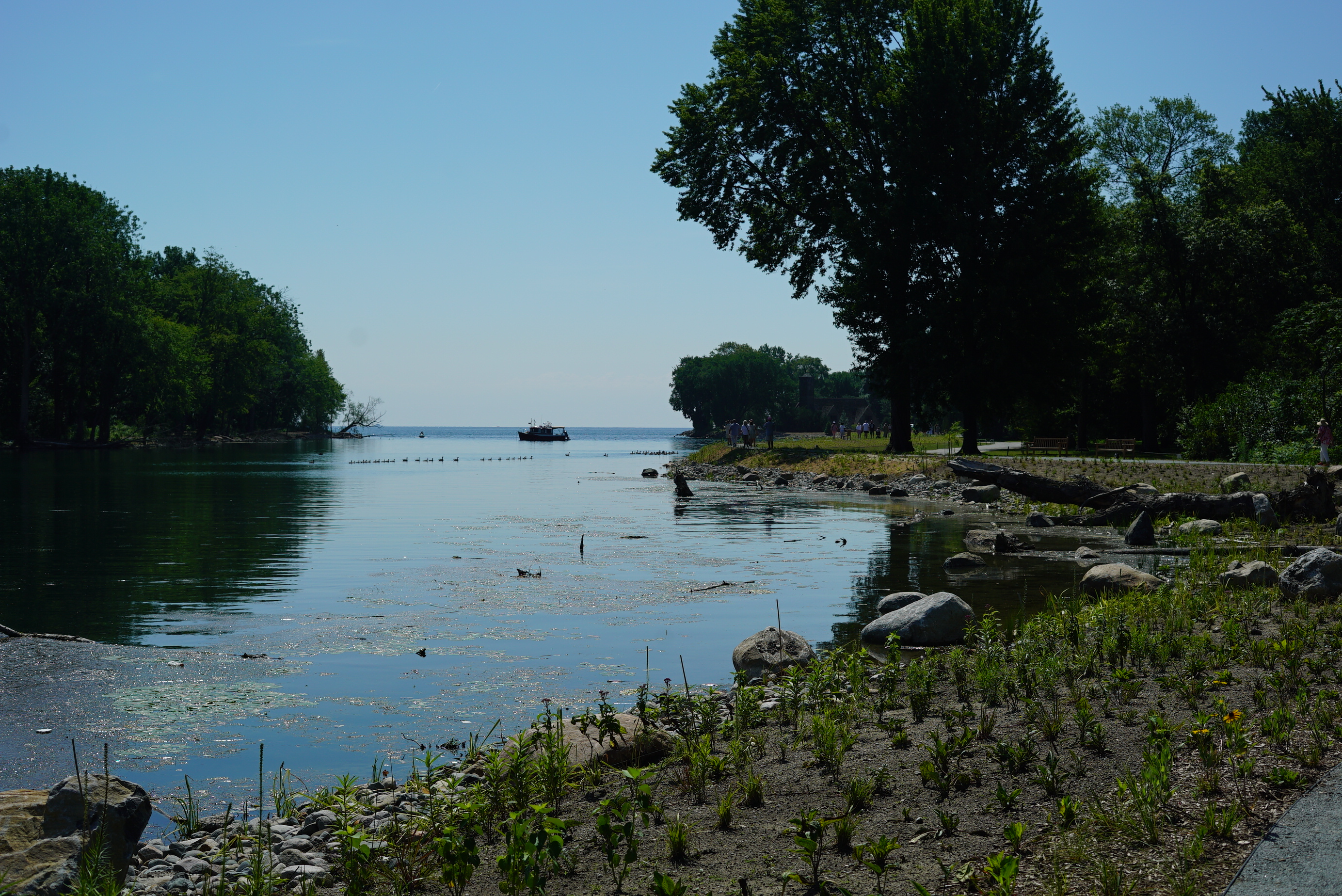

Within minutes, a blue dasher dragonfly darted by as a red admiral floated up and over toward the speaker podium. With the sheer amount of wildlife seen at the Edsel & Eleanor Ford House ribbon cutting ceremony, it was hard to ignore the success of their shoreline restoration project.
On July 7, the project opened to the public in Grosse Pointe Shores, Michigan. This was after a decade of advocacy and effort, and over $7 million in funding from National Oceanic and Atmospheric Administration’s NOAA Fisheries.
The estate was built in 1929, and shaped by famous hands — the architect Albert Kahn and landscape designer Jens Jensen. Danish-born Jensen was inspired by native plants and known for his belief in the restorative value of access to nature. He started out as a laborer and then worked his way up to becoming the superintendent of the whole West Park System in Chicago.
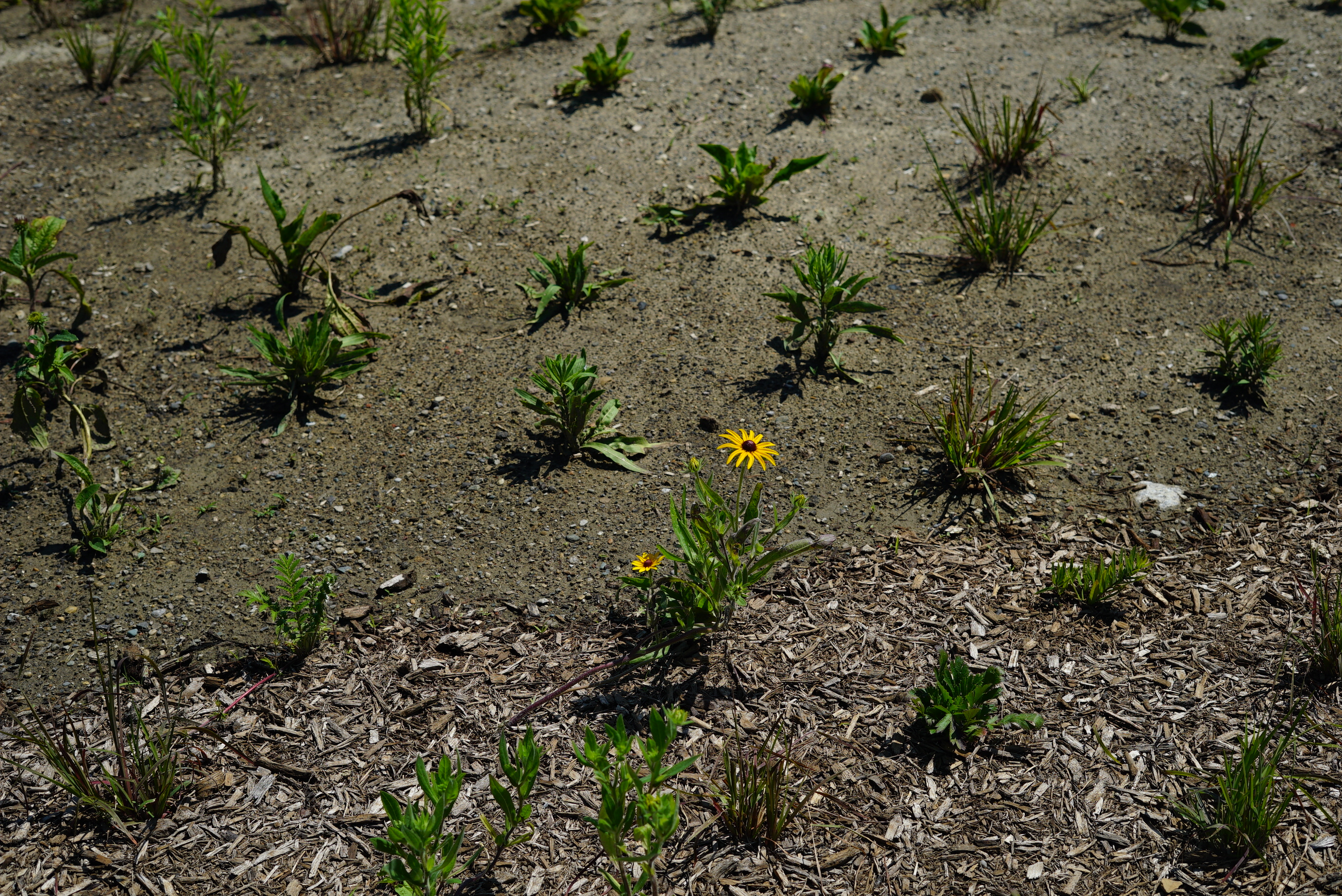
Jensen is known for being one of the founders of the prairie school of landscape architecture, a design movement rooted in the Great Lakes region from the late 19th and early 20th centuries. This school was known for rejecting traditional European gardens by using plants and water features inspired by the landscapes of the Midwest.
In Jensen’s original drawings for the Ford Estate, he noted the importance of the shallow waters and plants endemic to the waterfront area, in order to attract migratory birds on what is now known as Bird Island. According to Karl Koto, director of landscapes at the Ford House, the spirit of this restoration project is directly in line with what Jensen and the family were doing at the time when they designed it.
“Because we’re a National Historic Landmark, and we got that designation largely due to the design by Jensen and the collaboration with the Fords, that’s obviously at our forefront whenever we’re doing work in the historic part of the property,” said Koto in an interview with Great Lakes Now.
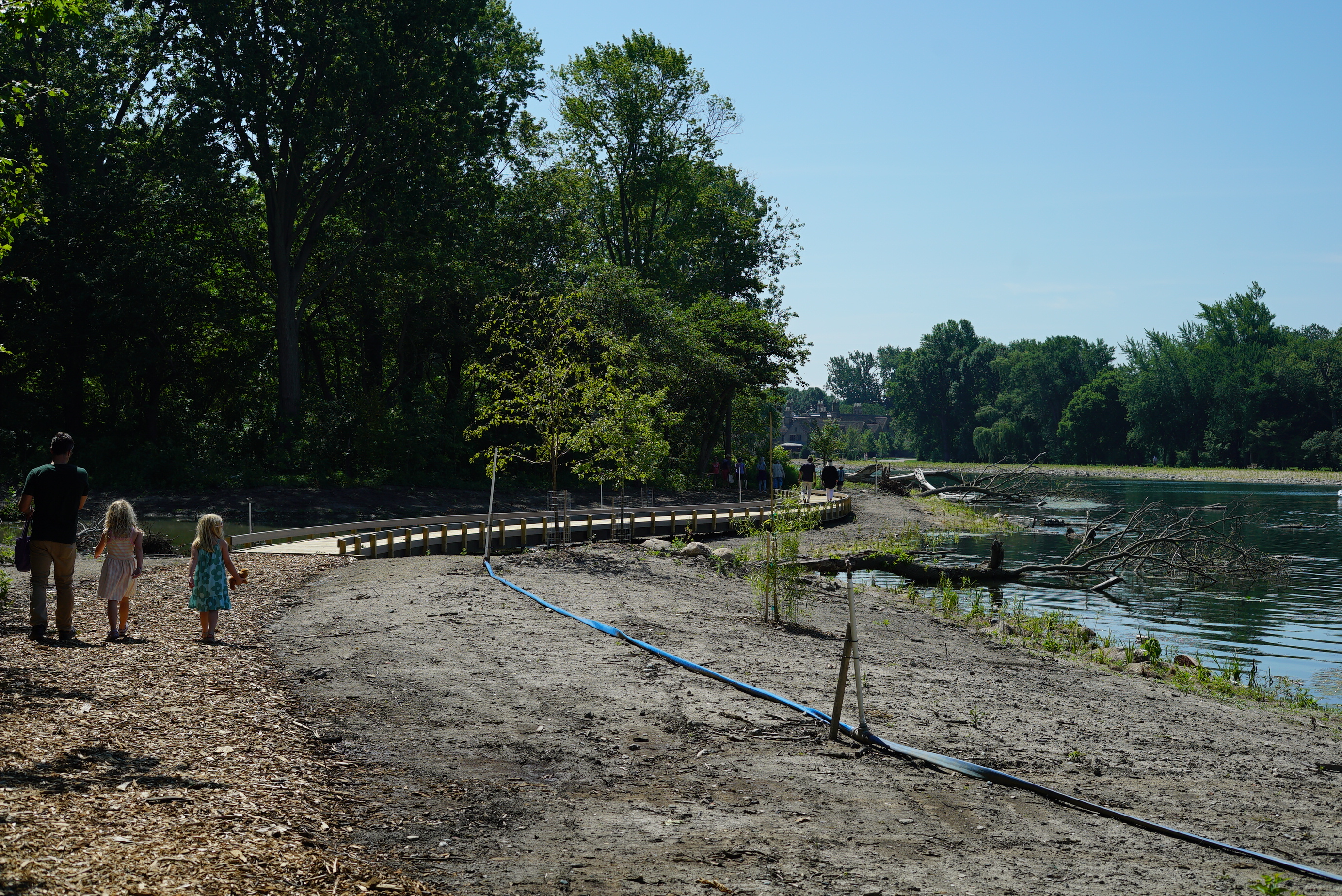
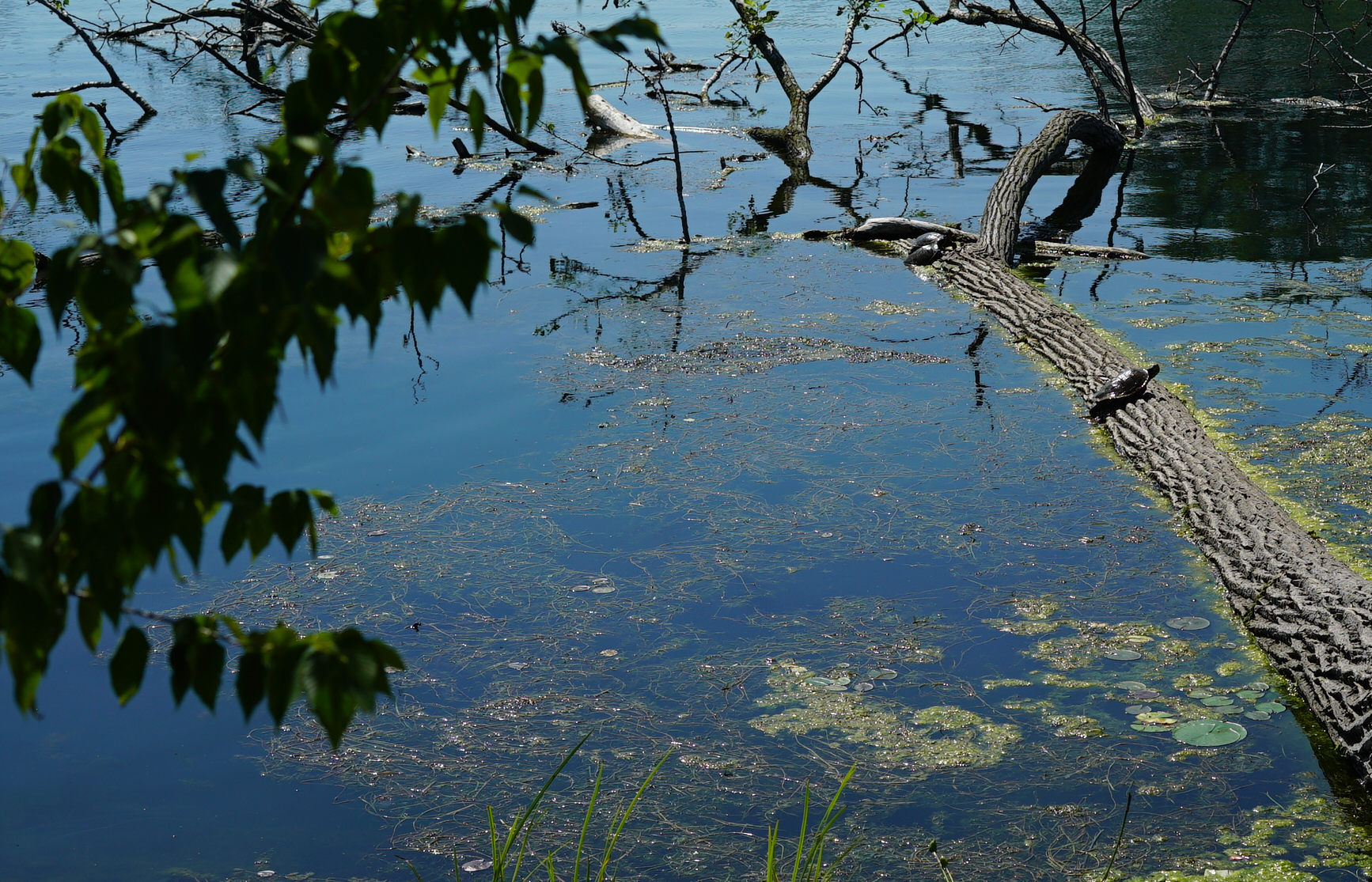
According to Koto, when he started this position about 12 years ago, they started to slowly reorient how they dealt with the waterfront part of the property. In the past, if a tree fell they would pull it and clean it up. Over the last decade, he said they’ve been leaving some of the fallen trees here and there, trying to make visitors more comfortable with seeing this. Fallen trees don’t just offer nutrients to the soil as they degrade but they offer essential protection for certain species of fish who spawn in the lake.
“I’ve really noticed this year, we have more ducklings than I’ve ever seen out here by far,” said Koto. “I think that’s largely because the Cove is always a popular spot, because it’s protected waters, but we have more trees down in the water, which really offers protection to the ducklings.”
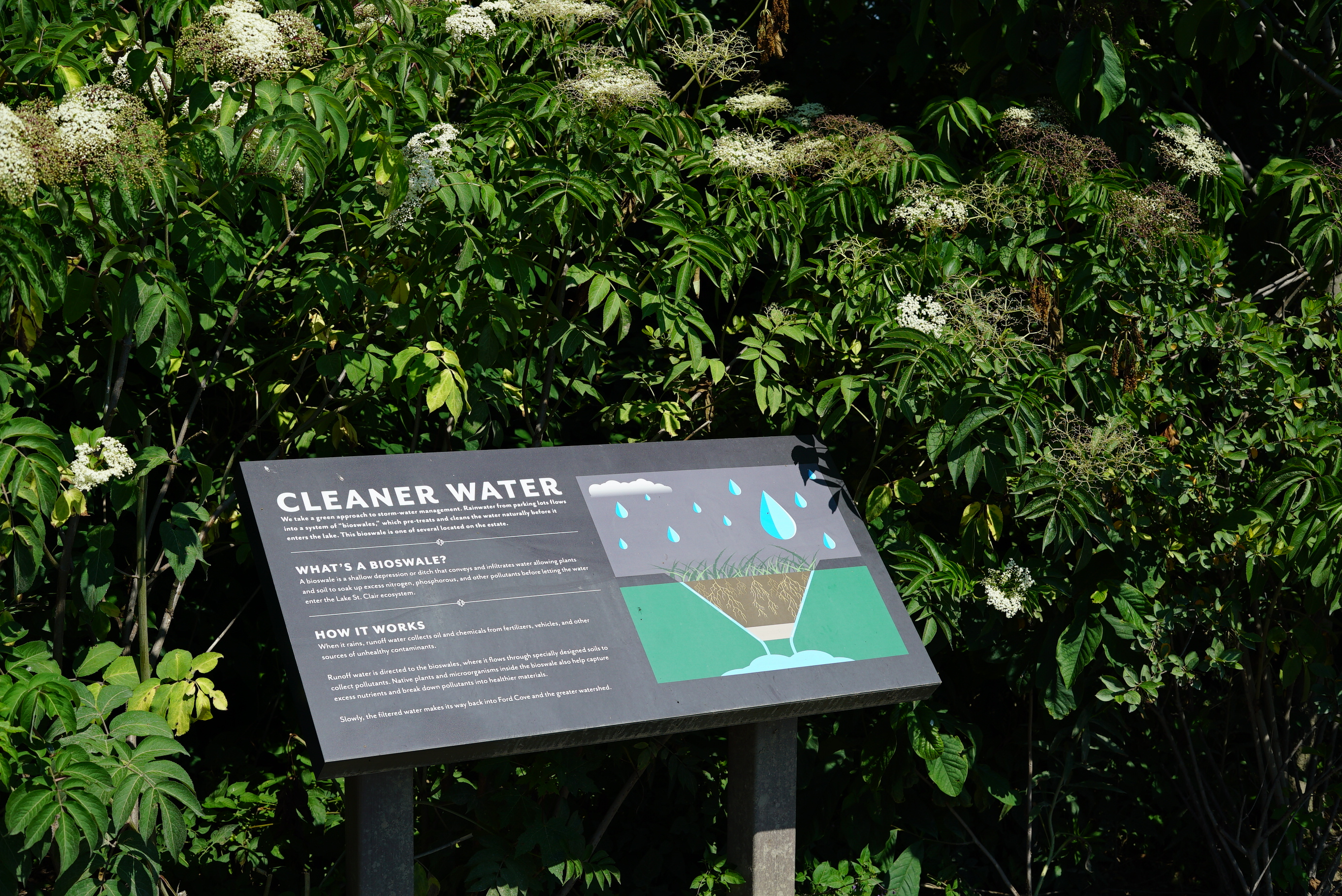
Another ecological benefit to this project are the bioswales and retention ponds, which naturally infiltrate stormwater runoff from places like parking lots and roads, in order to absorb some of the pollution before it reaches a larger body of water.
“We talk about regionalism and that’s important because everything that we discharge is going right here,” said Macomb County Public Works Commissioner Candice Miller at the ceremony. “It goes right by Ford House, it goes down past the Grosse Pointes and into the Detroit River.”
According to Brian Majka, a restoration ecologist with GEI, the nearshore area is an incredibly important place for wildlife. GEI is a consulting firm that helped with the shoreline restoration project, they provide guidance around geotechnical, environmental, water resources, civil design and construction services.
“Michigan and the EPA have identified that the loss of nearshore habitat is the number one threat affecting all of Michigan’s lakes,” said Majka at the ceremony. “It’s already been pointed out that 99.9% of Lake St. Clair’s shoreline on the United States’ side has actually been hardened. And when we harden the shoreline by installing riprap, stone armoring, concrete sheet piling — we disconnect the land from the water, and what that means is that those frogs and turtles and birds that need to be able to pass back and forth between the land and the water no longer can do so.”
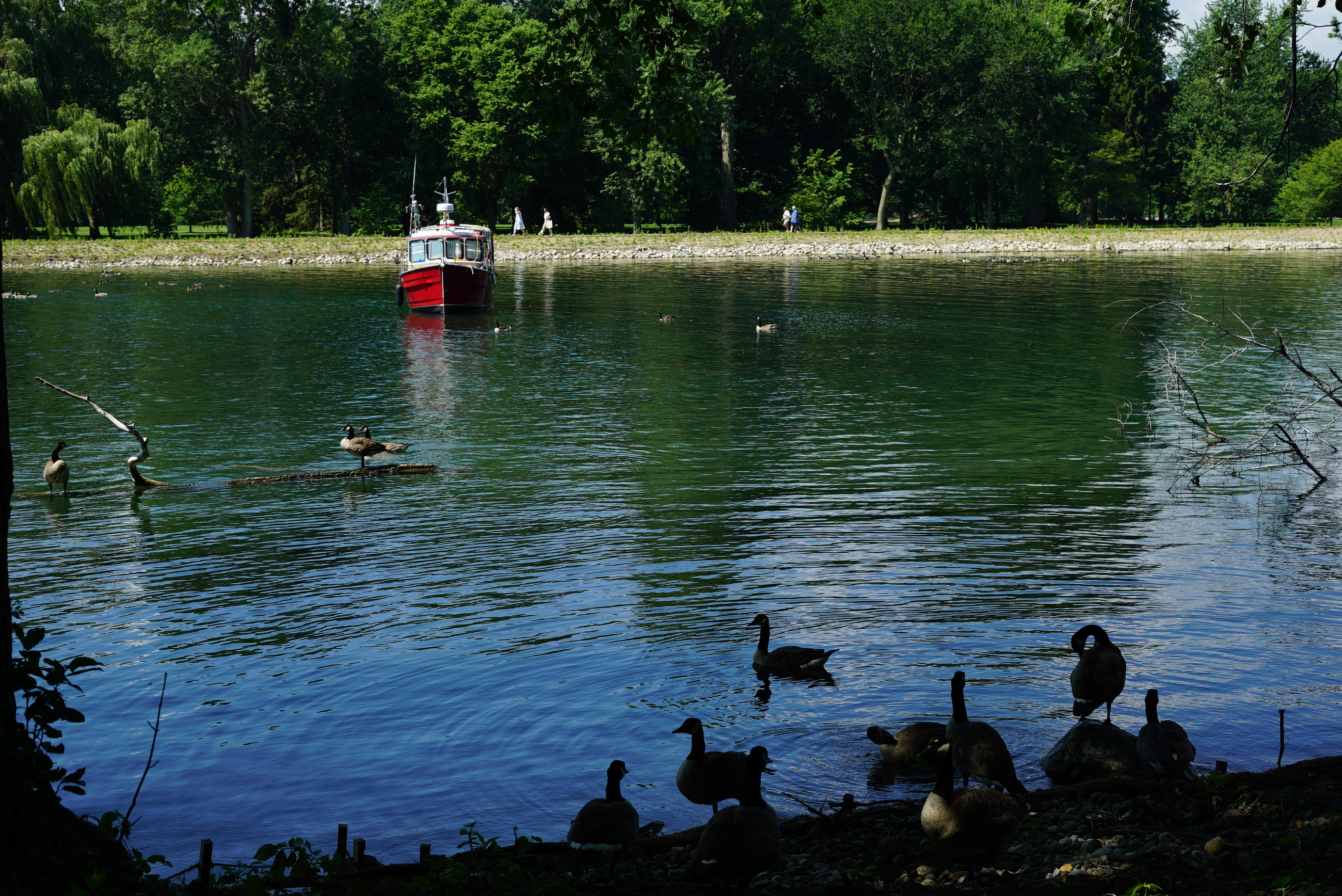
According to Koto, the Ford family hardened the shoreline in the 1970s because there was historic high water. To combat the flooding, they put concrete bags all around the property. Then, over time they backfilled that with some clay and debris, and then piled concrete on the water side of the berm.
Both Koto and Miller mentioned how this project is a great example of how federal funding can trickle down to help things on a smaller scale that will add up over time. The project is still ongoing and there is a lot to look forward to. They are recreating the original dock that was up near the powerhouse and, according to Koto, they’re talking about using that space to run educational fishing programs.
“We’re amazingly fortunate that we were able to get this funding through NOAA, and that once we did the feasibility study — they went all in — they really believe in the project, and they’ve been amazing partners to work with,” said Koto.
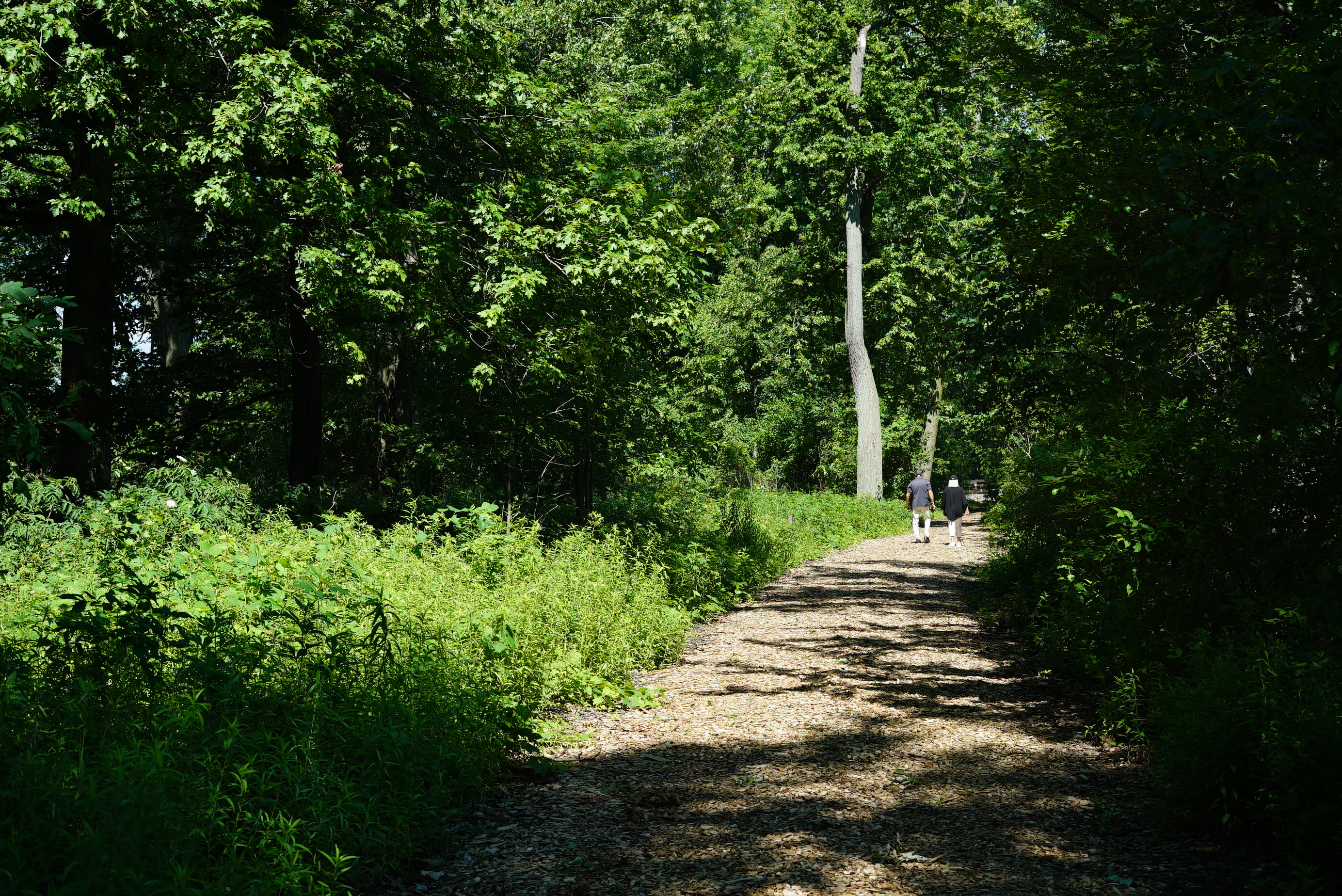
Initially the funding was aquatic habitat focused, but according to Koto, as they worked through the permitting with different agencies, ultimately the funding structure that they received helped to make it broader. It helped to increase accessibility around the property with universal accessible trails, boardwalks, recreating the historic dock — all to really connect people with the shoreline.
“I think that from the very early concepts, it’s become a much broader project that I think is going to be ultimately much more successful, but also much more usable by a larger group of people,” said Koto.