

For more than a decade, conservation groups have fought to protect Minnesota’s Boundary Waters Canoe Area Wilderness from proposed copper-nickel mining projects. Now, following actions by the Trump administration to remove federal protections from the area, advocates’ fight for the region has entered a new phase.
Local environmental groups, as well as national legal organizations, have spent years working together to protect the 1.1 million acre outdoor space. Broadly, they argue mining near the Boundary Waters threatens clean water, wildlife and a regional economy built around outdoor recreation.
In April, the Trump administration rolled back on a 20-year federal mining ban for the region, opening the Boundary Waters up to a mining from Twin Metals, the subsidiary of a Chilean mining company.
“We’re facing an all-out assault on northern Minnesota’s Boundary Waters from the mining industry’s allies in Congress,” said Blaine Miller-McFeeley, a senior legislative representative for Earthjustice.
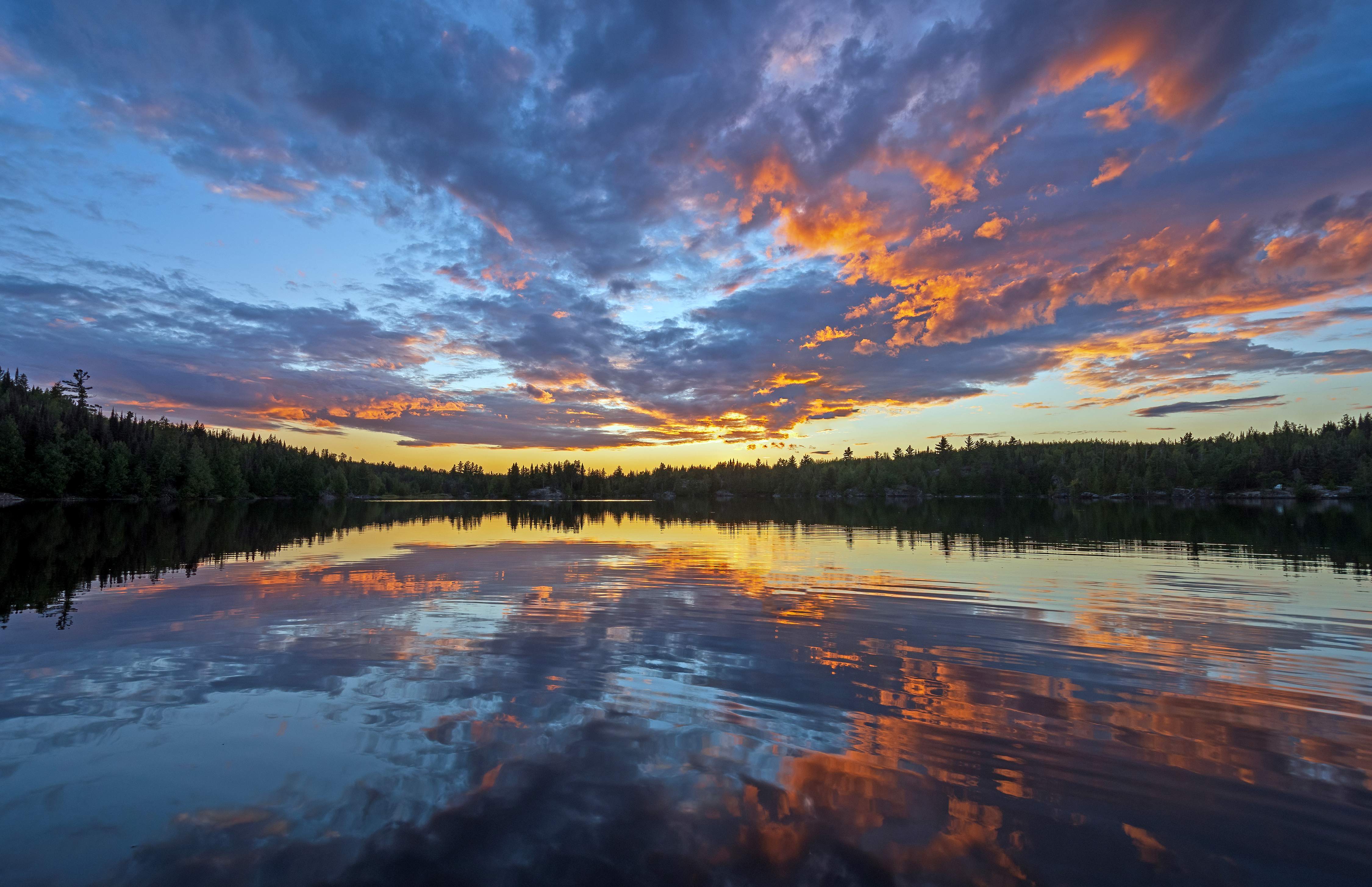
The Boundary Waters region, located in northeastern Minnesota along the Canadian border, contains over 1,000 lakes and traditionally is one of the most visited wilderness areas in the country, with over 149,000 visitors in 2024 alone, according to the Quetico Superior Wilderness News.
“The Boundary Waters is really a unique place in our landscape,” said Pete Marshall, communications director for Friends of the Boundary Waters Wilderness. “It’s over a thousand lakes and rocky shorelines. It’s really unlike any other place in the United States.”
The Boundary Waters region offers camping grounds, cross country skiing and hiking for its visitors.
“People who go there quite easily fall in love with it,” Marshall said. “Today we live our lives through screens. It’s probably more valuable than ever as a way to escape, to get away from the busyness and the noise and the distraction of modern living.”
This attachment to wilderness has propelled groups, like Friends of the Boundary Waters Wilderness, to work together to oppose the mining proposals in the area.
Building a movement
Although the area has been under fire in recent years, this is far from a new fight.
Friends of the Boundary Waters Wilderness is celebrating its 50th anniversary this year. The group was founded to help create the protections that eventually shaped the area as it exists today, according to Marshall.
“We were founded 50 years ago to help pass the legislation that made the Boundary Waters what it is today,” Marshall said.
In 2012, nearby residents of the city Ely started mobilizing to protect the area after proposed mining developments— forming Save the Boundary Waters, Executive Director Ingrid Lyons said.
“A small group of people based in Ely, Minnesota, were made aware that there were two federal mineral leases in the headwaters of the Boundary Waters Canoe Area Wilderness,” Lyons said. “This group of people kind of paused and said, ‘Why does the federal government even allow mineral leasing in this area?'”
That small effort quickly evolved into a larger campaign when organizers realized they would need to engage federal agencies and lawmakers in Washington to stop proposed mining development.
“We started going to Washington, D.C. every single month beginning in 2013,” she said.
In recent months, Miller-McFeeley said that when defending federal protections, he said environmental organizations were joined by not just advocacy groups but people who frequent the Boundary Waters.
“It was environmentalists, fishers, hunters, outdoor recreationists,” Miller-McFeeley said. “It was an extraordinarily diverse set of voices and groups and communities that came together because of this threat.”
A changing political landscape
The fight over mining near the Boundary Waters has intensified through multiple presidential administrations, but most intensely in the last 18 months.
Groups pushed for studies on the impact of mining in the Boundary Waters under the Obama administration. Later, under the Biden administration, a 20-year mining withdrawal was put in place which affected 225,504 acres near the wilderness.
But, these efforts were halted when the political environment shifted following President Donald Trump’s return to office.
“We knew we were going to come under a lot of different forms of attack,” Lyons said.
Marshall said this did not come as a surprise.
“The Trump administration has been unabashedly a very pro-extractive industry,” Marshall said. “There’s a big hunger out there for some kind of permanent legislative solution.”
Steve Shultz, government relations director for Friends of the Boundary Waters, said the administration’s priorities have made advocacy work more difficult.
“Our job is a lot more difficult with the Trump administration in place and the priorities that they’ve got at the forefront of their agenda,” he said.
Shultz said that the state’s efforts going forward could still play a significant role in determining whether mining projects move forward.
“There are many opportunities,” he said. “People keep asking me, ‘Is it over? Have we lost?’ But there are a lot of other opportunities.”
Earlier this year, Congress passed House Joint Resolution 140, using the Congressional Review Act to overturn a federal mineral withdrawal that had protected the Boundary Waters from new mineral leasing. This marked one of the most significant victories for mining advocates and one of the largest setbacks for conservation groups in recent years.
“This was a novel and likely illegal move,” Miller-McFeeley said.
According to Miller-McFeeley, Congress had never previously used the Congressional Review Act to overturn a public lands mineral withdrawal.
“It’s a powerful tool that they’re abusing to bypass normal democratic processes,” he said.
The resolution passed the Senate by a single vote.
“They were stripping protections for the Boundary Waters because they were blatantly ignoring the voices of the American people and prioritizing the profits of a foreign mining company over the interests of the nation’s people,” Miller-McFeeley said.
“Protecting the Boundary Waters is not a partisan issue,” Lyons said. “Seventy percent of Minnesotans across partisan divides want the Boundary Waters protected.”
What’s next
Despite the loss of federal protections, advocates say the fight is far from over.
Earthjustice and its partners continue to work with conservation groups to pressure Minnesota officials to use state authority to block future mining projects.
The current focus is on Twin Metals’ state mineral leases.
“We’re trying to pressure the Minnesota DNR to exercise its authority and cancel this lease,” Marshall said. “To do something to protect Minnesota’s water.”
Miller-McFeeley said efforts remain energized despite recent setbacks.
“The CRA [congressional review act] vote was not the end of the line. It was not the end of the story,” he said. “We will continue to fight because there are lots of different places to fight from.”
For many advocates, the fight ultimately comes down to preserving a place they believe is irreplaceable. But Marshall argues the choice is clear.
“It’s a very short-term economic gain for potentially hundreds of years of pollution,” Marshall said.
Correction: An earlier version of this article mistakenly stated that Steve Shultz works at Save the Boundary Waters. It has been updated to Friends of the Boundary Waters.